
Practical Cleaning Tips for Older Homes and Classic Row Houses
Essential Cleaning Tips for Older Homes
Cleaning older homes requires prioritizing dry dusting techniques, using minimal moisture, and applying gentle, pH-neutral cleaners to safeguard aged shellac, plaster, and antique millwork. Caring for historic architecture across Allegheny County means balancing everyday tidiness with long-term material preservation. Whether your house is an ornate Victorian in Shadyside or a sturdy brick Craftsman in Squirrel Hill, older finishes react quickly to standing water, harsh chemical formulas, and rough scrubbing. Adopting habits for a dust-free comfortable home helps you manage daily buildup without wearing down aged surfaces.
Gentle Dusting and Cleaning for Older Woodwork
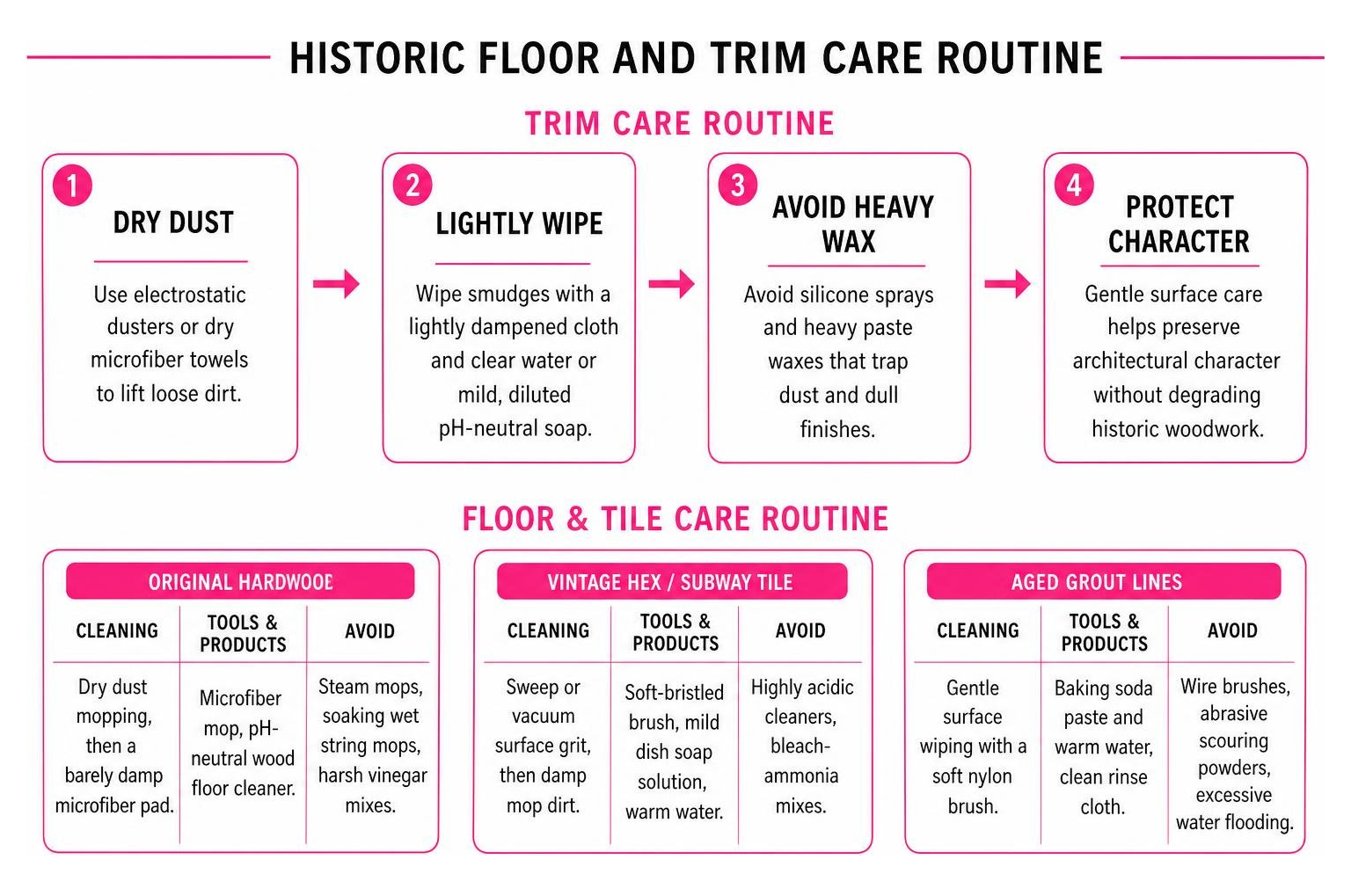
Original baseboards, wainscoting, pocket doors, and decorative crown moldings give older properties their warmth and distinct character. However, decades-old shellac, varnish, and oil-based paint require gentle methods. Aggressive wet wiping can cause antique wood fibers to swell or soften brittle topcoats over time.
- Rely on dry dusting tools: Use electrostatic dusters or clean, dry microfiber towels to lift loose surface dirt from carved details, picture rails, and fluted window trim. Microfiber traps fine particles without scratching soft, aged finishes.
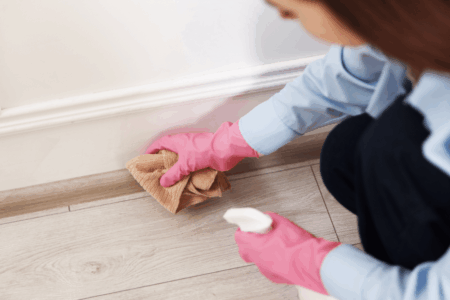
- Wipe with minimal moisture: When wiping down smudges or sticky residues around high-contact door frames, use a lightly dampened cloth with clear water or a mild, diluted pH-neutral soap. Never spray liquid cleaners directly onto vintage woodwork.
- Avoid heavy wax buildup: Layering commercial silicone sprays or heavy paste waxes can trap airborne debris and create a dull, gummy film that attracts more dust. Regular dry dusting is usually all that is needed to preserve the look of classic trim.
- Protect architectural character: When maintaining antique woodwork, focusing on gentle surface care helps maintain proper architectural character preservation without degrading historic woodwork.
Safe Floor and Tile Care in Historic Properties
Flooring in pre-1970 homes often includes tongue-and-groove oak, heart pine, or vintage ceramic and encaustic tile in entryways and bathrooms. Moisture is the primary concern for both materials: standing water can warp wood subfloors or seep behind aging, cracked grout lines.
| Vintage Material Type | Recommended Cleaning Method | Tools & Products | What to Avoid |
|---|---|---|---|
| Original Hardwood | Dry dust mopping, followed by a barely damp microfiber pad. | Microfiber mop, pH-neutral wood floor cleaner. | Steam mops, soaking wet string mops, harsh vinegar mixes. |
| Vintage Hex / Subway Tile | Sweep or vacuum surface grit, then damp mop accessible dirt. | Soft-bristled brush, mild dish soap solution, warm water. | Highly acidic cleaners, bleach-ammonia mixes, steel wool. |
| Aged Grout Lines | Gentle surface wiping with a soft nylon brush. | Baking soda paste and warm water, clean rinse cloth. | Wire brushes, abrasive scouring powders, excessive water flooding. |
Managing Soot, Coal Dust, and Seasonal Buildup
Pittsburgh’s industrial history means older residences, especially those that once utilized coal furnaces or gravity heating, can hold residual black dust behind baseboards and within wall cavities. Adding modern seasonal shifts, radiator heating, and drafty window frames can cause fine particulate to settle on vertical surfaces throughout the colder months. Planning ahead to prepare home for winter cleaning ensures you stay ahead of heavy seasonal dust accumulation across all living areas.
Gentle Techniques for Plaster Walls and Baseboards
Before the 1940s, standard interior wall construction relied on lath and plaster. Keys of plaster squeeze through wooden lath strips to lock the wall securely in place. Excessive pressure or heavy vibration during cleaning can snap these fragile keys, creating loose sections or surface cracks.
- Use vulcanized dry sponges: To lift fine soot or settled dust from matte plaster walls without smearing, lightly sweep a dry rubber soot sponge from the top down in straight, overlapping strokes.
- Vacuum with brush attachments: Use a vacuum fitted with a soft horsehair dusting brush to clean along the tops of tall baseboards, picture rails, and decorative window casings to capture loose particles without scratching paint. For high trim, use a stable step stool or ladder on level flooring, avoid overreaching, and skip any area that cannot be reached safely.
- Wipe gently around known issues: Standard surface cleaning addresses accessible surface dirt only. When reviewing common inspection findings in older homes, issues like peeling paint, plaster damage, or water stains indicate underlying maintenance needs that require proper inspection or repair rather than scrubbing.
Air Vent Surface Dusting and Seasonal Maintenance
Retrofitted heating systems in vintage houses often run through narrow wall cavities, venting through ornate cast-iron floor grates or decorative wall registers.
- Surface register cleaning: Lift cast-iron floor grates carefully and use a vacuum wand with a brush tip to clear loose dust and hair gathered directly beneath the grate opening. Some old grates are heavier than they look, so use two hands, bend at the knees, and ask for help rather than forcing a stuck cover.
- Wipe metal scrollwork: Clean the detailed metalwork of decorative covers with a damp microfiber cloth to remove dust clinging to intricate open patterns.
- Maintain seasonal airflow: Wipe visible vent surfaces before switching from summer cooling to winter heating to prevent loose surface dust from circulating into living areas. Thorough cleaning inside deep or narrow duct systems requires dedicated HVAC specialists with negative-pressure equipment.
- Radiator exterior wiping: For homes with cast-iron hot water or steam radiators, use a long, flexible microfiber duster between the radiator fins before heating season begins to clear dry particulate from exterior metal surfaces.
Protecting Vintage Bathrooms and Kitchen Fixtures
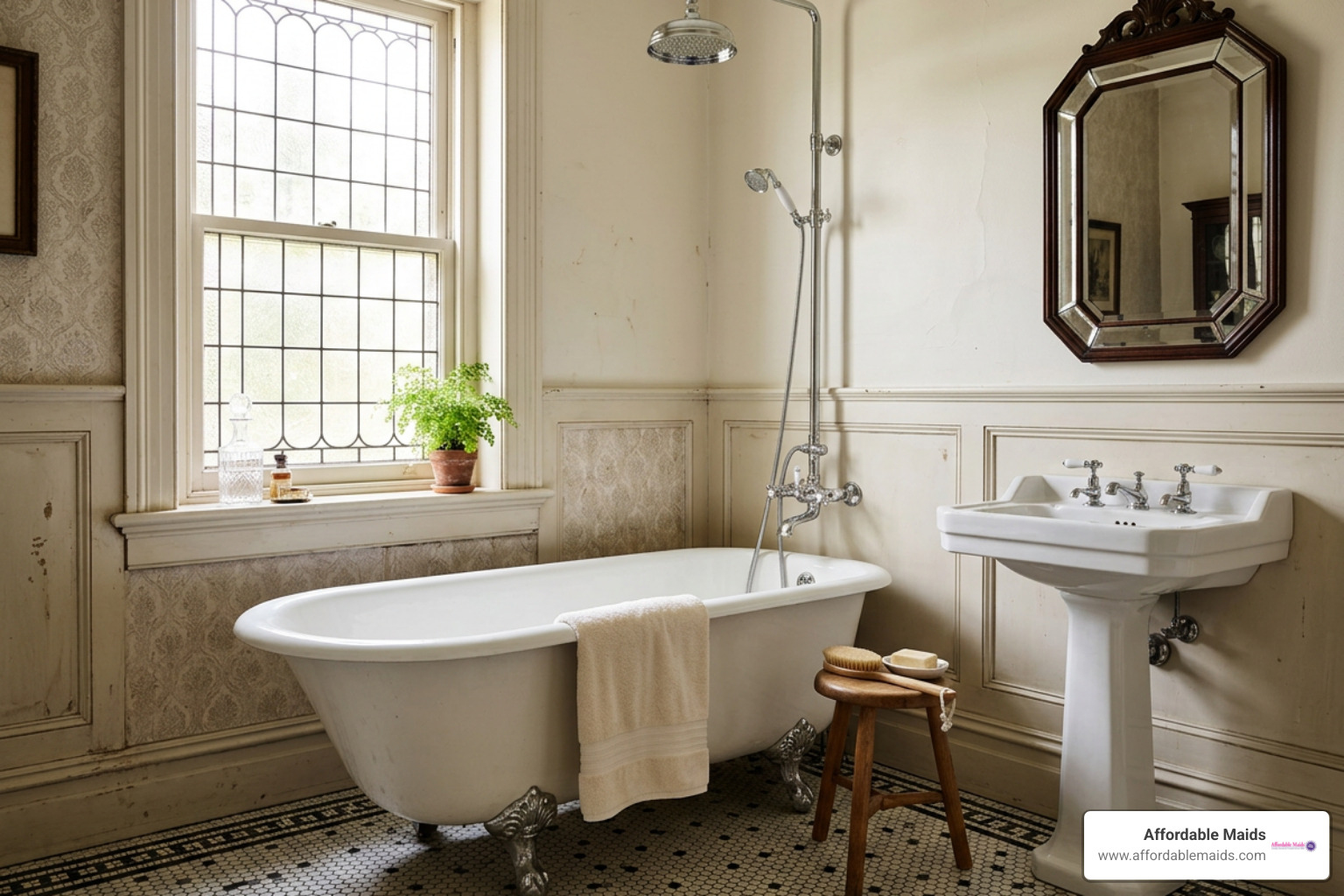
Historic bathrooms and kitchens frequently feature original porcelain-enameled cast-iron sinks, clawfoot tubs, and solid brass or chrome fittings. These fixtures add timeless appeal, but their enamel and plating can be permanently scratched by abrasive scouring pads or harsh acidic cleaners. Always read product labels first, test any new cleaner on a small hidden area, and keep rooms ventilated when using bathroom or kitchen cleaning products.
Hard Water Buildup and Mineral Deposits Around Fixtures
Depending on the water supply, plumbing, and fixture age, mineral deposits can create a hazy film around faucets, shower drains, and tub basins. Older bathrooms may also have worn caulk lines, chipped enamel, or plated hardware that reacts poorly to aggressive scrubbing, so start with the mildest method that will loosen accessible surface residue.
- Dissolve mineral film with mild acid: For stubborn water spots on chrome, apply a mild solution of equal parts white vinegar and warm water using a soft cloth. Let it sit for 5 to 10 minutes to loosen surface scale, then wipe clean and dry immediately with a microfiber towel. Do not use vinegar on natural stone or any surface where the manufacturer warns against acids.
- Never mix cleaning chemicals: Never combine bleach with vinegar, ammonia, or other acids, as this produces hazardous vapors. Always ensure the bathroom is well-ventilated while cleaning.
- Protect antique porcelain: Avoid using pumice stones or harsh scouring powders on vintage cast-iron tubs. These abrasives create microscopic scratches in the enamel, making surface dirt stick faster in the future. Stick to mild liquid dish soaps or gentle non-scratch creams.
Kitchen Appliance Care and Cleaning Tips for Older Homes
Older kitchens often have tight layouts and vintage architectural details that require attentive maintenance to control cooking oils and food residues.
- Degrease stovetops and backsplashes: Cooking oils can bind with airborne dust, forming a tacky layer on range hoods, backsplashes, and cabinet faces. Wipe these accessible vertical surfaces regularly with a warm water and mild dish soap solution.
- Appliance exteriors: Wipe down the exterior surfaces of ranges, refrigerators, and dishwashers using soft cloths and appropriate surface cleaners to maintain a clean finish.
- Interior appliance maintenance: When scheduling comprehensive housekeeping, note that specialized tasks such as interior oven or interior refrigerator scrubbing are typically available as add-on options rather than standard inclusions. Routine deep cleaning services should not be assumed to include every enclosed storage area; interior cabinet, drawer, and pantry cleaning should be planned separately.
Frequently Asked Questions About Cleaning Historic Homes
How often should older homes undergo thorough deep cleaning?
A comprehensive deep clean is beneficial at least twice a year—ideally in late autumn before closed-window winter heating begins, and again in spring to clear away tracked-in winter salt and grime. Routine weekly or biweekly maintenance keeps dust levels manageable between seasonal refreshes.
What is the safest way to remove dust from plaster walls?
The safest method is dry cleaning using a high-filtration vacuum with a soft brush attachment or a dry chemical soot sponge. Avoid applying wet mops or heavy liquid sprays to unsealed plaster, as water can penetrate hairline cracks and weaken the underlying lath connection.
How does winter weather impact interior dust and dirt?
Regional winter weather brings frequent freeze-thaw cycles that turn outdoor walkways into slush, tracking road salt and abrasive sand directly into entryways. Simultaneously, continuous radiator or forced-air heating dries out indoor air and circulates settled dust, requiring more frequent surface dusting and entryway floor care.
Conclusion
Caring for an older residence requires patience, gentle products, and an understanding of historic materials. By relying on dry dusting techniques, managing moisture on vintage floors, and tackling seasonal dust with care, you can maintain a comfortable, tidy living space while protecting the architectural details that make your property unique.
When you need dependable, routine housekeeping support across Allegheny County, scheduling a professional house cleaning service in Pittsburgh, PA ensures your home receives attentive, thorough care tailored to its distinctive character.