
Simple Daily Routines to Keep High-Traffic Entryways Spotless
How to Keep an Entryway Clean Every Day
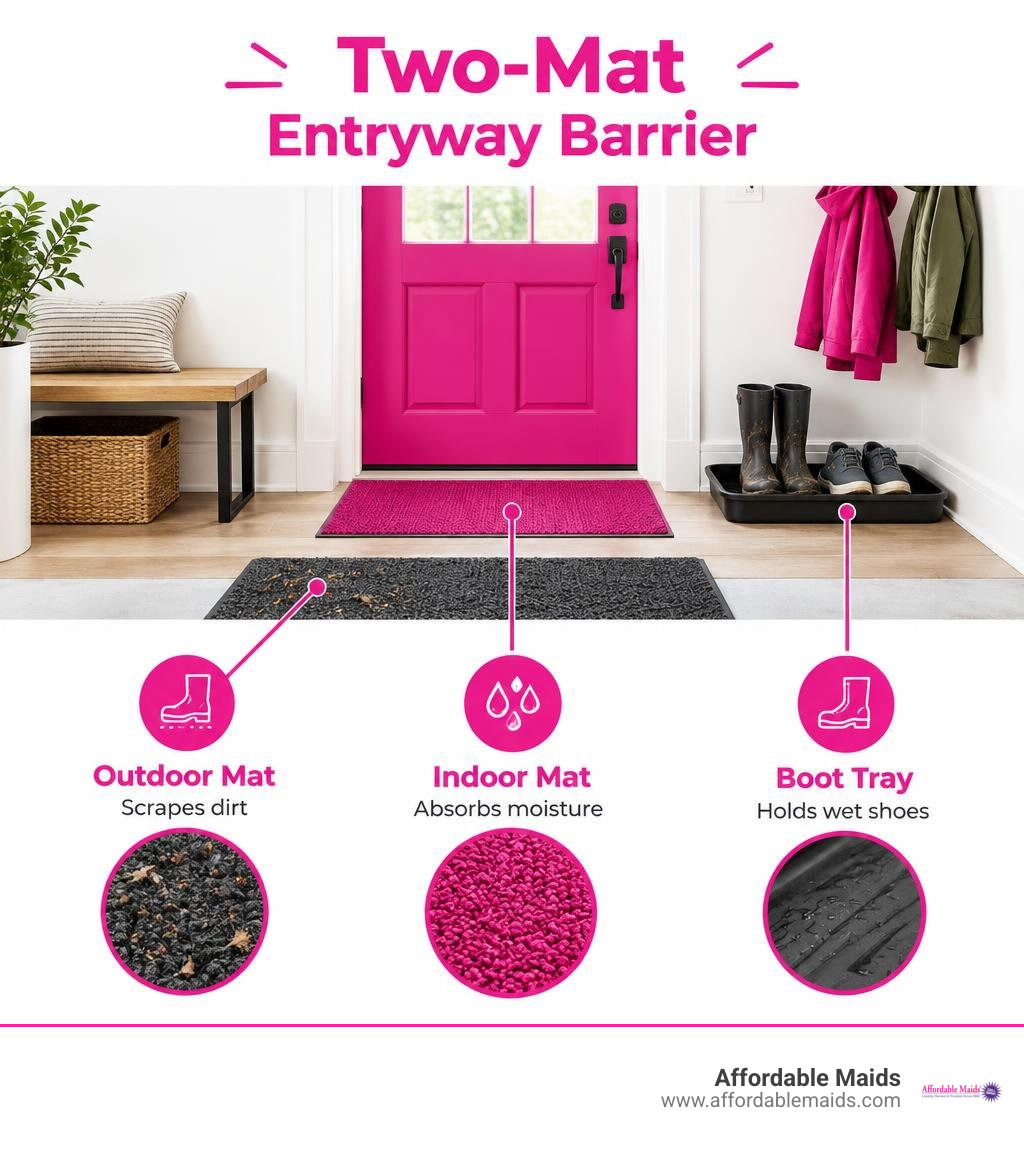
To keep an entryway clean, stop dirt at the door and give everyday gear a place to go. Put a scraping mat outside and an absorbent mat inside. Leave wet shoes on a boot tray, hang coats on hooks, and sweep up grit before it spreads. A quick evening reset keeps shoes, mail, and bags from piling up.
These small habits matter most in a busy entryway, where mud and moisture can reach the floor several times a day. I’m Lynn Reynolds, and I’ll show you how to turn them into a routine that’s easy to keep.
How to Keep Entryway Clean: Essential Daily and Weekly Routines
Outdoor shoes, coats, and bags carry in fine pollen, urban soot, and garden soil. When the threshold is neglected, those particles migrate into living rooms and bedrooms, grinding into floors along the way.
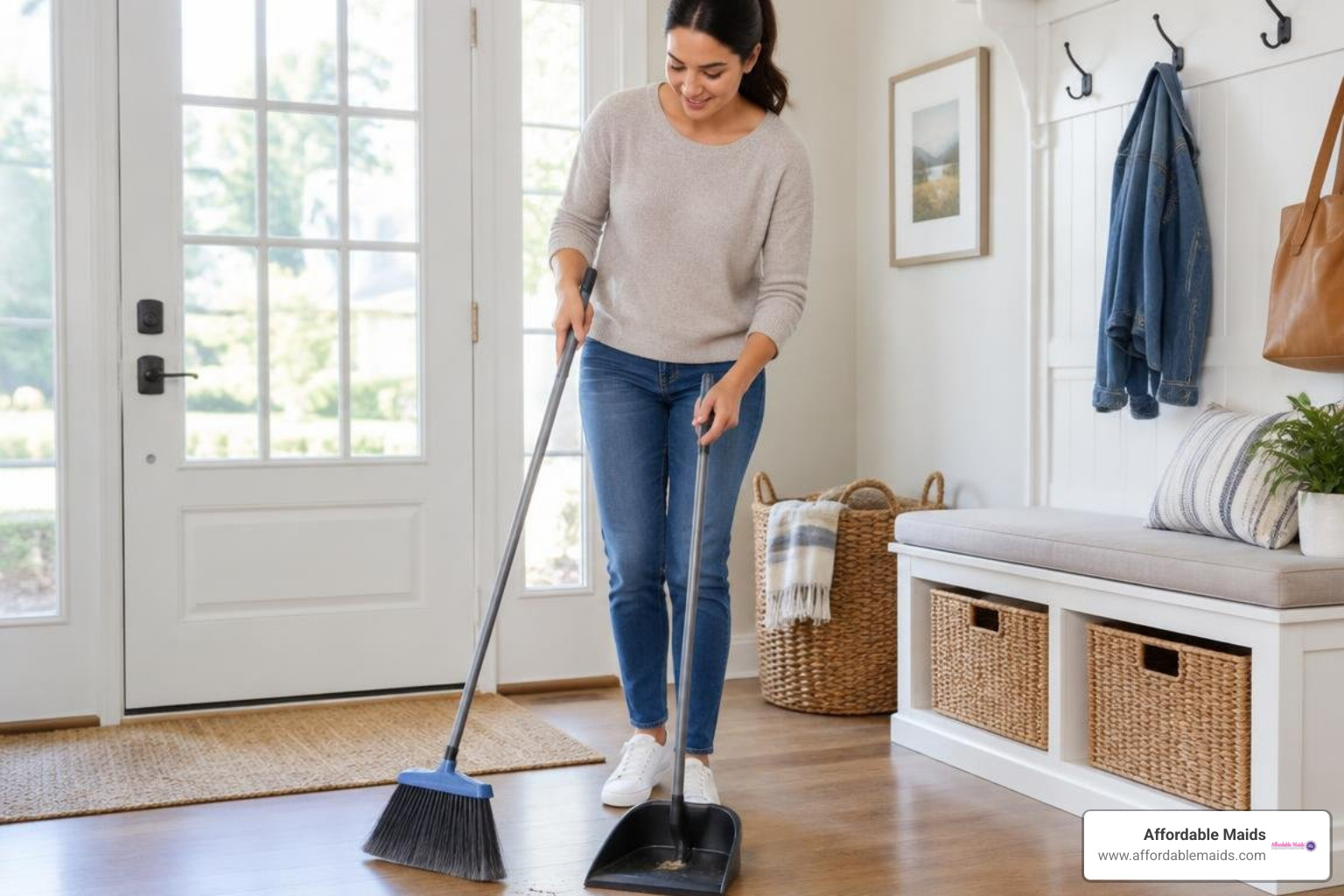
To maintain a consistently clean home, the goal is not to perform an exhausting scrub-down every single afternoon. Instead, we rely on low-friction micro-habits. Keeping a small, grab-and-go cleaning caddy tucked inside an entryway closet or behind a bench—stocked with a small handheld dustpan, a microfiber cloth, and a gentle floor spray—makes tackling accessible surface dirt almost effortless.
The 5-Minute Evening Reset
When everyone arrives home, clutter naturally gathers in the doorway. If left unchecked, items multiply overnight. A five-minute evening reset prevents the entryway from becoming a chaotic drop zone.
Here is how we organize our nightly sequence:
- Sort and Corral Shoes: Pick up loose footwear and move pairs onto the rack or into assigned shoe baskets.
- Realign Outerwear and Bags: Ensure backpacks, purses, and jackets are hanging securely on designated hooks rather than slumped on benches.
- Manage the Daily Paperwork: Sort incoming mail immediately over a small recycling bin so junk flyers never settle onto entryway tables.
- Quick Microfiber Floor Sweep: Take 60 seconds with a dry microfiber sweeper or cordless vacuum to gather loose outdoor grit before footsteps carry it deeper into the house.
Learning how to build a cleaning schedule you can stick to comes down to anchoring these tiny, manageable tasks to your existing evening routine, such as right after locking the front door for the night.
How to Keep Entryway Clean During Harsh Winter Weather
Winter brings a tough combination of slush, freezing moisture, mud, and abrasive road salts. If salt crystals are left to dry on indoor flooring, they leave cloudy, alkaline rings that can degrade floor finishes over time.

A few proactive habits make winter weather manageable:
- Install an Outdoor Boot Scraper: Place a stiff, cast-iron or heavy-rubber boot scraper just outside the door to shear away thick snow packs and caked mud before boots step across the threshold.
- Use River Stones in Boot Trays: Line heavy-duty rubber boot trays with a one-inch layer of smooth river stones. Melting slush drains below the rock level, allowing the bottoms of boots to dry in circulating air rather than sitting in stagnant, salty water.
- Address Salt Residue Promptly: Keep a spray bottle of diluted white vinegar (one part distilled white vinegar to four parts warm water) on hand. A light mist over tile or matting neutralizes alkaline salt crusts so you can wipe them away cleanly with a rag.
Taking time to manage outdoor slush and protect your entry surfaces prevents winter grime from spreading through the rest of your living areas.
Stopping Dirt and Moisture at the Front Door
The easiest way to clean entryway mess is to keep it from crossing the door sill in the first place. When you look for the root source of dust in your home, you quickly realize the front stoop is ground zero.
A clean exterior walkway reduces tracked debris by half. Give your outdoor porch, steps, and door threshold a brisk sweep once a week with a stiff-bristled broom to clear loose gravel, dried leaves, and soil before they get kicked toward the door.
Multi-Tier Mat System: Scrapers and Absorbent Runners
A single decorative welcome mat is rarely enough to protect high-traffic floors. A multi-tier mat defense captures different types of soil at sequential steps:
- Tier 1: The Exterior Scraper Mat: Position a rough, coarse mat outside (such as natural coconut coir or looped rubber). This acts as a brush against shoe treads to dislodge stuck grit and sand.
- Tier 2: The Interior Absorbent Mat: Place a dense, washable microfiber or water-dam mat immediately inside the door to soak up residual water, slush, and fine mud. Ensure it has a textured, non-staining rubber backing to prevent slipping.
- Tier 3: The Hallway Runner: If space allows, extend an indoor runner down the main path. This catches any leftover fine dust before feet step onto unprotected flooring.
Practicing simple habits for a dust-free, comfortable home includes shaking out these exterior mats weekly and running a vacuum over interior rugs regularly.
Establishing an Effective ‘No-Shoes’ Household Policy
Transitioning to a shoe-free home provides immediate indoor air and floor-care benefits. Shoes carry outdoor residues, road chemicals, and garden soils right into family spaces, and the area near the entryway often collects the most visible dust and grit.
To make a “no-shoes” rule stick without feeling awkward for guests, set up subtle visual cues:
- Provide Comfortable Seating: Place a sturdy wooden bench or compact ottoman near the doorway so removing footwear does not require balancing on one foot.
- Offer Guest Slippers or Grippy Socks: Place a clean, open woven basket filled with washable guest slippers or fresh nonslip socks near the entrance.
- Lead by Example: Keep your family’s indoor house shoes or hard-soled slippers arranged neatly right next to the door.
Establishing clear routines aligns with standard housekeeping practices for maintaining clean spaces, turning habits into automatic daily actions.
Protecting and Maintaining High-Traffic Entryway Flooring
Entryway flooring withstands serious friction, shifting weather, and heavy weight. Choosing the proper maintenance approach depends entirely on what is underfoot. The table below outlines basic care across common materials:
| Flooring Type | Moisture Resistance | Scratch / Wear Resistance | Recommended Cleaning Routine | Special Protection Tip |
|---|---|---|---|---|
| Porcelain Tile | Excellent | High | Sweep daily; damp mop with neutral pH tile cleaner weekly | Use non-acidic cleaners to prevent grout wear |
| Luxury Vinyl (LVP) | Excellent | High | Vacuum without beater bar; damp microfiber mop | Place felt pads under entryway benches and baskets |
| Laminate | Moderate to Low | Moderate | Dry dust mop; lightly mist with laminate-safe cleaner | Wipe standing puddles immediately to avoid seam swelling |
| Hardwood | Low | Moderate | Daily sweep; barely damp microfiber mop with wood cleaner | Never saturate with water; use breathable rug pads |
| Entryway Carpeting | Low | Low to Moderate | Vacuum 2–3 times weekly using high suction | Use heavy-duty walk-off mats over carpeted zones |
Seasonal shifts bring distinct challenges. Monitoring how summer foot traffic quietly changes your home helps adjust floor protection as bare feet, pool moisture, and yard sand take turns testing your entry floors.
Hard Surface Care: Tile, Luxury Vinyl, Laminate, and Hardwood
When cleaning hard surface floors in entryways, keep moisture controlled. Avoid soaking the floor with traditional string mops, which push dirty water into baseboards, grout lines, and plank seams.
Instead, use a flat microfiber mop lightly dampened with a floor-safe, neutral pH cleaner. For dried salt rings on tile or vinyl, a quick pass with a well-wrung cloth dipped in diluted vinegar dissolves mineral residue cleanly. While wiping along the floor edge, taking care of surrounding trim with simple baseboard cleaning methods keeps the perimeter looking sharp.
Protecting Carpets and Runners from Salt and Moisture
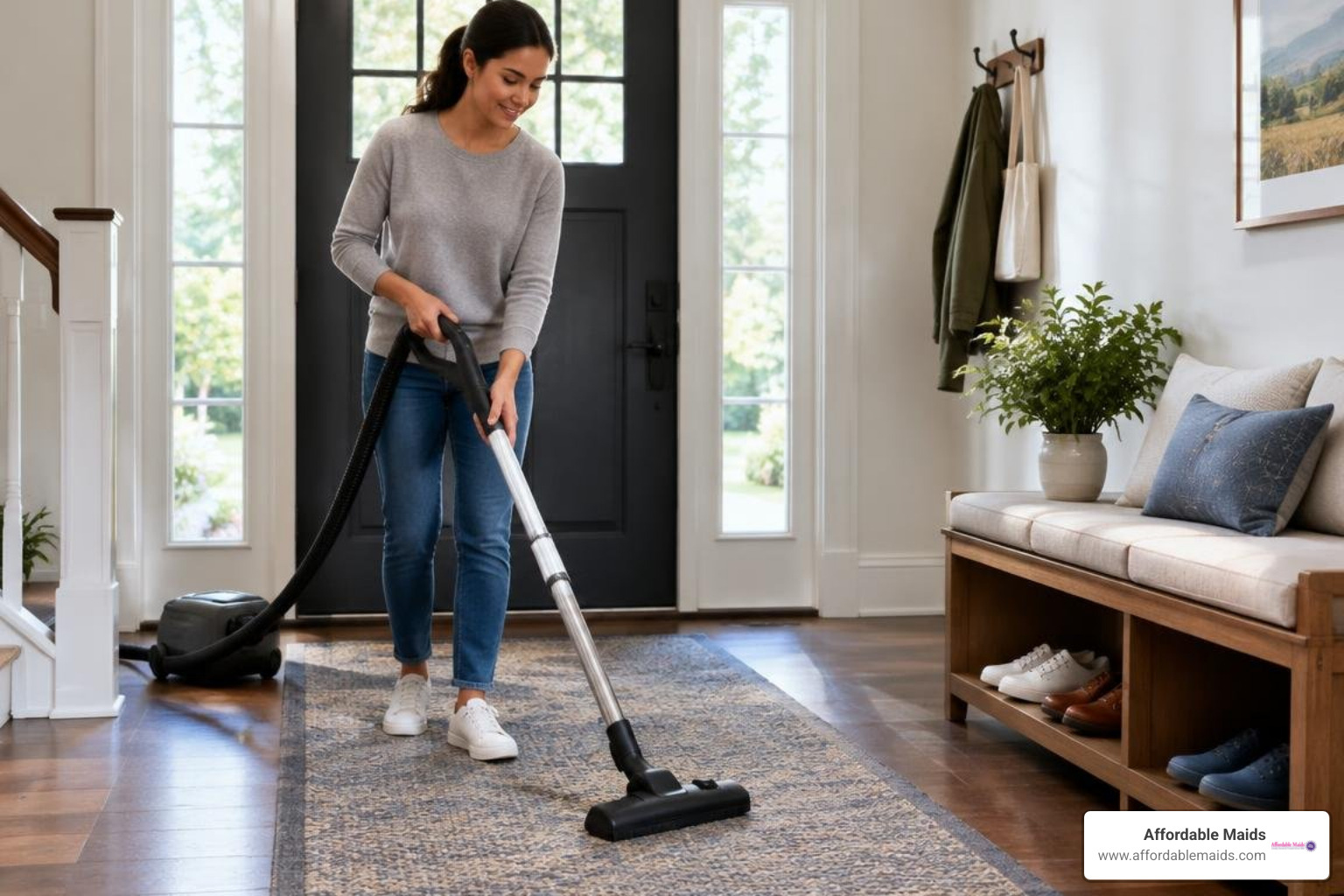
If your front door opens directly onto carpeting or you use runner rugs, dry soil acts like miniature sandpaper against carpet fibers. As foot traffic grinds dirt downward, the sharp edges of sand particles fray the yarn.
- Frequent Suction Vacuuming: Vacuum entry carpets and runners at least twice a week. Use slow, overlapping passes to pull deeply settled grit from the base of the pile.
- Blotting Wet Spills: If water or melting slush gets tracked onto carpet, press a dry microfiber towel firmly into the fiber to absorb the liquid. Avoid vigorous scrubbing, which distorts carpet pile and drives moisture deeper into the padding.
Functional Organization and Seasonal Gear Storage
A clean floor cannot compensate for cluttered surfaces. When mail, sports bags, dog leashes, and jackets cover every flat surface, daily maintenance grinds to a halt. If things have piled up, taking a moment to reset and declutter step by step can provide a clear plan for regaining control of your entryway.
Storage Solutions: How to Keep Entryway Clean and Clutter-Free
Creating practical drop zones gives every item an obvious home:
- Vertical Dual-Height Hooks: Install heavy-duty coat hooks at standard adult height, and place a second row of hooks roughly three feet off the ground for children’s gear or tote bags.
- Concealed Storage Benches: Use an entry bench with built-in lower shelves or flip-top storage to tuck away shoes and off-season accessories.
- Decorative Catchalls: Place a small ceramic bowl or tray on an entry console table to corral keys, loose change, and sunglasses so they do not scatter across tables.
- Dedicated Umbrella Stands: Keep a slim, weighted, waterproof umbrella stand right by the door to catch dripping rain gear before it touches wood floors.
- Seasonal Outerwear Rotation: Only keep current-season coats on entryway hooks. As seasons change, pack heavy winter parkas or summer beach totes into deeper closet storage to keep the daily entry airy.
Kid-Friendly Systems and Pet Paw Cleanup Stations
Keeping high-traffic spaces tidy is much easier when everyone in the household—including four-legged family members—has an easy system to follow.
- Individual Labeled Bins: Assign a personalized fabric or wire basket to each family member. Hats, gloves, sunscreen, and gym gear can be quickly dropped into individual bins without creating visual clutter.
- Dedicated Pet Paw Station: If you have dogs, keep an absorbent towel, pet-safe wipes, and a spray bottle of water directly inside the door. Wiping paws before your dog leaves the mat prevents muddy trails through the house. Reviewing pet-friendly cleaning tips helps streamline daily animal care.
- Wiping High-Touch Surfaces: Doorknobs, deadbolts, and light switches collect fingerprints and grime rapidly. Include these during your weekly routine by wiping high-touch areas with a lightly dampened microfiber cloth.
Frequently Asked Questions About Entryway Maintenance
What is the most durable flooring type for a high-traffic entryway?
Porcelain tile and luxury vinyl plank (LVP) are generally considered the most durable options for entryways. Porcelain tile offers superior resistance to water, mud, and heavy scratching, though it requires occasional grout maintenance. Luxury vinyl plank provides excellent water resistance, warmth underfoot, and slip resistance while standing up well to pet claws and grit.
How do you remove winter salt stains from entryway rugs and floors?
To remove white salt rings from water-safe floors and rugs, mix one part distilled white vinegar with four parts warm water in a spray bottle. Lightly mist the stained area to neutralize the alkaline salts, let it sit for two to three minutes, and blot the area dry with a clean microfiber cloth. Always test a small, inconspicuous corner first on delicate surfaces.
How often should entryway mats and shoe trays be cleaned?
Outdoor scraper mats should be shaken out or swept weekly. Indoor washable runners benefit from a thorough vacuuming twice a week and a cycle in the washing machine every few weeks depending on weather conditions. Rubber boot trays should be rinsed out with warm, soapy water every two to three weeks to remove collected soil and mineral buildup.
Conclusion
Keeping your home’s entryway clean and welcoming does not require endless scrubbing. By installing a solid two-mat defense, sticking to a five-minute evening reset, and giving shoes and seasonal gear dedicated storage, you can protect your interior floors from everyday mess.
When life gets busy and you would like a helping hand maintaining common areas throughout your home, consider scheduling trusted recurring maid services. Our experienced teams help keep your home clean and comfortable week after week.