
A Practical Field Guide to Housekeeping in Residential Homes
Housekeeping in Residential Homes: A Clear Starting Point
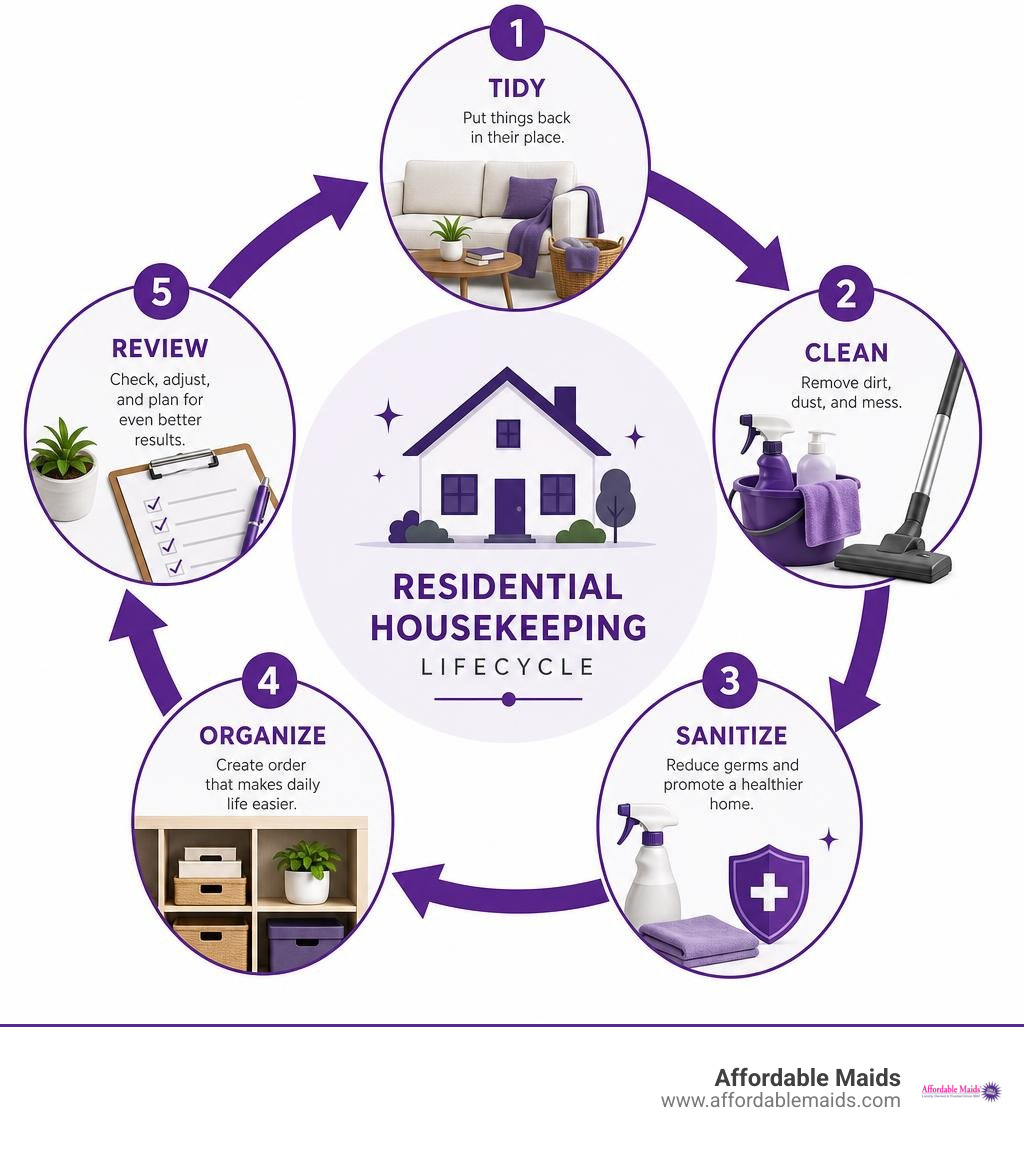
Housekeeping in residential homes is the ongoing work of keeping a home clean, sanitary, orderly, and ready for daily life. It can include dusting, vacuuming, mopping, bathroom and kitchen cleaning, dishes, laundry, bed making, trash removal, and tidying. The right task list depends on the household, the visit schedule, and whether you need routine upkeep or a deeper one-time clean.
For busy Pittsburgh-area households, the simplest approach is to:
- List the rooms and chores that need attention every visit.
- Separate routine tasks from occasional deep-cleaning work.
- Set clear priorities, supply preferences, access details, and safety boundaries before service begins.
Good housekeeping does more than make rooms look nice. Clear floors reduce trip hazards, regular cleaning helps control dust and germs, and organized spaces make hectic mornings easier. This guide explains what a residential housekeeper does, what is usually outside the role, how services differ, and how to set expectations that work for your home.
Understanding Housekeeper Roles vs. House Cleaners
When setting up household assistance, the terms housekeeper, maid, and house cleaner are frequently used interchangeably. However, their day-to-day operational scopes, visit cadences, and equipment expectations are quite distinct.
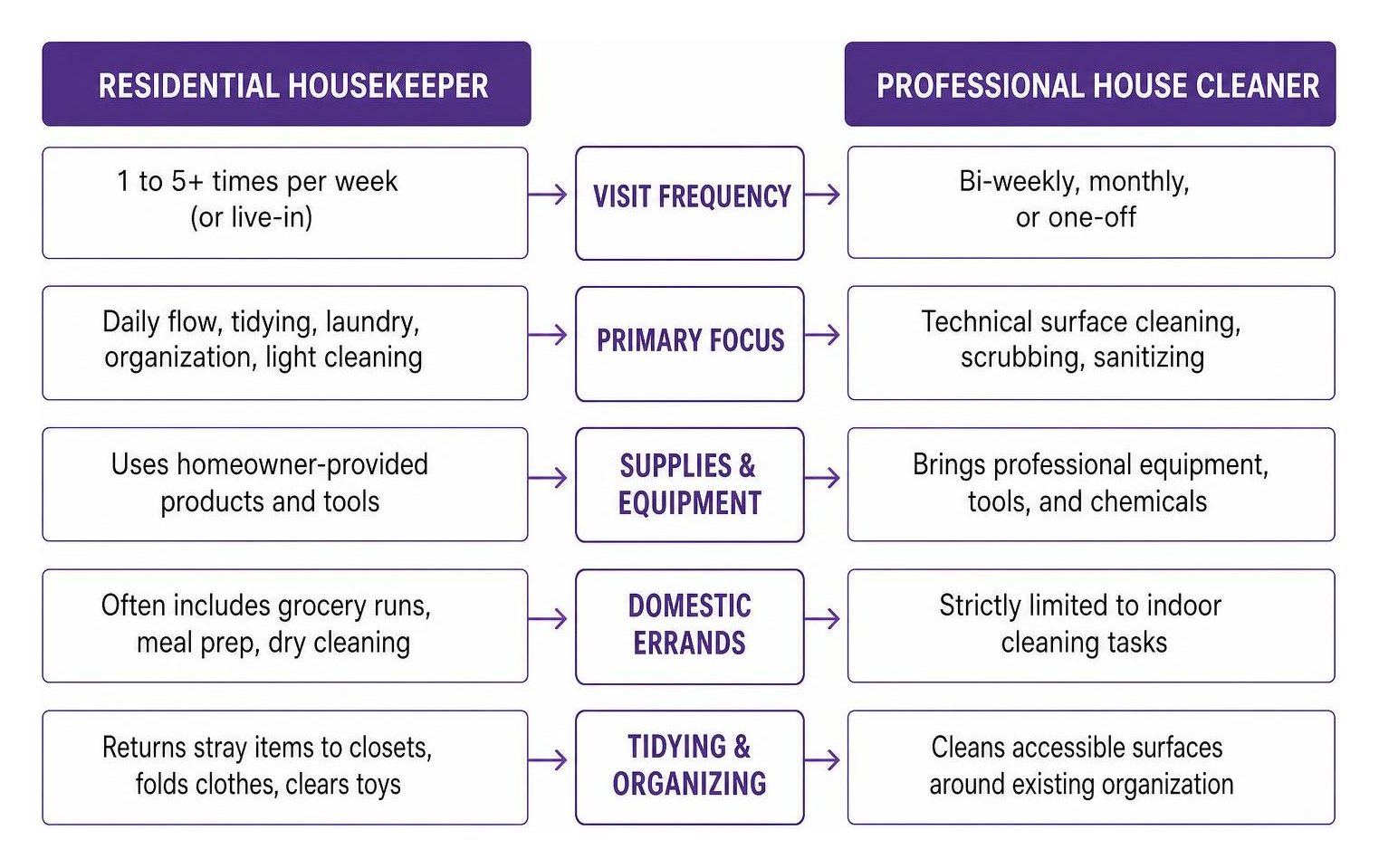
A traditional housekeeper acts as an ongoing household manager who maintains the daily rhythms of a living space. A house cleaner, by contrast, focuses strictly on the technical removal of surface dirt, grime, and buildup across scheduled visits. Understanding this distinction prevents mismatched expectations and ensures you hire the exact domestic support your family needs.
| Service Element | Residential Housekeeper | Professional House Cleaner |
|---|---|---|
| Typical Visit Frequency | 1 to 5+ times per week (or live-in) | Bi-weekly, monthly, or one-off |
| Primary Focus | Daily flow, tidying, laundry, organization, light cleaning | Technical surface cleaning, scrubbing, sanitizing |
| Supplies & Equipment | Uses homeowner-provided products and tools | Brings professional equipment, tools, and chemicals |
| Domestic Errands | Often includes grocery runs, meal prep, dry cleaning | Strictly limited to indoor cleaning tasks |
| Tidying & Organizing | Returns stray items to closets, folds clothes, clears toys | Cleans accessible surfaces around existing organization |
Housekeeper vs. House Cleaner Scope
A residential housekeeper handles continuous maintenance tasks. Because they visit multiple times a week (or reside on the property), they learn the unique organizational systems of your family. Their duties often span tidying up clutter, loading and unloading the dishwasher, running cycles of personal laundry, ironing garments, rotating bed linens, and monitoring the inventory of cleaning supplies and household consumables.
House cleaners, on the other hand, enter a home to execute intensive cleaning tasks across a set block of time. They wipe down baseboards, disinfect bathroom tile and grout, scrub soap scum from glass shower doors, and polish surfaces to a shine. That is why busy homeowners choose recurring house cleaning—it provides a dependable, periodic baseline of deep sanitation without requiring full-time domestic management.
Light Housekeeping: Private Residences vs. Assisted Living Facilities
The definition of “light housekeeping” shifts dramatically when transitioning from private homes to residential care and assisted living environments.
In private domestic staffing, light housekeeping generally covers routine daily chores: dusting surfaces, sweeping kitchen floors, wiping counters after meals, making beds, and folding laundry.
In assisted living and senior care facilities, however, housekeeping is frequently divided between certified caregiving staff and dedicated Environmental Services (EVS) teams:
- In-Home Caregivers and CNAs: Certified Nursing Assistants and home health aides focus strictly on activities of daily living (ADLs) and personal care for the individual. For an aide, light housekeeping is strictly defined as tasks directly tied to the client’s immediate comfort and safety—such as washing the senior’s breakfast plate, changing their bed linens, or clearing their immediate pathway. Asking an aide to scrub bathrooms or clean the entire family’s floors can lead to caregiver burnout, boundary violations, and high turnover.
- Facility Environmental Services (EVS): Institutional housekeepers in assisted living communities must adhere to strict regulatory guidelines, such as CMS (Centers for Medicare & Medicaid Services) hygiene benchmarks. Standard facility light housekeeping packages often involve a quick 15-to-20-minute daily or weekly room visit. The staff member vacuums high-traffic carpet, empties trash cans, wipes down the bathroom vanity, sanitizes the toilet, and replenishes paper products. Heavier tasks, such as deep carpet extraction or full wall scrubbing, are classified as specialized maintenance tiers or reserved for terminal cleanings between resident transitions.
Scope and Standards of Housekeeping in Residential Homes
Maintaining modern residential living spaces requires structure. Without a clear framework, routine tasks fall through the cracks, leading to cluttered rooms and accumulated dust.
Core Duties of Daily Housekeeping in Residential Homes
A well-structured housekeeping workflow targets high-traffic hubs first, moving methodically from top to bottom and dry tasks to wet tasks:
- Surface Care and Dusting: Systematically removing dust, pet dander, and cobwebs from ceiling fans, light fixtures, shelving, and furniture surfaces using microfiber tools.
- Floor Maintenance: Thoroughly sweeping, vacuuming, and damp-mopping hard floors and rugs, paying special attention to corners, under furniture edges, and entryway transition strips.
- Kitchen Hygiene: Washing dishes, wiping down countertop appliances, polishing sink fixtures, sanitizing prep surfaces, and cleaning stovetops.
- Bathroom Sanitation: Scrubbing and disinfecting sinks, faucets, toilets, and shower surrounds while wiping mirrors clear of water spots.
- High-Touch Point Disinfection: Focus on cleaning high-touch areas like doorknobs, cabinet pulls, handrails, appliance handles, and light switches to stop the spread of household pathogens.
- Linen and Wardrobe Management: Stripping and remaking beds, sorting laundry loads by fabric care requirements, folding garments, and returning clothes to designated closet spaces.
- Waste Management: Emptying household waste receptacles, wiping bins, replacing liners, and sorting recyclables.
Excluded Tasks and Physical Safety Boundaries
To ensure safe, sustainable service, professional housekeepers and cleaning teams establish firm operational boundaries. Standard residential housekeeping generally excludes:
- Heavy Lifting: Moving furniture, appliances, or storage boxes weighing more than 35 pounds, which presents serious risks of musculoskeletal injury.
- High-Elevation Work: Cleaning exterior windows or wiping high architectural ledges that require climbing tall ladders. Standard residential work is limited to a two-step stool.
- Biohazard and Hazardous Materials: Handling human waste, bodily fluids, animal feces, pest infestations, mold remediation, or harsh industrial chemicals.
- Dedicated Childcare and Eldercare: Acting as an unsupervised nanny or medical caregiver. While a housekeeper may tidy a nursery or prepare a snack, domestic cleaning and active child supervision require completely separate focus.
- Outdoor Groundskeeping: Mowing lawns, clearing gutters, pressure-washing driveways, or removing yard debris.
Enhancing Home Safety and Hazard Prevention
Housekeeping is not merely an aesthetic luxury; it is a vital home safety protocol. Systematic housekeeping prevents common domestic hazards:
- Fall and Slip Mitigation: Cluttered hallways, stray toys, loose electrical cords, and slick floor spills are leading causes of household trips and falls. Consistent tidying and prompt floor drying keep pathways secure.
- Indoor Air Quality Improvement: Regular HEPA-filtered vacuuming and damp-microfiber dusting trap airborne particulate matter, dust mites, pollen, and pet dander, offering significant relief for household members with allergies or asthma.
- Pest Deterrence: Immediate meal cleanup, daily dishwashing, wiping down crumb-filled pantries, and prompt garbage disposal remove the food and moisture sources that attract rodents and insects.
- Fire Safety: Clearing dust buildup from baseboard heaters, keeping dryer lint traps clean, and ensuring unblocked exit pathways throughout the home significantly lower fire hazards.
Establishing these routines helps maintain a consistently clean home that is inherently healthier and safer for children, seniors, and pets alike.
Specialized Residential Cleaning and Maintenance Services
While recurring housekeeping keeps the home functional day to day, homes periodically require specialized deep-cleaning and transitional services.
Deep Cleaning and Seasonal Refresh Protocols
Over months of daily living, grease, soap scum, and fine dust accumulate in areas that routine surface wipes do not reach. Dedicated deep cleaning services tackle these neglected zones:
- Appliance Interiors: Degreasing baked-on splatters inside ovens, removing shelves to sanitize refrigerator interiors, and cleaning dishwasher filter traps.
- Architectural Detailing: Hand-washing baseboards, door frames, window sills, wainscoting, and crown moldings.
- Tile and Grout Restoration: Agitating and extracting embedded grime from bathroom tile grout lines and kitchen backsplashes.
- Cabinet Rejuvenation: Wiping down exterior cabinet faces and sanitizing the interior of pantry shelves.
Many homeowners schedule a comprehensive deep clean twice a year—often during spring and autumn—to reset the home before returning to their regular maintenance schedule.
Move-In, Move-Out, and Post-Construction Turnovers
Transitional cleanings require specialized approaches because they deal with either entirely empty spaces or heavy industrial dust:
- Move-In and Move-Out Turnovers: Designed to prepare a home for new occupants or fulfill rental lease requirements to secure a security deposit. Because furniture is removed, cleaners can detail every baseboard corner, sanitize the inside of all empty drawers and wardrobes, clean interior closet tracks, and ensure the property is move-in ready.
- Post-Construction Cleaning: Renovations leave behind airborne drywall dust, silicone residue, paint overspray, and sawdust. This fine dust settles inside ductwork, on top of light fixtures, and within cabinet hinges. Post-construction cleaning requires multi-stage HEPA filtration vacuuming, specialized dust-trapping cloths, and repeated wet-wiping passes to make the living space safe and livable.
Homeowners and property managers rely on comprehensive cleaning checklists to verify that no fixtures or hidden corners are overlooked during these intensive turnovers.
Hiring, Budgeting, and Managing Domestic Support
Bringing housekeeping support into your home requires transparent budgeting, thorough vetting, and clear operational expectations.

Housekeeping Rates and Regional Cost Drivers
Housekeeping costs vary based on geographic location, service model, home size, and the worker’s experience level:
- Metropolitan Cost Variations (U.S.): Housekeeper asking rates across major U.S. markets reflect local cost-of-living differences. For instance, rates typically range from $19.52 to $19.71 per hour in cities like San Antonio, Texas, up to $26.78 per hour in metropolitan areas like Seattle, Washington. Other mid-to-large markets—including Chicago ($22.12/hr), Denver ($22.41/hr), and Los Angeles ($25.04/hr)—sit comfortably in between.
- Senior Living Facility Wages: Institutional housekeepers working in assisted living or skilled nursing communities average between $16.50 and $17.25 per hour for structured environmental services.
- International Live-In Staffing: In international luxury markets, compensation structures shift to monthly salaries with room and board. For example, international live-in staffing standards for private villas in Dubai range from AED 5,000 to AED 8,000 per month (roughly $1,360 to $2,180 USD), often encompassing 6-day work weeks, wardrobe care, light meal prep, and property management.
Key factors that influence quotes for residential homes include overall square footage, the number of bedrooms and bathrooms, the presence of indoor pets, and whether you require laundry or dishwashing alongside surface cleaning.
Hiring and Managing Housekeeping in Residential Homes
When hiring domestic assistance, homeowners generally choose between hiring an independent direct-hire housekeeper or partnering with an established, professional cleaning service. Each approach involves distinct responsibilities:
- Direct-Hire Housekeepers (Employment Responsibilities): If you hire an individual housekeeper directly, you become a household employer under federal and state tax laws. You are responsible for verifying work authorization, withholding household payroll taxes (FICA/unemployment), tracking hours, and securing proper liability coverage. You must also supply all cleaning chemicals, vacuums, and equipment.
- Professional Residential Cleaning Companies: Working with a fully licensed, bonded, and insured cleaning company eliminates household employer liability. The company manages employee taxes, background screening, workers’ compensation insurance, professional training, and equipment.
Regardless of which path you choose, following the best way to find a trustworthy cleaning service involves checking references, verifying insurance, establishing written task lists, and holding short monthly check-ins to keep expectations aligned.
Social Evolution and Historical Context of Domestic Labor
Housekeeping has evolved from an unwritten historical obligation into a recognized domestic management profession and a cornerstone of the modern service economy.
Gender Division and Modern Domestic Dynamics
For generations, household labor was largely invisible and distributed strictly along traditional gender lines. While domestic dynamics have diversified, time-use studies reveal ongoing divisions in unpaid domestic work:
- Data from the U.S. Bureau of Labor Statistics (BLS) American Time Use Survey indicates that on any given day, approximately 70 percent of women engage in food preparation or cleanup, compared with 43 percent of men.
- Similarly, approximately 50 percent of women carry out daily interior housekeeping chores (such as cleaning and laundry), compared to just 20 percent of men.
In dual-income households, balancing high-demand professional careers with domestic chores often leads to what sociologists term the “second shift.” Outsourcing residential cleaning to professional services has become an effective strategy for modern families to reclaim personal time, reduce household friction, and maintain a balanced lifestyle.
Decluttering Philosophies and Long-Term Household Care
Modern housekeeping increasingly emphasizes proactive clutter reduction as an essential first step before any cleaning takes place. Clearing surfaces not only reduces tripping hazards but also gives cleaning tools direct access to dust and grime.
A prominent framework in long-term home organization is the Swedish practice of döstädning (death cleaning). This philosophy encourages homeowners to systematically organize, downsize, and declutter their personal belongings throughout their later adult years. By intentionally editing household goods, eliminating duplicates, and cataloging family heirlooms, individuals maintain an easily manageable living space and prevent surviving relatives from being overwhelmed by unorganized estates.
Frequently Asked Questions About Residential Housekeeping
What is the difference between standard cleaning and light housekeeping?
Standard cleaning focuses primarily on surface sanitization—thoroughly vacuuming and mopping floors, scrubbing bathroom fixtures, cleaning stovetops, and wiping countertops.
Light housekeeping encompasses broader daily domestic tidying, such as loading dishes, folding laundry, making beds, organizing cluttered countertops, and taking out the trash.
What should never be expected from a residential housekeeper?
A residential housekeeper should never be asked to perform tasks that pose personal safety hazards or require specialized certifications. This includes:
- Lifting furniture or heavy items over 35 pounds
- Working on tall exterior ladders or washing second-story exterior windows
- Cleaning up human biohazards, bodily fluids, or animal waste
- Administering medications or acting as an unsupervised caregiver for children or vulnerable adults
- Performing complex plumbing, electrical, or structural home repairs
How often should a private home schedule professional housekeeping?
The optimal frequency depends on household size, daily schedules, and lifestyle:
- Weekly Service: Ideal for large families, active households with shedding pets, or busy professionals who want to eliminate weekend chores entirely.
- Bi-Weekly (Every Two Weeks): The most popular cadence for average households, providing a regular baseline of deep sanitation and floor care while remaining cost-effective.
- Monthly Service: Best suited for low-traffic homes or single individuals who handle daily tidying and light surface maintenance themselves but need help with heavier scrubbing.
Conclusion
A well-maintained home serves as an emotional sanctuary—a clean, comfortable retreat from the demands of daily life. Whether you need daily assistance with laundry and dishes or recurring professional visits to sanitize your kitchen and bathrooms, establishing clear expectations and structured routines ensures your living space remains healthy and organized.
At Affordable Maids, we bring over 32 years of trusted cleaning experience to homes across the greater Pittsburgh region. As Pittsburgh’s #1 trusted cleaning firm with 8 local offices, more than 279,000 completed cleans, and over 400 five-star reviews, our bonded and insured teams provide recurring maid services, one-time deep cleanings, and move-in/move-out handovers backed by our 100% satisfaction guarantee.
Discover the time-saving benefits of professional residential cleaning service Pittsburgh PA and let our professional team restore comfort, clarity, and shine to your home today.