
How to Build a Cleaning Schedule You Can Stick To
Quick Answer
To build cleaning schedules & routines you can stick to, start with a simple frequency hierarchy: daily resets for dishes and counters, weekly room care for bathrooms and floors, monthly detail work for trim and vents, and seasonal resets for bigger projects. Then use time-boxing and task batching: set a 15- to 30-minute timer for one category of work, clean similar surfaces in one sweep, and stop when the block is done. This gives every chore a place on the calendar without turning housekeeping into an all-day project.
Core Frameworks for Cleaning Schedules & Routines
The average American spends roughly 3 to 4 hours every week cleaning, adding up to nearly 200 hours each year. Despite all that effort, many people still feel trapped in a cycle of endless chores. That frustration usually stems from an unstructured approach. When we clean reactively, we jump between tasks, exhaust our energy, and leave half the house untouched.
Building an effective housekeeping rhythm requires shifting from marathon sessions to task batching and time-boxing. Time-boxing means setting a dedicated 15- to 30-minute block for a single project and stopping when the timer rings. Task batching groups similar actions together, such as dusting every room in one sweep rather than pulling out the duster multiple times throughout the week.
Structuring tasks by frequency keeps surface grime from turning into stubborn buildup. A standard frequency hierarchy includes:
- Daily resets: High-touch wipe-downs, dish management, and surface tidying.
- Weekly room care: Thorough vacuuming, mopping, bathroom cleaning, and linen changes.
- Monthly detail work: Baseboard dusting, vent wiping, and appliance exterior detailing.
- Seasonal resets: Interior window washing, deep pantry purges, and mattress rotation.
Following scientific guidelines on high-traffic cleaning ensures high-contact spots receive regular attention without wasting effort on low-traffic zones.
The Clean Mama System and Zone-Based Cleaning
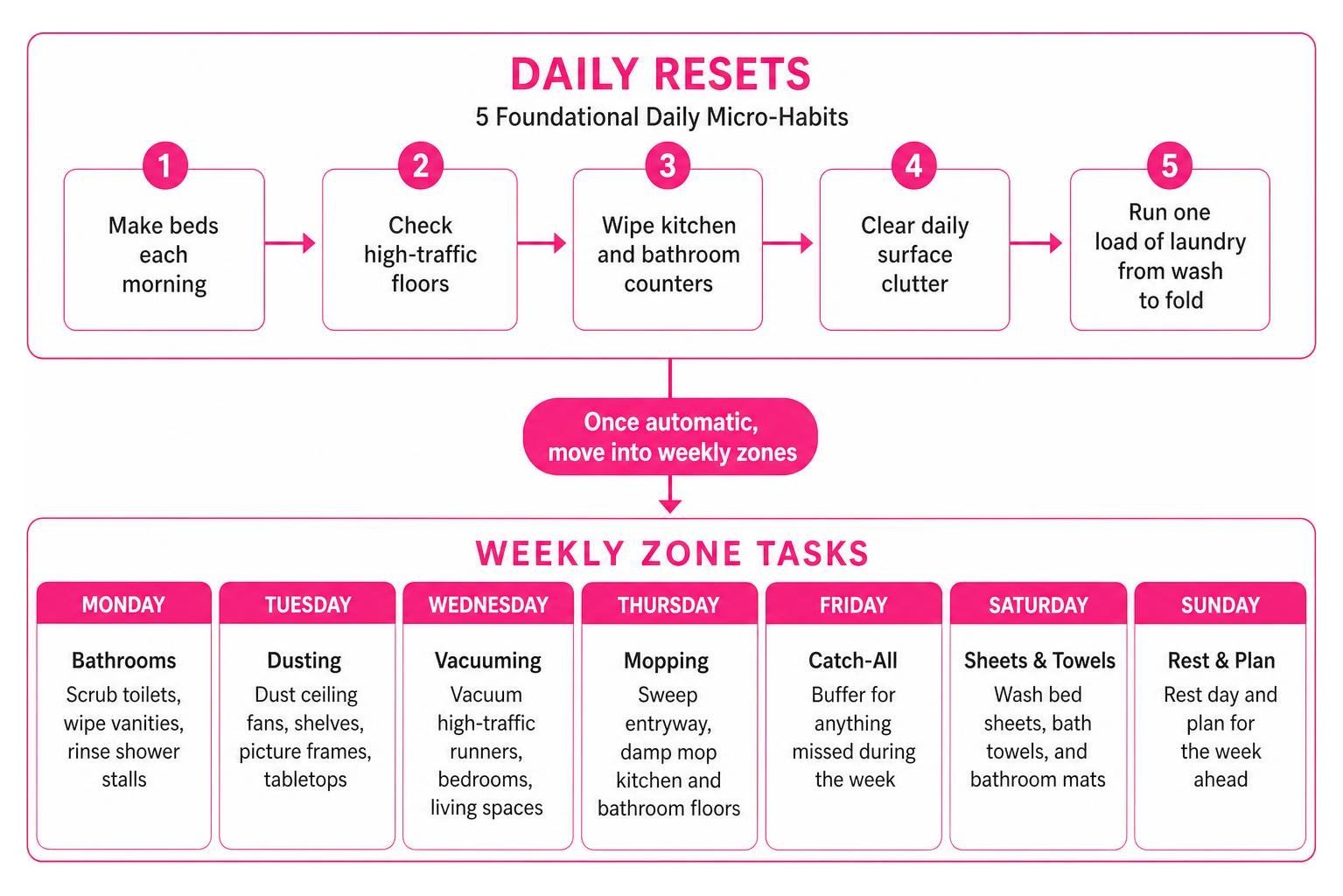
One widely adopted framework is the Clean Mama method, popularized by cleaning expert Becky Rapinchuk. This system relies on five foundational daily micro-habits:
- Making beds each morning.
- Checking high-traffic floors.
- Wiping kitchen and bathroom counters.
- Clearing daily surface clutter.
- Running one complete load of laundry from wash to fold.
Once these five daily habits feel automatic, the system layers in dedicated weekly tasks. Rather than cleaning the entire house at once, you tackle a specific category each day. A typical weekday sequence assigns bathrooms on Monday, dusting on Tuesday, vacuuming on Wednesday, mopping on Thursday, and a catch-all day on Friday.
Friday acts as a buffer for anything missed during the week, while Saturday focuses on sheets and towels. Sunday remains a dedicated rest and planning day, setting up the week ahead without domestic guilt.
Daily and Weekly Cleaning Schedules & Routines for Busy Households
For busy households, separating daily maintenance from weekly deep tasks keeps clutter from turning into chaos.
| Frequency | Target Area | Key Focus Tasks | Estimated Time |
|---|---|---|---|
| Daily Morning | Bedrooms & Kitchen | Make beds, empty dishwasher, wipe breakfast counters | 5-10 mins |
| Daily Evening | Kitchen & Living Areas | Wash dinner dishes, clear counters, 5-minute tidy | 10-15 mins |
| Weekly (Mon) | Bathrooms | Scrub toilets, wipe vanities, rinse shower stalls | 20-30 mins |
| Weekly (Tue) | High Surfaces | Dust ceiling fans, shelves, picture frames, tabletops | 15-20 mins |
| Weekly (Wed) | Carpet & Rugs | Vacuum high-traffic runners, bedrooms, living spaces | 20-25 mins |
| Weekly (Thu) | Hard Surface Floors | Sweep entryway, damp mop kitchen and bathroom floors | 20-25 mins |
| Weekly (Sat) | Bedding & Linens | Wash bed sheets, bath towels, and bathroom mats | Passive wash cycles |
Pairing this cadence with a weekly guide to maintaining a clean home ensures consistent upkeep without losing entire Saturdays to housekeeping.
Monthly, Rotating, and Seasonal Deep Resets
Beyond weekly chores, every home gathers slow, hidden buildup that needs periodic attention. Instead of letting these chores accumulate until spring, weave them into rotating task lists.
Using structured cleaning checklists helps track these periodic chores systematically:
- Monthly rotating chores: Dusting baseboards, wiping interior door frames, vacuuming furniture crevices, washing HVAC return grilles, and running cleaning cycles through the dishwasher and washing machine.
- Quarterly resets: Washing mattress protectors, vacuuming under heavy furniture, wiping down kitchen cabinet exteriors, and cleaning light fixtures.
- Seasonal deep cleans: Polishing windows, wiping patio furniture, swapping seasonal clothing, and deep organizing utility closets.
Downloadable cleaning checklists can make delegating and tracking monthly items straightforward.
Designing a Flexible Cleaning System for Real Life

A rigid schedule often collapses the moment an unexpected work project, sick child, or exhausting week arrives. Sustainable cleaning routines need built-in flexibility. Rather than abandoning your routine when life gets hectic, shift to a two-tier system: a Full Routine for standard weeks and a Minimum Baseline Routine for high-stress periods.
Your minimum baseline routine covers only what keeps the home sanitary and functional:
- Washing dishes so the sink stays clear.
- Taking out full trash cans to avoid odors.
- Keeping kitchen counters wiped down.
- Keeping main walkways free of tripping hazards.
When low-energy days hit, complete only the baseline and let the rest wait for your scheduled catch-up day.
Customizing Cleaning Schedules & Routines for Diverse Lifestyles
Different homes have distinct demands, schedules, and energy levels. Customizing your approach ensures your housekeeping fits your daily life:
- Shift Workers and Irregular Hours: Avoid tying tasks to calendar days. Instead, use numbered task blocks (Block 1: Bathrooms, Block 2: Floors). Complete one block whenever you have an open 30-minute window, regardless of whether it is a Tuesday morning or a Sunday night.
- Families with Young Children: Focus on “clean-as-you-go” micro-habits. Gamify chores by setting a five-minute timer for a “toy dash” before dinner. Basic housekeeping rules can help teach kids shared responsibility without turning tidying into a battle.
- Limited Mobility or Chronic Fatigue: Break rooms into smaller physical zones. Clean the bathroom sink and counter on Monday, then sit to scrub the toilet on Wednesday. Use lightweight cordless vacuums and long-handled extendable scrubbers to minimize bending and reaching.
- Small Apartments vs. Large Homes: In smaller footprints, combine zones (such as living and dining areas) into one 15-minute sweep. For larger homes, focus on one isolated zone per day to avoid walking back and forth with supplies.
Time-Budgeting and Task Prioritization with the 80/20 Rule
The Pareto Principle applies directly to home maintenance: 80% of the dirt in a home comes from 20% of the spaces. The kitchen, primary bathrooms, and entryway gather the vast majority of dust, grime, and grease, while guest bedrooms and formal dining areas stay relatively tidy.
Prioritize your cleaning time where it makes the biggest visual and sanitary difference:
- Clean the kitchen counters, sink, and stovetop daily.
- Focus daily sweeping on the kitchen and entryway.
- Keep bathroom faucets and toilets fresh with quick midweek wipe-downs.
By regularly cleaning high-touch areas like doorknobs, light switches, cabinet pulls, and appliance handles, you preserve household hygiene in just a few minutes a day.
Overcoming Common Scheduling Mistakes and Burnout
The most common housekeeping mistake is saving every chore for the weekend. Cleaning marathons lead to resentment, physical exhaustion, and burnout. Another common trap is perfectionism—believing that if you do not have time to scrub the entire shower, you should not wipe the counter.
If you miss a scheduled task, use the Skip-Ahead Method. Do not try to double up your workload tomorrow to compensate for yesterday. Simply let the missed task go until its next scheduled rotation, or address it during your weekly catch-up block. Treating each day as a clean slate helps you maintain a consistently clean home without guilt.
Essential Housekeeping Tools and Maintenance Strategies

Having the right tools ready to go makes starting any cleaning task much easier. Wandering from room to room looking for a stray bottle of spray wastes time and drains motivation.
Professional cleaners rely on workflow efficiency rules:
- Top-to-Bottom: Always dust ceiling fans, high shelves, and countertops before vacuuming or mopping floors so falling debris gets swept up last.
- Left-to-Right: Work around a room in a circle so you never wonder what surface you cleaned last.
- Dry-to-Wet: Complete all dry dusting and sweeping before introducing liquid sprays or mops to avoid smearing dust into mud.
Using high-grade microfiber cloths instead of paper towels or cotton rags can reduce the volume of cleaning chemicals needed by up to 90%, lifting fine particles with water or mild solutions alone.
Streamlining Supplies with Portable Cleaning Caddies
Keep your supplies organized in a lightweight, mobile caddy that travels easily between rooms. An effective, multi-room kit includes:
- Color-Coded Microfiber Towels: Blue for glass and mirrors, yellow for dusting surfaces, and red or green for bathroom fixtures to prevent cross-contamination.
- Multi-Surface Cleaner: A gentle, pH-neutral spray for everyday wipe-downs.
- Glass & Mirror Cleaner: For streak-free bathroom fixtures and entryway mirrors.
- Non-Abrasive Scrub Brush & Detail Brush: Ideal for grout lines, sink seams, and drain rims.
- HEPA-Filtration Vacuum: Traps fine dust mites, pet dander, and allergens rather than blowing them back into the air.
- Flat Microfiber Mop: Uses washable pads for quick floor care without the hassle of heavy mop buckets.
Maintenance Cleaning vs. Deep Cleaning
Understanding the difference between routine maintenance and deep cleaning prevents unrealistic expectations during standard upkeep:
- Maintenance Cleaning: Focuses on daily and weekly surface management. It removes fresh soil, wipes down food contact zones, clears floors, and keeps plumbing fixtures fresh.
- Deep Cleaning: Targets accumulated soil, limescale, stubborn soap scum, and hidden areas. It includes wiping down baseboards, door frames, window sills, and exterior cabinetry.
Understanding the practical differences between deep cleaning and standard cleaning helps homeowners plan their calendar effectively. While standard maintenance keeps a house livable, seasonal deep cleaning addresses neglected details.
When scheduling deep cleans, keep scope limits in mind. Standard deep cleaning covers exterior surfaces, architectural trim, and fixtures. Projects like cleaning the interior of refrigerators and ovens are typically reserved as optional add-on services, while interior drawers, pantries, and closet shelving are organized separately.
Involving Family and Managing Catch-Up Days
A clean home should not fall on the shoulders of one person. Involving every household member builds healthy habits and lightens the daily load:
- Visual Chore Boards: Post a simple daily and weekly chart in a shared space like the mudroom or refrigerator.
- Age-Appropriate Delegation: Toddlers can put toys in bins; older children can empty small wastebaskets, fold towels, and dust low furniture; teens can vacuum, wipe down bathrooms, and manage their own bedding.
- The 10-Minute Family Reset: Put on upbeat music after dinner and have everyone tidy their own belongings for ten minutes.
Pairing family participation with a dedicated Friday Catch-All block ensures that when Saturday morning arrives, the entire household can enjoy their weekend together.
Frequently Asked Questions About Home Cleaning Routines
How do I handle weeks when I fall behind on cleaning?
Give yourself a grace period and switch directly to your minimum baseline plan. Focus only on washing dishes, emptying trash, and clearing kitchen counters. Do not attempt to complete five days of missed chores in a single evening. Use your upcoming Friday catch-all block or simply let uncompleted tasks wait until their next scheduled rotation.
What is the difference between maintenance cleaning and deep cleaning?
Maintenance cleaning is ongoing, short-interval work—wiping counters, sweeping floors, and scrubbing toilets—designed to keep daily dirt under control. Deep cleaning tackles heavy, built-up grime, such as descaling shower walls, detailing baseboards, dusting light fixtures, and scrubbing exterior appliance surfaces.
How often should major kitchen and bathroom appliances be cleaned?
Microwave interiors and stovetops should be wiped weekly or immediately after spills. Refrigerator door seals, dishwasher filters, and washing machine drum cycles should be maintained monthly. Refrigerator condenser coils, range hoods, and deep oven detailing should be handled on a quarterly or seasonal schedule to keep appliances running efficiently.
A Simple Way to Keep Up with Your Home
Building a sustainable cleaning schedule is about protecting your time and energy, not creating rigid rules. By combining daily micro-habits with focused weekly room care and seasonal resets, you can maintain a comfortable, orderly home without spending your weekends cleaning.
When busy seasons make it hard to keep up with your housekeeping, professional support can help bridge the gap. Affordable Maids has delivered reliable residential maid services across the greater Pittsburgh area for more than 32 years. With over 279,000 cleans completed, 400+ five-star reviews, eight local offices, and a 100% satisfaction guarantee, our bonded and insured team provides dependable recurring support tailored to your lifestyle.
Recurring maid services can support your home’s routine with scheduled visits when everyday upkeep becomes difficult.
Internal Linking Recommendations for Site Editors
To build internal link equity, consider adding links pointing to this article from the following existing guides:
- Source:
/weekly-guide-to-maintain-clean-home/— Anchor Context: “…building balanced cleaning schedules & routines for your family…” - Source:
/simple-habits-dust-free-comfortable-home/— Anchor Context: “…incorporate into your ongoing home cleaning routine…” - Source:
/a-practical-field-guide-to-housekeeping-in-residential-homes/— Anchor Context: “…how to organize your daily and weekly cleaning schedules…”