
3 Quick and Easy Ways to Create a Daily Weekly Monthly Cleaning Checklist
3 Simple Frameworks to Build Your Daily Weekly Monthly Cleaning Checklist
To build an effective daily weekly monthly cleaning checklist, organize tasks by cadence: assign 10- to 15-minute daily micro-tasks (bed-making, dishwashing, wiping counters) for baseline order, 30- to 60-minute weekly routines (vacuuming, mopping, bathroom scrubbing) for hygiene and dust control, and periodic monthly maintenance (baseboards, appliance interiors, vents) for long-term upkeep. Structuring your schedule this way eliminates chore overwhelm and decision fatigue. Without a clear system, much of the 3 to 4 hours the average American spends cleaning each week is lost shifting clutter from one room to another.
By grouping tasks by cadence, room, or impact, you turn unpredictable chores into predictable habits. Here are three straightforward methods to design your cleaning routine.
Method 1: The Cadence Framework for a Daily Weekly Monthly Cleaning Checklist
The cadence framework splits chores strictly by how fast grime accumulates. Instead of tackling entire rooms at once, you assign specific task frequencies across the calendar.
- Daily Micro-Tasks (10–15 Minutes): Focus on immediate functional resets. A morning bed-making session, wiping the kitchen counter after breakfast, and an evening 10-minute clutter sweep keep common spaces usable.
- Weekly Block Routines (30–60 Minutes): Dedicate specific days to single chore categories. For example, make Monday bathroom day, Tuesday dusting, Wednesday vacuuming, Thursday floor washing, and Friday a flexible catch-all day.
- Monthly Maintenance: Slot larger, recurring upkeep items into designated weekends or spread them across a rotating monthly focus.
This structure allows you to maintain a consistently clean home without sacrificing entire weekends to scrub baseboards. As outlined in the classic Martha Stewart home cleaning schedule, separating quick daily touch-ups from periodic maintenance preserves both your surfaces and your free time.
Method 2: The Room-by-Room Zone Rotation
If jumping between different task types across the entire house feels disjointed, the zone rotation method organizes your efforts geographically. You divide your home into distinct zones and rotate through them over the course of the month.
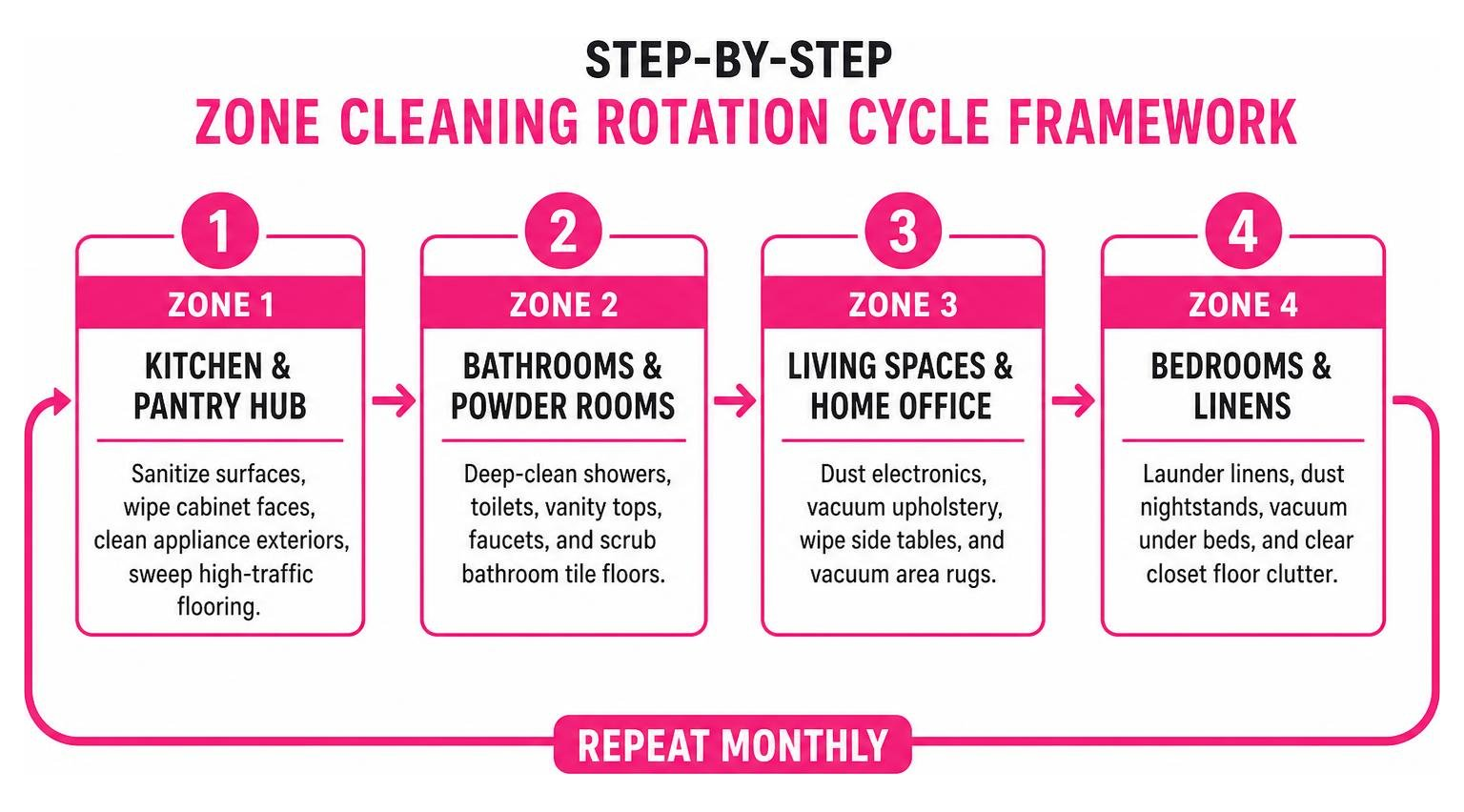
- Zone 1: The Kitchen & Pantry Hub: Focus on cleaning exterior surfaces, wiping cabinet faces, cleaning small appliance exteriors, and sweeping high-traffic flooring.
- Zone 2: Bathrooms & Powder Rooms: Deep-clean shower walls, toilets, vanity tops, faucets, and scrub bathroom tile floors.
- Zone 3: Living Spaces & Home Office: Dust electronics, vacuum upholstery beneath cushions, wipe side tables, and vacuum area rugs.
- Zone 4: Bedrooms & Linens: Launder sheets and duvet covers, dust nightstands, vacuum under bed frames, and clear closet floor clutter.
Following a structured weekly cleaning guide ensures that no single room gets neglected long enough to require an emergency overhaul.
Method 3: The 80/20 High-Impact Habit Loop
The Pareto principle states that roughly 80% of outcomes result from 20% of causes. In home maintenance, 80% of visible household dirt and grime originates from roughly 20% of your activities—primarily concentrated in the kitchen and bathrooms.
Instead of spreading your energy evenly across every square foot, prioritize high-touch, high-traffic zones:
- High-Touch Points: Door handles, light switches, cabinet pulls, and appliance handles.
- Friction Hotspots: The kitchen sink basin, the strip of floor in front of the stove, and bathroom vanity mirrors.
- Habit Stacking: Attach a quick chore to an existing habit. Wipe the bathroom faucet while brushing your teeth, or unload the dishwasher while your morning coffee brews.
Establishing these fundamental patterns reinforces the basic housekeeping rules that keep a living environment functional with minimal daily resistance.
Core Tasks by Cadence: Daily, Weekly, and Monthly Breakdown
To eliminate guesswork, here is an exact task breakdown tailored to keep your living space orderly throughout the year.
Daily Upkeep and 10-Minute Resets
Daily tasks are designed to preserve baseline order. They should take no more than 15 minutes in total:
- Make beds upon waking to create an immediate visual win.
- Wash dishes or load and run the dishwasher after meals; wipe the kitchen sink basin.
- Wipe down kitchen countertops, dining tables, and prep areas.
- Sweep high-traffic kitchen and entryway floors to remove loose crumbs and dirt.
- Sort incoming mail and clear entryway drop-zone clutter.
- Empty full kitchen trash and compost bins.
Weekly Deep-Cleaning Tasks and Floor Care
Weekly chores address hygiene, allergen management, and surface buildup across the home:

- Bathrooms: Scrub toilets inside and out, wash sinks and countertops, wipe mirrors, and clean bathtub and shower surrounds.
- Dusting: Dust flat surfaces, shelves, electronics, picture frames, and ceiling fan blades from top to bottom.
- Linens: Strip and wash bed sheets, pillowcases, and bath towels.
- Floors: Thoroughly vacuum carpets, area rugs, and upholstered furniture; mop hard surface floors using a damp microfiber system.
- Kitchen Detail: Clean the microwave interior, wipe large appliance exteriors, and thoroughly scrub the kitchen sink.
Understanding the difference between routine maintenance and comprehensive refreshes—such as evaluating standard vs deep cleaning—helps you identify when basic weekly chores need an occasional deeper boost.
Monthly Maintenance and Appliance Refresh
Monthly tasks address neglected corners and critical appliance upkeep to prevent long-term wear:
- Wipe down baseboards, door moldings, and switch plates in high-traffic hallways.
- Scrub tile grout lines in showers and entryways to lift embedded dirt.
- Clean inside the microwave and wipe down refrigerator interior shelving and crisper bins.
- Dust air supply vents, return grilles, and vacuum behind easy-to-move furniture.
- Inspect HVAC filters (replace every 30–90 days depending on pets and occupancy).
- Clean out the clothes dryer lint trap housing and check exterior vent exhausts.
Essential Tools and Strategy for Checklist Success
Having the right equipment prevents wasted motion. Switching from conventional cotton rags to high-density microfiber cloths can reduce the need for harsh cleaning chemicals by up to 90%, lifting dust and grease with plain water or mild cleaners.
- HEPA Filtration Vacuum: Essential for capturing fine pet dander and dust rather than recirculating it into your indoor air.
- Structured Cleaning Caddy: Keep all-purpose spray, glass cleaner, microfiber towels, a scrub brush, and gloves in a portable caddy to carry from room to room.
- Color-Coded Cloths: Use blue for glass, yellow for dusting, and red for bathrooms to prevent cross-contamination.
Safety Note: Never mix household cleaners. Combining bleach with ammonia, vinegar, or acidic solutions creates toxic chloramine or chlorine gas.
Customizing Your Daily Weekly Monthly Cleaning Checklist for Busy Schedules
No single schedule fits every lifestyle. Adapt your framework to match your physical capacity and daily routine:
- Shift Workers & Irregular Schedules: Skip rigid Monday-through-Friday setups. Group your weekly tasks into two 45-minute cleaning blocks on your scheduled off-days, maintaining only essential 5-minute daily resets during work shifts.
- Paced Cleaning for Limited Mobility: Avoid standing for long sessions. Break tasks into 10-minute seated or low-strain intervals, utilize extension poles for high and low dusting, and tackle one single room across multiple days.
- Family & Roommate Delegation: Turn household upkeep into a collaborative effort. Assign tasks by age or preference using a shared board, rotating responsibilities monthly to avoid chore fatigue. For practical schedule templates, explore resources like the GeneChecklist home cleaning schedule to kickstart your household system.
Printable vs Digital Checklist Tracking
| Feature / Format | Printable Paper Checklist | Whiteboard Chore Grid | Digital Cleaning App |
|---|---|---|---|
| Best For | Tactile satisfaction & fridge display | Family & roommate visibility | Automated recurring reminders |
| Setup Effort | Low (instant print & clip) | Medium (draw grid & update weekly) | Medium (initial task customization) |
| Accountability | Visual physical check-boxes | Centralized public tracking | Push notifications & streak tracking |
| Customization | Editable templates / handwritten notes | Fast dry-erase task adjustments | Highly flexible cadence adjustments |
Frequently Asked Questions About Cleaning Schedules
How much time should I spend cleaning each day?
For most homes, 15 to 20 minutes of daily maintenance is plenty. Spend 5 minutes in the morning making beds and wiping bathroom counters, and 10 to 15 minutes in the evening loading the dishwasher, wiping kitchen counters, and clearing high-traffic clutter. Weekly tasks can then be handled in 30- to 45-minute focused blocks.
What is the 80/20 rule for household cleaning?
The 80/20 rule applies the Pareto principle to home maintenance: 80% of household grime comes from 20% of your spaces—primarily kitchen prep surfaces, sinks, and bathroom fixtures. By keeping those high-impact areas clean daily, your entire home will appear clean and remain functional with minimal effort.
How do I get my family or roommates to follow the checklist?
Post your checklist in a shared space like the kitchen refrigerator or family message board. Assign clear, unambiguous tasks (such as “empty dishwasher” or “wipe bathroom vanity”) rather than broad instructions like “clean the kitchen.” Rotate weekly assignments fairly and celebrate completed routines together.
Spend Less Time Cleaning and More Time Living
Creating a structured routine brings order to your living space, but busy schedules, family obligations, and work demands can make staying consistent difficult. If you find yourself falling behind on deep scrubbing, dusting, or floor care, professional support can restore balance to your home.
Affordable Maids has provided dependable residential cleaning for over 32 years across the greater Pittsburgh region, including communities like Wexford, Cranberry, Monroeville, Bethel Park, and Sewickley. Backed by over 279,000 completed cleanings, more than 400 five-star reviews, and a 100% satisfaction guarantee, our team provides reliable support tailored to your schedule.
Learn how our flexible recurring maid services can handle the heavy lifting of weekly and bi-weekly maintenance so you can enjoy a fresh, welcoming home without sacrificing your valuable free time.