
How to Clean Around Pet Bowls the Right Way
The Best Way to Clean Around Pet Bowls
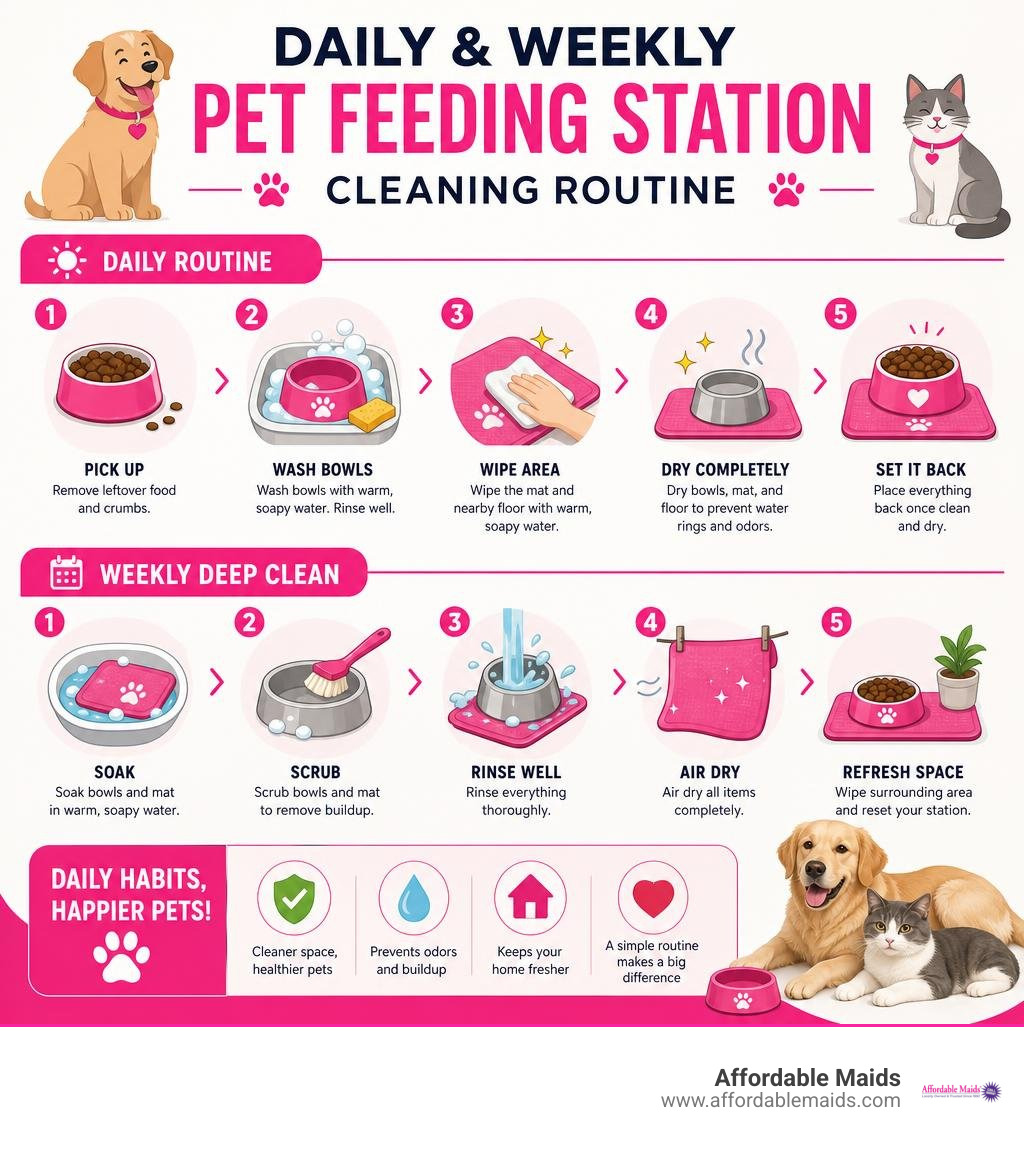
The best way to clean around pet bowls is to pick up dry food, wash the bowls, wipe the mat and nearby floor with warm, soapy water, and dry everything before putting it back. Do this after meals when possible, especially with wet or raw food. A quick daily reset stops crumbs, water rings, odors, and slimy buildup from settling into the floor, mat, or baseboards.
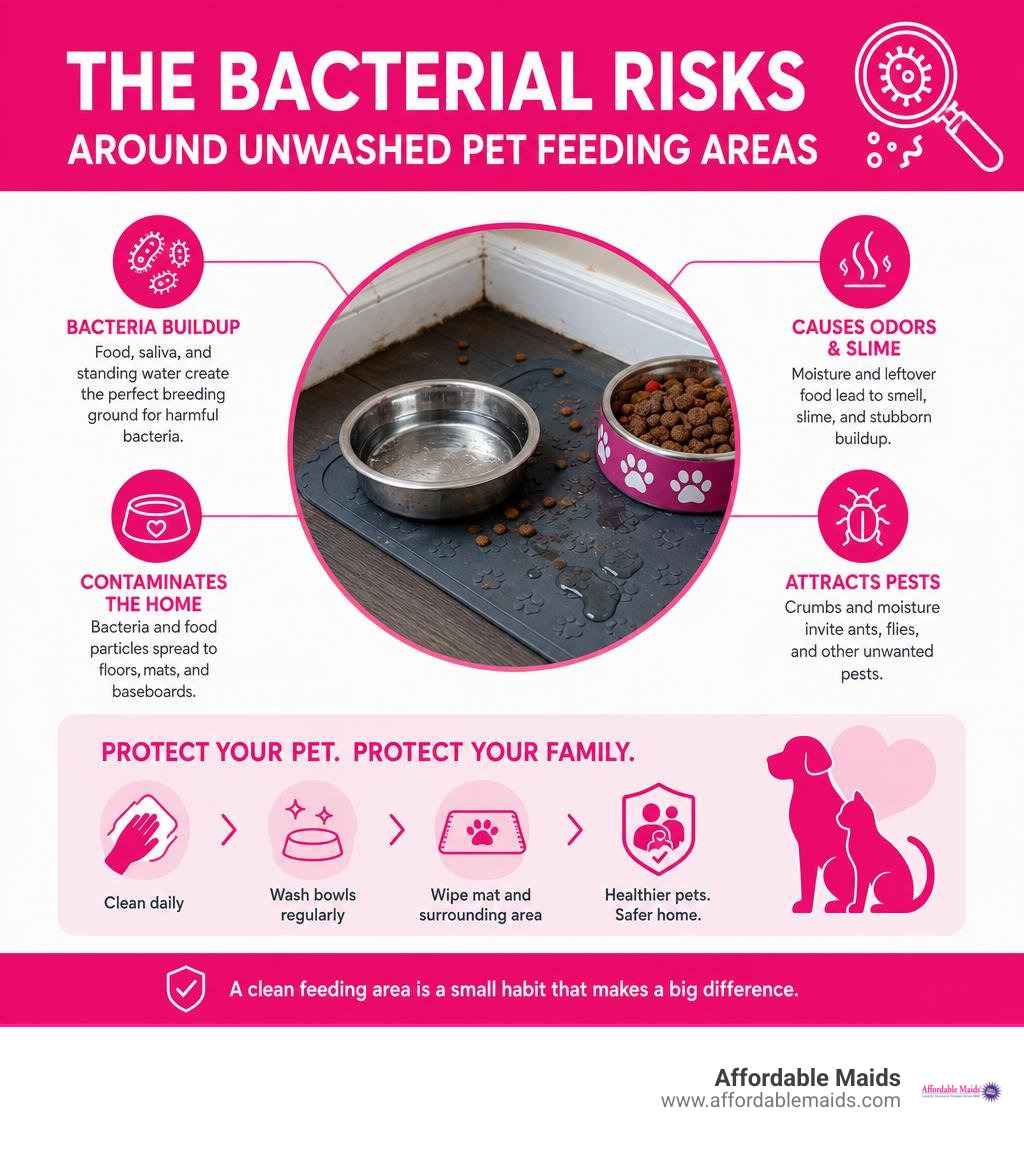
Pet bowls can collect bacteria from food, saliva, and standing water. The National Sanitation Foundation has ranked pet bowls among the germiest household items, so the small space around them deserves the same attention as any food-prep area.
For busy homes, keep the routine simple: use a dedicated cloth or brush for pet items, choose washable stainless steel bowls and a waterproof mat, and do a more thorough clean each week. Follow the practical steps below to maintain a clean, hygienic feeding zone.
Why Pet Feeding Stations Need Regular Cleaning
It is easy to overlook the feeding corner when running through household chores. However, research conducted by the National Sanitation Foundation (NSF) revealed that pet food dishes consistently rank as one of the top five dirtiest items in typical households, placing right behind kitchen sponges and kitchen sinks.
Every time our pets eat or take a drink, they transfer saliva, oral bacteria, and food particles into the bowl and across the surrounding floor. Over time, these residues create a breeding ground for microorganisms like Salmonella, E. coli, and Listeria. According to veterinary bowl hygiene research, unwashed bowls and messy feeding stations encourage the formation of biofilm—a slimy matrix of bacteria that adheres firmly to surfaces.
Beyond microscopic bacteria, stray kibble dust, moist food splatter, and water puddles attract unwanted household pests, including ants, flies, and beetles. Routine sanitation also protects human family members from zoonotic cross-contamination, particularly young children or immunocompromised individuals who might touch the floor near pet dishes. Incorporating basic pet-friendly cleaning tips ensures our pets enjoy fresh meals while keeping the entire living environment hygienic and fresh.
The Best Way to Clean Around Pet Bowls Daily
Establishing a daily cleaning rhythm takes only two to three minutes, but it prevents sticky residue and mineral scale from bonding to your flooring. The feeding zone functions like a miniature kitchen workstation, which means it requires attention after regular meal times.
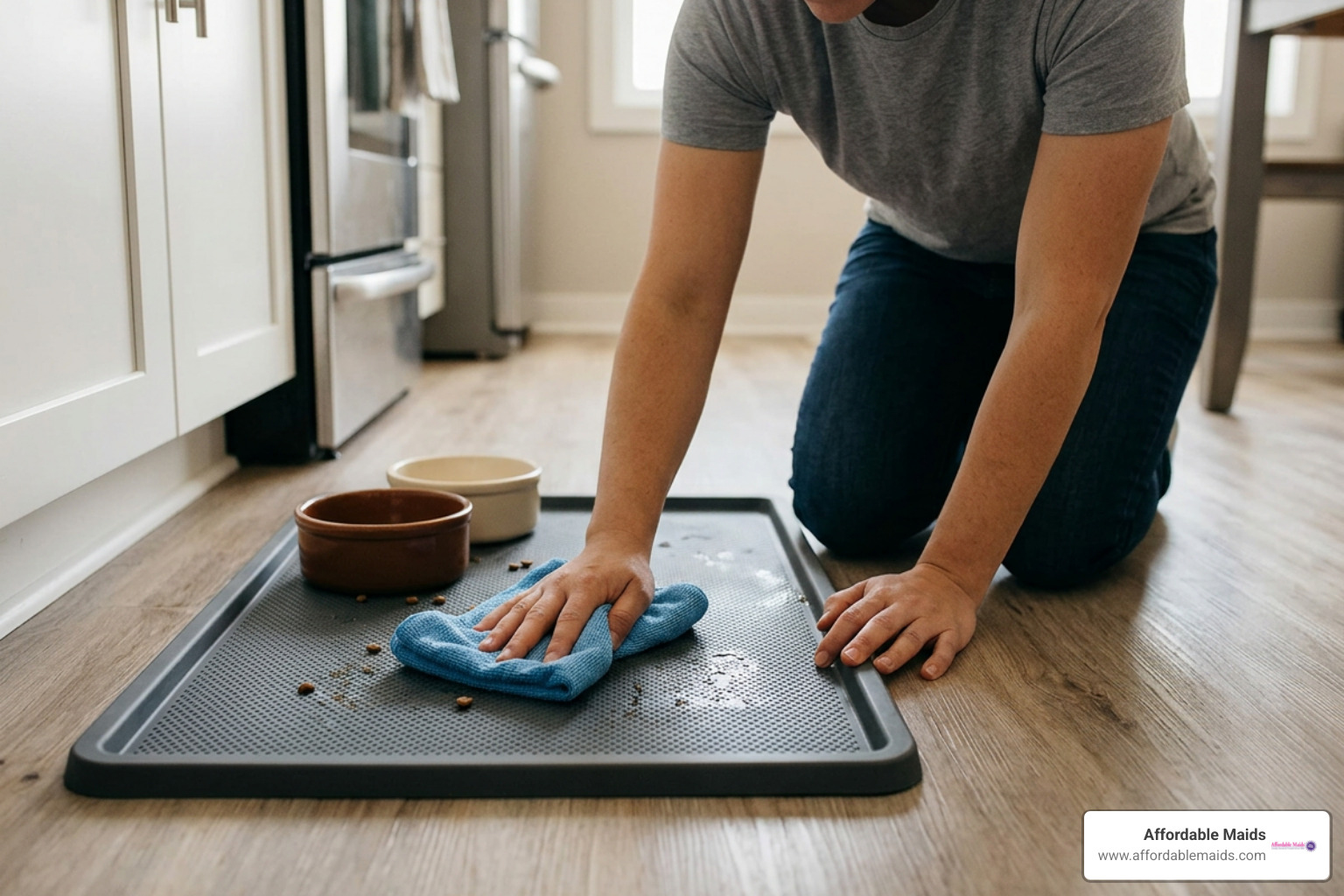
Focusing on the splash zone around your pet’s dishes is just as important as cleaning high-touch areas throughout the rest of the house. Water splashed from enthusiastic drinking can seep under placemats, trapping moisture against hardwood or tile grout and creating unpleasant odors.
Step-by-Step: The Best Way to Clean Around Pet Bowls and Mats
Following a structured cleaning sequence ensures you capture loose debris before introducing moisture:

- Clear the Station: Pick up food and water dishes and move them to the sink.
- Collect Dry Debris: Sweep or vacuum loose kibble crumbs and hair from the mat and surrounding floor. Wiping a wet cloth over dry kibble dust creates a paste that smears across surfaces, so always remove dry particles first.
- Wash with Mild Soap: Dip a dedicated microfiber cloth into warm, soapy water (using a mild, unscented dish soap) and wipe down the top and bottom of the feeding mat.
- Clean the Floor Area: Wipe the flooring underneath and around the mat, extending a few inches past the splash zone.
- Dry Completely: Use a dry towel or allow the area to air-dry fully before laying the mat and bowls back down. Trapping moisture under rubber or silicone mats can discolor flooring over time.
Handling Stubborn Biofilm, Water Rings, and Dried Food
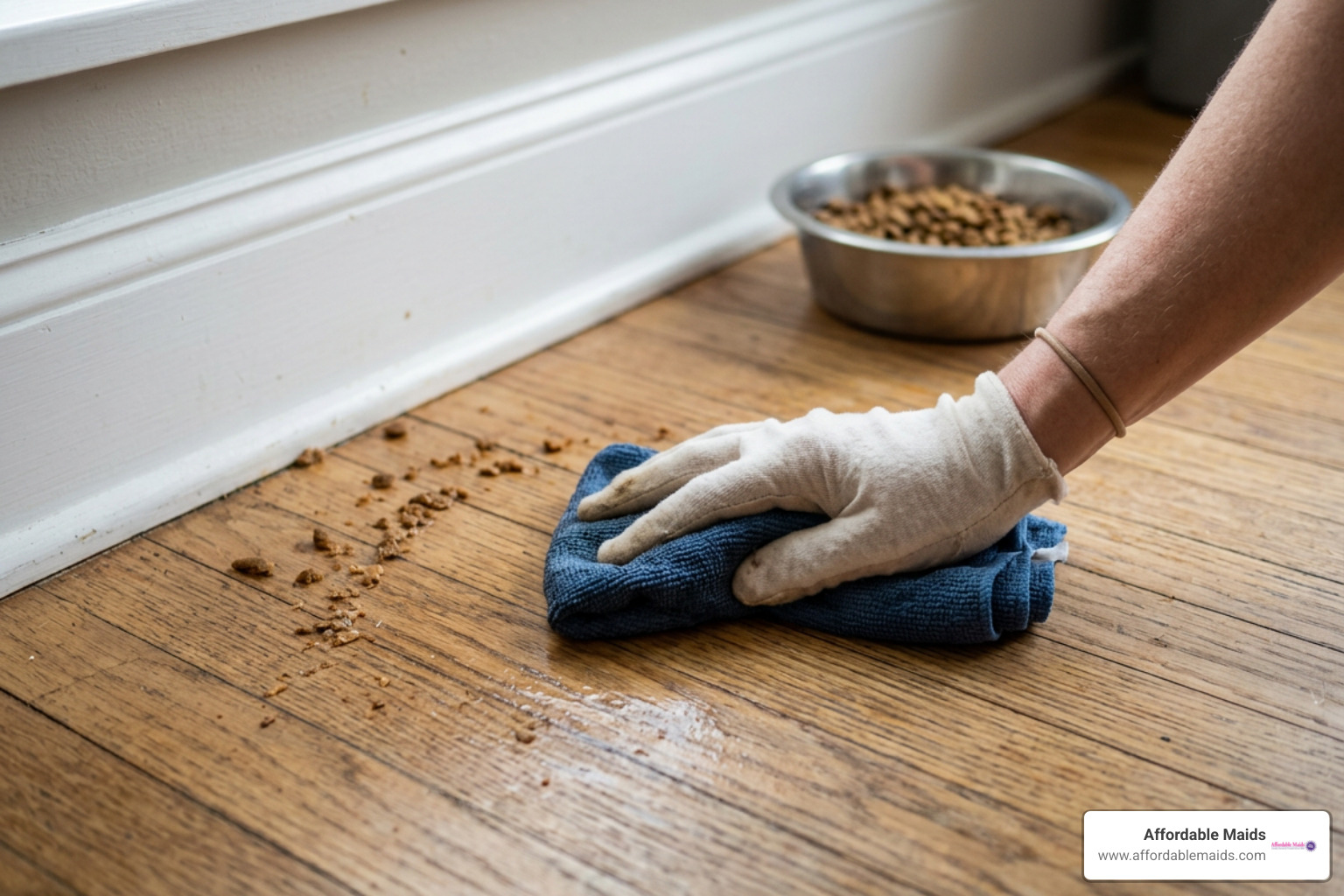
When wet pet food dries against baseboards or hard flooring, simple wiping will not always lift the residue. Avoid using abrasive steel wool or harsh scouring pads, which can scratch sealant off hardwood or dull glossy tile.
- Softening Dried Food: Dampen a cloth with warm water, lay it directly over the hardened food spot for two minutes, and allow the moisture to soften the crust before wiping it away.
- Removing Biofilm and Water Rings: Mineral deposits and bacterial slime respond well to a 1:1 solution of warm water and distilled white vinegar. Spray the solution onto the ring, let it sit for five minutes to dissolve the scale, and wipe clean with a microfiber cloth.
- Baseboards and Grout: Use a soft-bristled brush dipped in warm soapy water to clean food splatter out of tile grout lines and along baseboard crevices behind the station.
Choosing Pet-Safe Disinfectants and Cleaning Solutions
When selecting products for pet areas, safety is the top priority. Dogs and cats explore their world through smell and taste, frequently licking items off the floor. Many standard household cleaners contain phenols, ammonia, or heavy synthetic fragrances that can irritate pet paws, respiratory systems, and digestive tracts.
Understanding label directions and dwell time is critical when using disinfectants. Following essential tips for effectively cleaning disinfecting allows sanitizing agents to remain visibly wet on the surface for the required contact time (often 1 to 10 minutes depending on the product) to successfully neutralize pathogens. Always ensure adequate ventilation by opening a window or running an exhaust fan while cleaning.
Choosing Safe Supplies: The Best Way to Clean Around Pet Bowls Without Toxins
You do not need harsh chemicals for everyday feeding station maintenance. Common pantry staples make effective, non-toxic cleaners:
- Distilled White Vinegar: Its mild acidity dissolves mineral scale, eliminates water rings, and neutralizes odors. Use a 1:1 water-and-vinegar spray on feeding mats and tile floors.
- Baking Soda: A gentle abrasive that lifts stuck-on wet food without scratching delicate finishes. Mix baking soda with a splash of warm water to create a mild scrubbing paste for stubborn spots.
- Mild Unscented Dish Soap: Excellent for breaking down grease and food proteins on silicone mats, ceramic trays, and surrounding baseboards.
- Dedicated Microfiber Cloths and Scrub Brushes: Designate specific cleaning tools exclusively for pet supplies to avoid cross-contaminating human dishware and food prep counters.
Guidelines for Deep Sanitizing and Raw Food Diets
For households feeding raw meat diets, standard dish soap alone is not sufficient. Raw diets carry a higher risk of Salmonella and Listeria contamination, requiring strict sanitation protocols after every single feeding.
To properly sanitize food-contact surfaces and non-porous feeding mats, you can use a diluted bleach solution prepared fresh according to CDC guidelines: mix 2 ounces (1/4 cup) of regular household bleach with 1 gallon of cool water. Soak non-porous bowls or wipe down waterproof feeding trays, allowing the solution to remain in contact with the surface for at least 10 minutes. Rinse thoroughly with clean water afterward to remove all chemical residue, and allow items to air-dry completely before use. Following established veterinary sanitizing protocols keeps both pets and family members safe from food-borne contamination.
Selecting and Maintaining Hygienic Bowls and Feeding Mats
The materials you choose for your pet’s dining setup play a significant role in how easy it is to keep the area clean and bacteria-free.
| Bowl Material | Hygiene Level | Durability | Dishwasher Safe | Best Use Case |
|---|---|---|---|---|
| Stainless Steel (304 / 18/8) | Highest | Excellent (Does not crack or chip) | Yes | Ideal for all pets, daily use, and raw diets |
| Ceramic / Stoneware | Moderate to High | Good (Can crack or craze over time) | Yes (If glazed & certified lead-free) | Good for weighted stability; replace if chipped |
| Food-Grade Silicone | Moderate | Flexible & durable | Yes | Great for travel and collapsible feeding |
| Plastic | Lowest | Poor (Develops micro-scratches easily) | Top-rack only (May warp) | Not recommended for long-term daily feeding |
Plastic bowls are prone to microscopic scratches from chewing, cleaning brushes, and general wear. These tiny crevices trap bacteria, saliva, and food oils that cannot be reached by standard sponge washing, often leading to chin acne in cats and persistent foul odors. Replacing plastic dishes with non-porous stainless steel or high-quality ceramic significantly reduces germ accumulation.
Pair your bowls with a food-grade silicone feeding mat featuring raised outer edges (lip design). A raised border traps spilled water and wandering kibble, preventing moisture from seeping underneath and protecting your floors. Inspect mats regularly and replace any that develop deep cracks, tears, or permanent discoloration. Establishing these simple hardware choices makes it easier to maintain consistently clean home surfaces across all living areas.
Frequently Asked Questions About Cleaning Pet Feeding Areas
How often should you clean pet food and water bowls?
According to guidelines from the U.S. Food and Drug Administration (FDA), pet food dishes should be washed with hot, soapy water after every single meal. Water bowls should be emptied, washed, and refilled with fresh water at least once every 24 to 48 hours. Feeding mats and surrounding floors should receive a quick wipe daily, paired with a deeper clean once a week.
Can you wash pet bowls in the dishwasher with regular dishes?
Yes, as long as the bowls are labeled dishwasher-safe. Running pet bowls through a standard dishwasher cycle with hot water and heated drying effectively cleans and sanitizes them. If your dishwasher has a high-heat sanitize cycle, this provides an extra layer of heat-based sanitation. To prevent cross-contamination, always scrape away leftover pet food into the trash before placing the dishes on the dishwasher rack alongside your family’s dishes.
What is the slimy residue inside pet water bowls?
The clear, slippery film you feel along the bottom and sides of an unwashed water dish is biofilm. It forms when bacteria, fungi, and algae bind together in a sticky protective matrix fueled by pet saliva, tap water minerals, and ambient dust. Rinsing with plain water will not remove biofilm; it requires friction from a dedicated sponge or brush combined with warm soapy water or a diluted vinegar soak to break the bond.
Conclusion
Maintaining a fresh and tidy pet feeding station does not require hours of hard labor. By choosing non-porous stainless steel dishes, placing a raised-lip silicone mat beneath bowls, and spending two minutes wiping the floor daily, you create a healthier living space for both your pets and your family.
Balancing daily pet care routines with whole-home upkeep can be demanding. When you need professional support keeping your living spaces refreshed and tidy, Affordable Maids provides reliable recurring maid services tailored to your household’s unique needs. Contact our team to schedule regular cleaning visits that keep every corner of your home in top shape.