
Establish a Manageable Cleaning Schedule for Homes with Pets Today
Designing an Effective Cleaning Routine for Pet Owners
Living with pets brings endless companionship, but pet hair, tracked-in soil, and dander naturally accumulate on everyday surfaces. Instead of spending entire weekends playing catch-up, establishing a predictable rhythm prevents organic debris and odors from building up. Knowing how to build a cleaning schedule you can stick to allows you to protect high-traffic floors and living areas without turning daily chores into a full-time job.
A functional schedule focuses on high-impact zones: the living room seating where your pet naps, the entryway where paws bring in garden dirt, and the feeding area. By dividing tasks into short daily resets, thorough weekly cycles, and occasional deep refreshes, you keep visible pet debris under control efficiently.
Daily Resets in a Cleaning Routine for Pet Owners
The daily reset takes only 10 to 15 minutes and stops messes from compounding:
- Waste Management: Scoop cat litter boxes or pick up yard waste daily. This single step offers the highest impact-to-effort ratio for odor management in the home.
- Entryway Paw Checks: Keep a damp towel or pet-safe wipes by the exterior door to wipe down paws after walks before mud reaches the hallway floor.
- Food and Water Care: Rinse bowls daily to prevent slimy biofilm and food residue. Understanding how to clean around pet bowls keeps feeding mats fresh and deters pests.
- Quick Fur Pickup: Run a rubber pet-hair squeegee or lint roller across the primary sofa cushions, and do a fast dry sweep of high-traffic hard floors.
Weekly Chore Distribution and Deep Reset Strategies
While daily tasks keep odors at bay, weekly tasks address embedded pet hair and general grime. Following a structured weekly guide to maintain a clean home ensures you do not miss hidden pet zones.
- Launder Pet Fabrics: Wash pet bedding, crate liners, and washable furniture throws. Wash them at the highest temperature permitted by their fabric care labels using an unscented, pet-safe laundry detergent.
- Vacuum Thoroughly: Vacuum carpets, rugs, baseboards, and upholstered furniture using dedicated pet-hair and crevice attachments.
- Wash Hard Floors: Damp-mop hard surface floors with a pet-safe cleaner after vacuuming up loose fur.
- Dust at Pet Level: Wipe baseboards, window sills where cats perch, and lower wall corners where pets rub against surfaces.
- Check HVAC & Air Purifier Filters: Check air purifier pre-filters and HVAC return grilles to clear off trapped fur.
Consulting a comprehensive home cleaning checklist can help you coordinate these weekly pet chores alongside regular household maintenance.
Essential Pet-Safe Cleaning Tools and Products
Having the right cleaning tools makes pet care substantially faster while keeping animals safe from harsh fumes or toxic residues:
- HEPA-Filtered Vacuums: A vacuum equipped with a sealed HEPA filter captures fine particles as small as 0.3 microns, trapping pet dander instead of blowing it back into the room air.
- Microfiber Cloths and Mops: Static charge in microfiber attracts fine dander and hair. Practicing simple habits for a dust-free home with microfiber cloths minimizes airborne allergens.
- Rubber Squeegees and Pet Hair Rakes: Rubber blades build static friction that lifts embedded pet hair out of carpet fibers and upholstered cushions far more effectively than vacuum suction alone.
- Pet-Safe Plant-Based Cleaners: Avoid harsh chemicals like phenols, bleach, or ammonia. Instead, select plant-derived cleaners or diluted dish soap for hard surfaces, and review essential pet-friendly cleaning tips to protect your animals from accidental ingestion or skin irritation. Always allow cleaned surfaces to dry completely before allowing pets back into the area.
Managing High-Impact Pet Mess Zones and Odors
Tackling pet messes requires understanding pet chemistry. Household soil from animals is largely organic, composed of proteins, fats, and uric acid salts. Understanding the correct order to clean a house ensures you isolate biological messes before wiping surrounding surfaces.

Fast Stain Removal and Odor Chemistry
When fresh pet accidents occur on carpets or upholstery, prompt action prevents long-term odors:
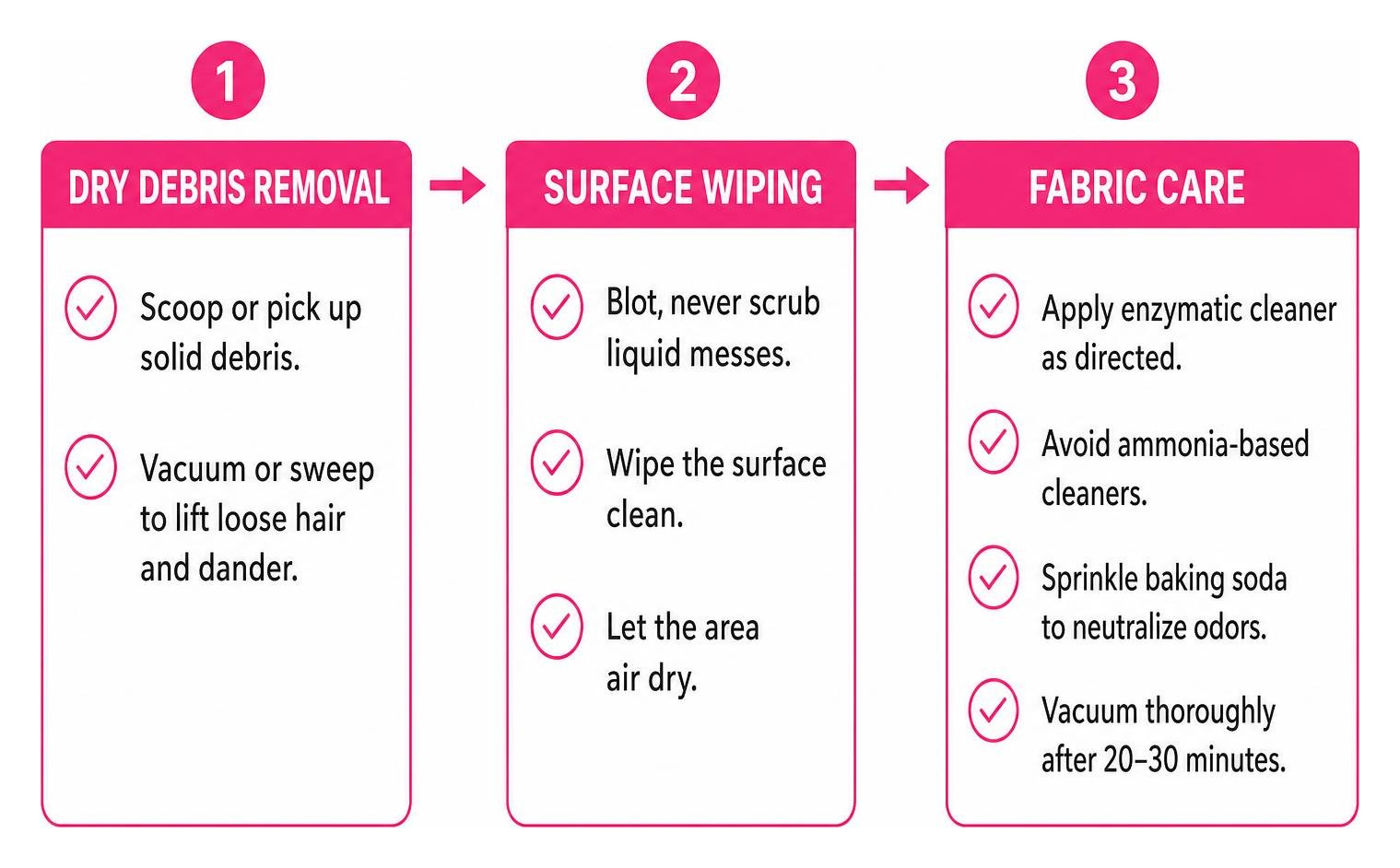
- Remove Solids Immediately: Pick up solid waste gently with a paper towel without pushing it deeper into carpet fibers.
- Blot, Never Scrub: Blot liquid messes firmly using clean paper towels or an old cloth to draw out moisture. Rubbing pushes liquid deeper into the padding.
- Apply Enzymatic Cleaners: Pet urine contains uric acid crystals that ordinary detergents cannot break down. Saturate the spot with an enzymatic cleaner according to the product-label directions. The natural enzymes digest the organic proteins and uric acid crystals at the source.
- Avoid Ammonia-Based Cleaners: Ammonia mimics the chemical signature of pet urine, which can encourage pets to mark the same spot repeatedly.
- Neutralize Odors with Baking Soda: For general upholstery freshness, sprinkle baking soda over dry fabrics, let it sit for 20 to 30 minutes to absorb odors, and vacuum it thoroughly.
Entryways, Litter Stations, and Feeding Areas
Certain zones experience constant pet traffic and require targeted containment:
- Entryway Paw Stations: Place an absorbent wash mat both outside and inside your primary entry door. Store a dedicated towel and a gentle paw-cleaning foam right by the entrance.
- Litter Box Stations: Use high-sided litter boxes to contain scatter, and place a honeycomb-style tracking mat beneath the box to catch loose litter grains from paws.
- Feeding Mats: Set water and food dishes on waterproof, raised-edge silicone mats. This catches spilled kibble and water droplets, preventing moisture damage on hardwood floors and tile grout lines.
Household Adaptations: Multi-Pet, Allergies, and Living Spaces
Different households face distinct cleaning demands. A single indoor cat requires a different routine than three active dogs or a home with allergy sufferers.
| Household Type | Daily Waste Care | Vacuuming Frequency | Pet Bedding Laundering | Air Quality Focus |
|---|---|---|---|---|
| Single Pet | Scoop/clean once daily | 1–2 times per week | Once weekly | Monthly air filter checks |
| Multi-Pet (2–3 Pets) | Scoop/clean 1–2 times daily | 2–3 times per week | 1–2 times weekly | HEPA air purifiers in main zones |
| Large Pack (4+ Pets) | Scoop/clean 2–3 times daily | Every 1–2 days | Twice weekly | Dedicated high-capacity air filtration |
| Allergy-Sensitive Home | Scoop/clean twice daily | 3+ times per week (HEPA) | Weekly on highest safe heat | Continuous HEPA purifiers; dander control |
Tailoring the Cleaning Routine for Pet Owners by Pet Count and Space
In compact living spaces or multi-pet homes, adjusting your routine keeps pet hair and odors from taking over. In smaller apartments, air volume is limited, meaning litter boxes and pet resting areas should be positioned near proper ventilation or next to a freestanding HEPA air purifier.
For multi-story homes, establish a regular zone rotation so pet hair does not quietly accumulate in lower-traffic areas like guest bedrooms or basements. Consistently applying these structured strategies will help you maintain a clean home regardless of your floor plan or how many animals you love.
Preventive Grooming Habits to Cut Cleaning Workload
The most efficient way to clean pet hair is to catch it before it lands on your furniture and floors:
- Daily Brushing: Spending five minutes brushing your dog or cat outdoors or in an easy-to-sweep utility room removes loose undercoat fur and dander.
- Coat Maintenance: Use breed-appropriate grooming tools, such as slicker brushes for thick coats or rubber grooming mitts for short hair.
- Regular Nail Trims: Trimming your pet’s nails every 3 to 4 weeks prevents scratches on sealed hardwood floors and reduces snagging on upholstery.
- Paw and Ear Care: Wipe paws after muddy walks and inspect ears periodically to keep natural oils and dirt from transferring to bedding and sofa cushions.
When to Supplement DIY Habits with Professional Cleaning
Even with a dedicated daily and weekly routine, pet dander and fine dirt gradually accumulate along baseboards, behind large furniture, and around kitchen kickplates. Scheduling professional residential cleaning helps reset your living spaces, particularly during spring and fall shedding seasons.
When life gets busy, our thorough deep cleaning services focus on accessible surface buildup, detailed baseboard dusting, and comprehensive floor care throughout the home. For homeowners throughout the greater Pittsburgh area, our residential cleaning across every room handles time-consuming surface dusting, wiping counters, and detailed vacuuming so you have more time to enjoy your pets.
Note: For specialized tasks beyond standard surface cleaning, homeowners should contact an appropriate specialist who is equipped to handle those specific needs.
Frequently Asked Questions About Pet Cleaning Schedules
What is the single most effective daily habit for pet owners?
Daily waste management—scooping the litter box or promptly clearing outdoor pet waste—has the highest impact-to-effort ratio. It eliminates the primary source of household pet odors before smells permeate fabrics, rugs, and drywall.
How often should pet bedding and toys be washed?
Pet bedding should be laundered at least once per week. Wash removable covers and blankets at the highest water temperature permitted by their care labels using an unscented detergent. Hard plastic or rubber toys can be washed weekly in warm, soapy water, while plush fabric toys should be laundered regularly in a mesh wash bag.
Why do pet urine odors linger after normal cleaning?
Pet urine contains insoluble uric acid salts and proteins that bind tightly to carpet fibers and porous subfloors. Standard household detergents only remove the water-soluble components, leaving the uric acid crystals behind. When humidity rises, these crystals release strong odors. Only an enzymatic cleaner designed to digest the organic proteins can fully break down these crystals, and for deeply set-in odors, consulting an appropriate specialist is recommended.
Conclusion
A clean, inviting home and a happy pet can easily go hand-in-hand. By sticking to a simple daily reset, maintaining a structured weekly cleaning rhythm, and managing shedding through routine grooming, you can keep fur, dander, and odors under control without feeling overwhelmed.
When you need an extra set of hands to keep your home’s surfaces refreshed, Affordable Maids provides local residential cleaning across Pittsburgh communities, including Allison Park, Bethel Park, Canonsburg, Cranberry, Fox Chapel, Gibsonia, Mars, McCandless, Monroeville, Mt. Lebanon, Robinson Township, Sewickley, Squirrel Hill, Upper St. Clair, and Wexford. To establish a reliable routine that keeps your living spaces fresh, consider scheduling recurring maid services for pet households tailored to your specific home size and needs.