
A Realistic Guide to Keeping Your Home Tidy Between Scheduled Cleanings
How to Maintain a Clean House Between Cleanings Without Doing It All
Learning how to maintain a clean house between cleanings starts with a few small habits: put dishes away after meals, wipe up spills right away, return items to their usual spots, and spend 15 minutes tidying before bed. Focus on the kitchen, entryway, and other busy areas first. Leave the bigger jobs for your scheduled cleaning.
Clean enough is enough. Pick the habits your household can repeat, and share the work so it does not fall on one person. I’m Lynn Reynolds, and I’ll help you build a simple routine for the days between cleanings.
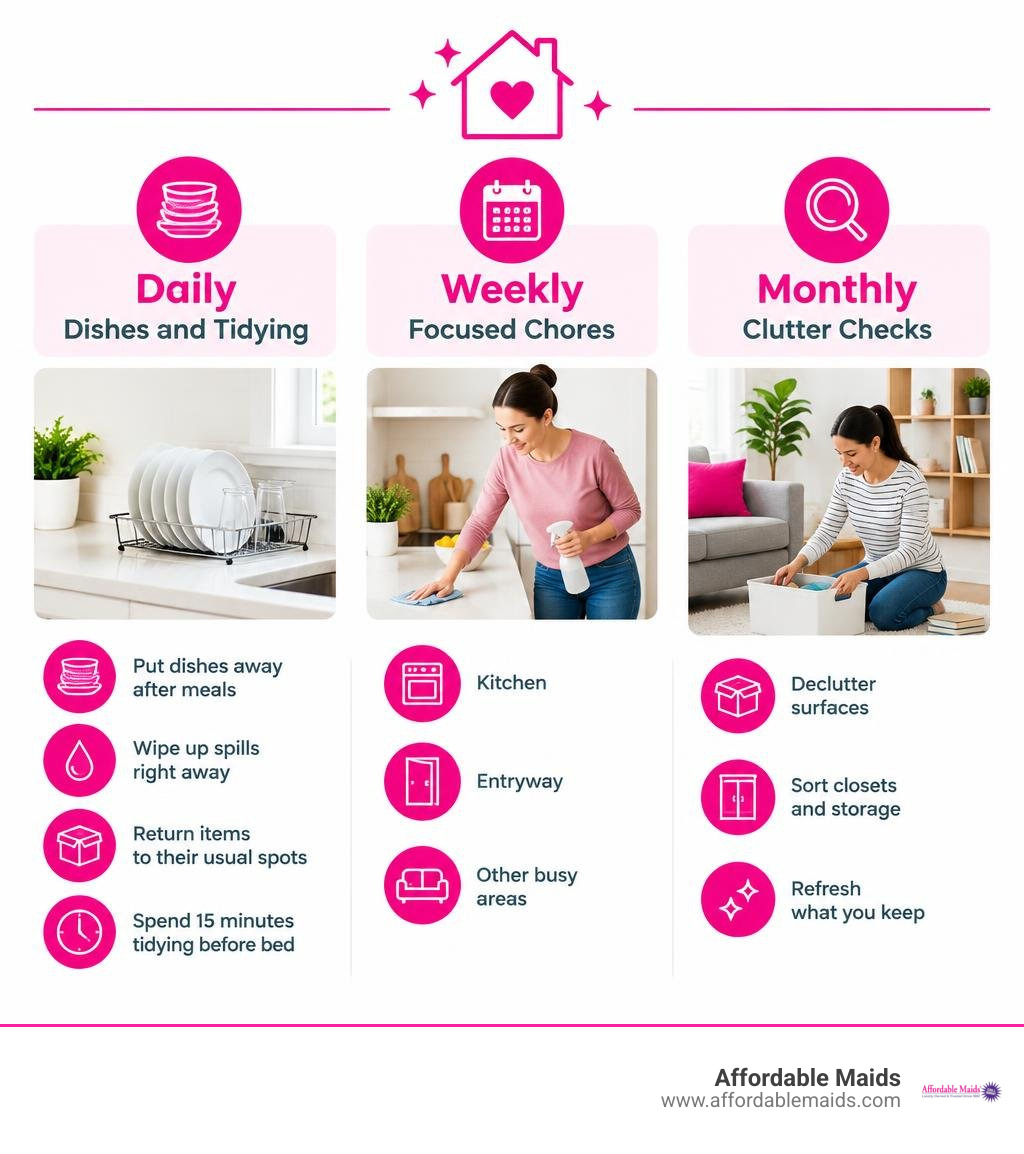
How to Maintain a Clean House Between Cleanings: Simple Daily Habits
Most mess does not arrive all at once. It builds from small things left for later: a cup on the counter, a jacket on a chair, a pile of mail. Daily habits stop that buildup before it turns into a weekend project.
Start by choosing your daily priorities. Write down two or three realistic goals for the day, and let everything else wait. Usually that means the kitchen, visible clutter, and the floors where people walk most.
Here are the habits that make the biggest difference:
- Clean as you go. Rinse a pan while the pasta cooks, or wipe the counter while you wait for the coffee. These one or two minute tasks are easier now than after everything has dried.
- Use the one-touch rule. When you pick something up, put it where it belongs instead of setting it down somewhere “for now.”
- Make the bed. It takes a couple of minutes, and a made bed makes the whole bedroom look tidier. Using a duvet with a washable cover instead of a top sheet makes it even faster.
- Put dishes straight into the dishwasher. Skip the sink and the counter.
- Wipe counters after meals. Crumbs and splashes take seconds to clear while fresh.
- Keep a laundry basket in the bedroom. Dirty clothes go in the basket, and clean ones go in the closet. Nothing lives on the floor or the chair.
- Deal with spills promptly. Wiping up a spill before it dries keeps it from becoming a stain or a sticky patch.
- Give everything a designated spot. Keys, shoes, mail, and chargers each need a home. If an item has no place, tidying becomes guesswork.
A load of laundry each day can also keep the pile from taking over. Start it in the morning, move it to the dryer, and fold and put it away by evening. If you work outside the home, a delayed-start setting on the washer lets the load finish right when you walk in.
Paper clutter is another quiet culprit. Recycle or shred mail right away, or set it in one inbox to sort once a day. Moving fridge papers onto a single calendar keeps the kitchen calmer.
These habits cover the daily layer. For the next layer, see this guide to weekly cleaning tasks that fit between visits.
How to maintain a clean house between cleanings with a 15-minute nightly reset
A short evening reset may be the most effective habit on this list. Waking up to a tidy home is a gentler start to the day, and a quick reset means tomorrow’s mess begins from a clean slate.
Here is a simple version:
- Set a timer for 15 minutes. A time limit keeps this from turning into a cleaning marathon.
- Clear the kitchen counters. Put away anything that does not belong, and wipe the surfaces.
- Load the dishwasher. Run it if it is full.
- Return misplaced items. Carry a basket around the main living areas and drop items where they belong.
- Prepare for tomorrow. Set out bags, shoes, and anything you need for the morning, which takes about 10 minutes of your reset time.
- Take a quick look at the floors. Sweep or vacuum visible debris in the busiest spots.
Focus on visible clutter, not deep-cleaning details. Nobody needs to scrub grout or reorganize a drawer at 9 p.m. If the timer goes off and you are not finished, stop. The goal is steady progress, not perfection.
How to maintain a clean house between cleanings as a family
One person doing everything leads to burnout. A tidy home is much easier to keep when everyone helps, and even small children can contribute.
- Match chores to age. Young children can put toys in bins or carry their plate to the counter. Older kids can load the dishwasher, sort laundry, or tidy their rooms.
- Share a task list. A posted list or calendar removes the need to nag. Everyone can see what is theirs.
- Rotate responsibilities. Swapping jobs every week or two keeps things fresh and helps each person find what they do best.
- Put shoes and coats away. Give each person a hook, bin, or basket near the door.
- Put dishes away. Plates go in the dishwasher, not beside the sink.
- Use bins for toys. Easy-to-reach bins make cleanup something small children can manage.
Expect to remind kids for the first few weeks. It often feels faster to do the job yourself, but teaching the habit pays off over time. For ideas on getting started, see these suggestions for chores for children that treat them like helpful roommates.
A nightly timer also works well here: children tidy their rooms while a parent finishes the kitchen or folds laundry.
Build a Realistic Routine That Fits a Busy Schedule
A good routine is one you will actually follow. Start small, and add more only when the first habits feel automatic.
- Choose a few repeatable habits. Pick one or two, such as making the bed and running the dishwasher each night. Add more as they stick.
- Attach tasks to existing routines. Wipe the bathroom sink after brushing your teeth. Empty the dishwasher while the coffee brews.
- Assign tasks to days. One focused chore per day keeps the workload light. For example, laundry on Monday, bathrooms on Friday, and floors on Thursday.
- Keep a short daily reset. Fifteen minutes in the evening is enough for most homes.
- Plan one focused weekly chore. Vacuuming, dusting, or bathrooms can each get their own day.
- Leave a flexible catch-up day. Life happens, and an open day absorbs it.
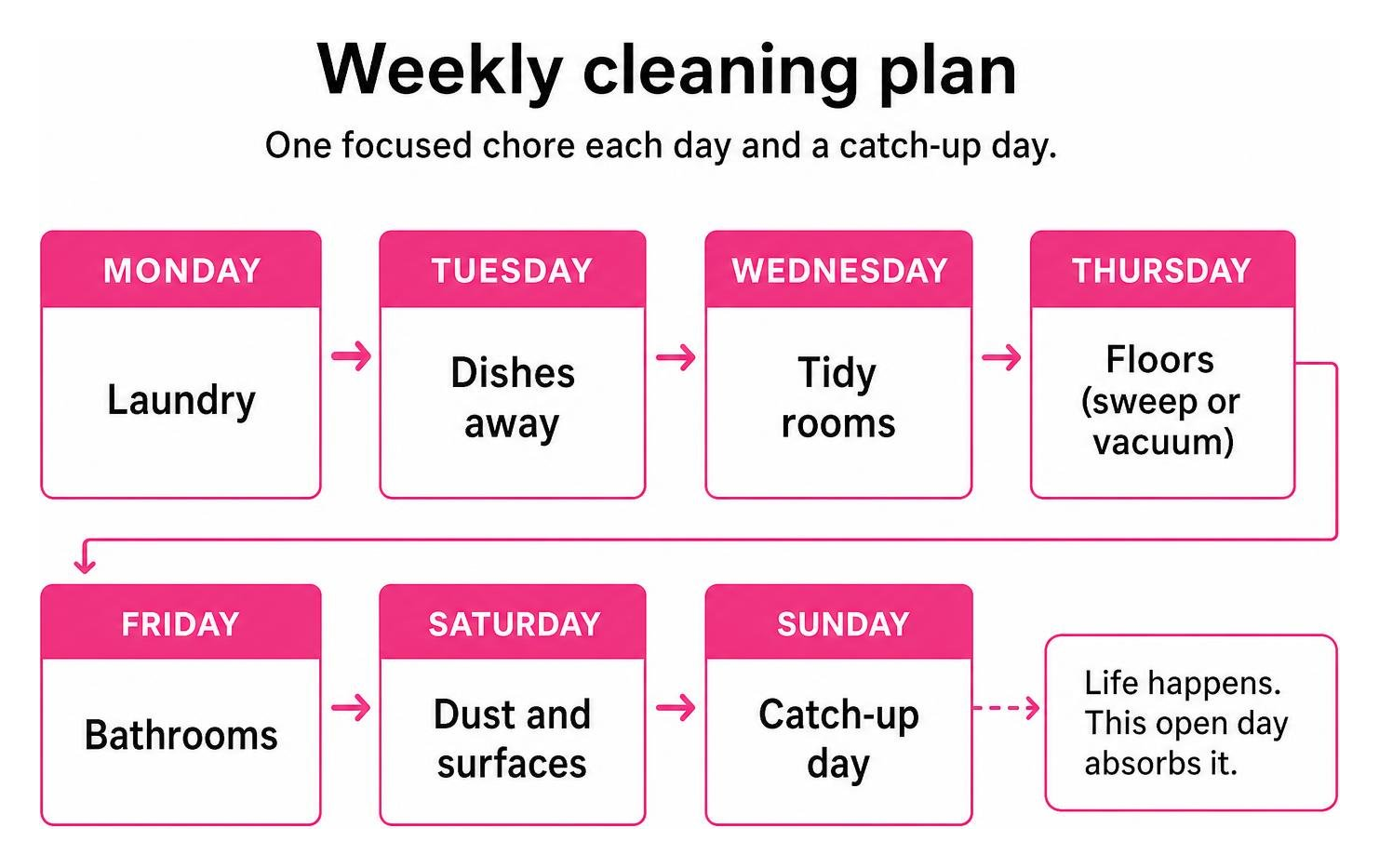
The clean-enough principle
Perfectionism is the quickest way to give up on a routine. The clean-enough principle says that you do not have to finish everything, and a home that is mostly tidy and comfortable is a success.
A helpful guide is the 80/20 mindset. If daily upkeep gets the home about 80 percent of the way there, that is plenty. The remaining details, such as baseboards, ceiling fans, and buildup in corners, belong to your deeper weekly, monthly, or professional cleanings. Treat this as a practical rule of thumb, not a measured standard.
When time is short, prioritize the essentials over perfection:
- Dishes and kitchen surfaces
- Visible clutter
- Floor debris in busy areas
- The bathroom sink and toilet
Everything else can wait. If you want help mapping this out, our guide to cleaning schedule planning walks through building one you can stick with. Give any new schedule a few months of trial and error, since every household is different.
Focus on High-Traffic Areas and Quick Touch-Ups
Dirt and clutter spread from the places people use most. If you keep those spots under control, the rest of the house stays cleaner too.

Here is where to focus each day:
- Entryway. This is where dirt, pollen, and clutter enter. Place a doormat outside and a small rug inside, and give shoes a dedicated spot. If you have pets, keep a towel by the door to wipe paws.
- Kitchen. Crumbs, spills, and dishes collect here fastest. Wipe counters and the sink after meals.
- Bathroom sink. A quick wipe as needed keeps toothpaste and splashes from hardening.
- Living room. Reset pillows and throws, collect cups, and return items to their places.
A five-minute daily sweep or vacuum of visible debris in these areas keeps dirt from traveling through the house. A robotic vacuum can help here, though it does not replace a thorough manual vacuuming. If you use one, clear toys and cords first.
Also wipe frequently touched surfaces such as light switches, doorknobs, and countertops regularly, and clean any area that looks visibly dirty. Viruses such as the common cold can stay on surfaces for days, and they spread when people touch a contaminated surface and then their face. Regular cleaning with soap and water removes most germs, and that is usually enough for everyday upkeep. For electronics, follow the manufacturer’s instructions.
Keep useful, surface-appropriate supplies close
If supplies are across the house, you will skip the quick fix. Store basics where you use them:
- Microfiber cloths in each bathroom and the kitchen
- A small cleaning caddy you can carry from room to room
- A broom and dustpan near the kitchen
- A surface-safe cleaner suited to the material you are cleaning
- A toilet brush in each bathroom
- Separate cloths for the bathroom and kitchen, so you do not spread germs between them
Always follow the product label for amounts, contact time, and surface suitability. Never mix cleaning products, especially bleach with vinegar or other cleaners, since the fumes can be dangerous. Ventilate when you use chemicals, and store them out of reach of children and pets. Wash cloths, mop heads, and vacuum filters regularly so they do not simply move dirt around.
Use the “never leave a room empty-handed” rule
This habit turns every trip through the house into a small tidy-up. Whenever you leave a room, look for something that belongs where you are headed and take it along.
- Carry misplaced items toward their proper home, such as a mug to the kitchen or a book to the shelf.
- Put items away instead of creating a new pile at the stairs or on a table.
- Keep a basket for belongings that need sorting, then return them later in one trip.
- Avoid carrying hazardous or breakable items in a hurry. Take sharp, fragile, or chemical items separately and carefully, and keep your path clear.
Frequently Asked Questions About Maintaining a Tidy Home
What should I clean every day between scheduled cleanings?
Keep daily tasks light:
- Wash or load dishes
- Wipe kitchen surfaces after meals
- Clean visible spills
- Put away clutter
- Sweep or vacuum debris in high-traffic areas
- Wipe the bathroom sink as needed
Empty the trash when it fills up, and make the bed. Save the rest for weekly tasks.
How do I keep a house clean when I have very little time?
Pick one or two priority habits, such as the dishwasher and the bedtime reset. Use short task blocks of one to five minutes, like wiping a counter while the microwave runs. Keep supplies accessible so you can act when you see a need. Finally, share the work across the household, so the load is spread out.
Should I use specialty cleaning products every day?
Usually not. Routine cleaning with soap and water or a suitable all-purpose cleaner is typically enough for everyday upkeep. Clean food-preparation surfaces after each use, especially after contact with raw meat. Follow product labels and use products only as directed. Stronger products are for particular situations, such as when someone in the home is sick.
Conclusion
Keeping a house tidy between cleanings comes down to consistent small habits, realistic standards, and shared household tasks. You do not need to do everything every day. Wipe, put away, reset at night, and let the clean-enough principle keep the pressure low.
Daily upkeep also complements scheduled service. When the surfaces are clear and the clutter is under control, a professional visit can focus on the deeper work. At Affordable Maids, we offer recurring maid services if you would like a regular cleaning to pair with your daily routine. Contact us for a personalized quote, which depends on factors like home size, condition, service type, and add-ons.