
Smart Ways to Clean Your Living Spaces After Allergy Season
How to Clean After Allergy Season
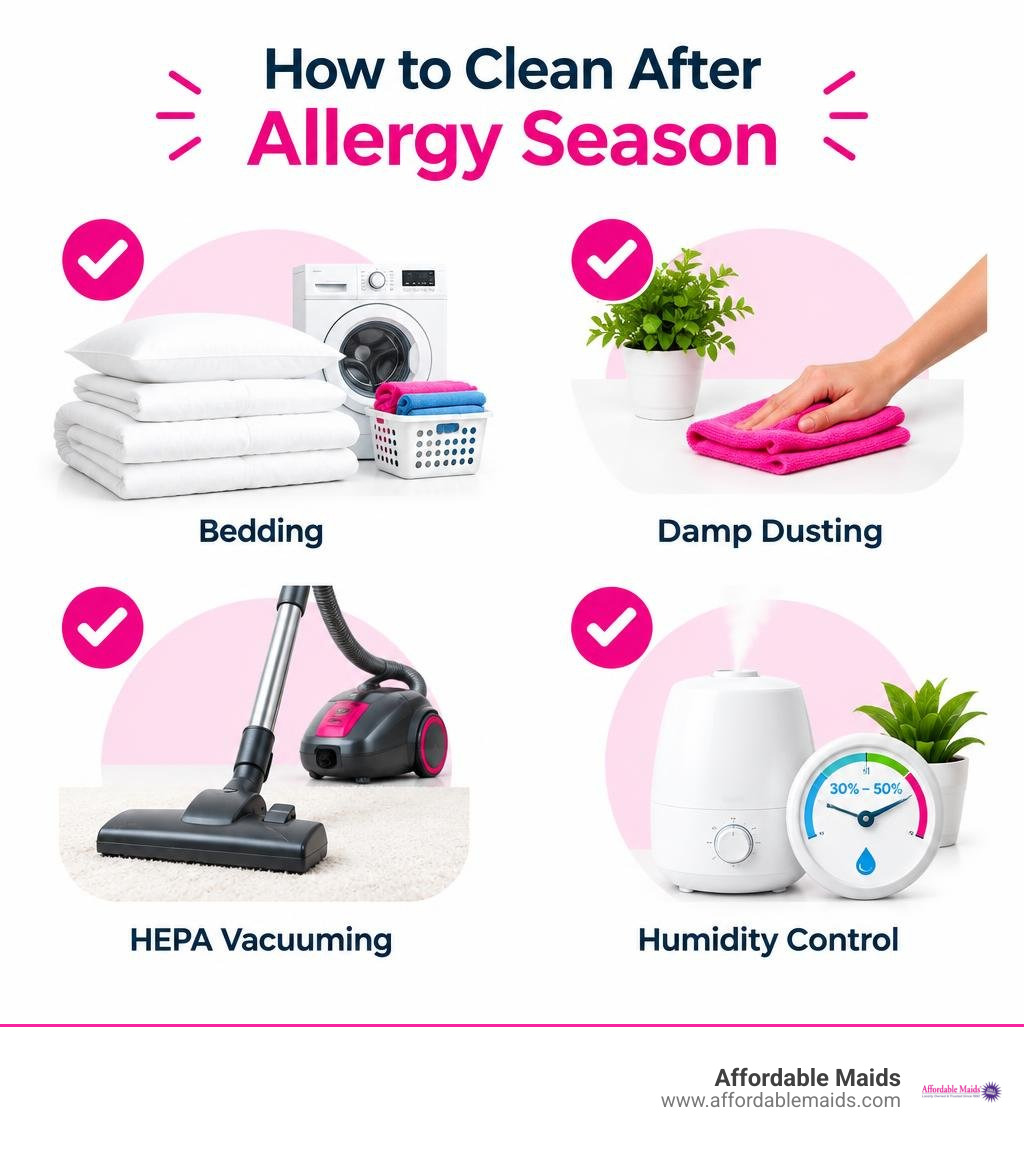
Here’s how to clean after allergy season: Start in the bedroom. Wash bedding, then wipe surfaces with a damp microfiber cloth and vacuum floors with a HEPA-filtered vacuum. Next, clean entryways and living areas where pollen and dust settle. Keep indoor humidity between 30% and 50% to discourage dust mites and mold.
Cleaning can stir up allergens, so wear a well-fitting mask or ask someone else to handle dusty tasks if they trigger your symptoms. I’m Lynn Reynolds, and I’ll walk you through a practical room-by-room plan.
Why Post-Allergy Season Cleaning Matters for Indoor Air
When peak outdoor pollen drops, many homeowners assume their allergy troubles are finished. However, microscopic particles brought inside during high-pollen months settle onto flooring, upholstery, and hard surfaces. About 50 million adults experience allergic rhinitis symptoms like sneezing, itchy eyes, and nasal congestion, and unaddressed indoor build-up can prolong those reactions well past the blooming season.
Indoor environments can trap settled particulates. When you walk across a rug or sit on a couch, you can send those particles right back into the breathing zone. Addressing built-up debris after allergy season helps lower overall exposure, supporting better indoor air quality and helping to keep your living spaces comfortable year-round.
Common Lingering Allergens in the Home
A thorough post-season tidy targets several primary indoor irritants:
- Tree, Grass, and Ragweed Pollen: Microscopic grains blow through open doorways and attach to shoes, clothing, and pets.
- Dust Mites and Droppings: Eight out of 10 people in the United States are exposed to dust mites, which thrive in soft fabrics and humid conditions.
- Pet Dander and Saliva: Six out of 10 people are exposed to cat or dog dander, which clings stubbornly to furniture and fibers.
- Indoor Mold Spores: Summer and late-spring humidity encourage mold growth in damp basements, bathrooms, and window tracks.
How Cleaning Reduces Allergen Exposure
Our bodies react when allergen concentrations cross a personal sensitivity threshold. Regularly wiping surfaces and vacuuming traps physical particles, keeping them from circulating through the home.
Removing surface debris reduces common secondary triggers that cause airway irritation, morning sinus pressure, and nighttime breathing discomfort. Physical source removal is the most direct way to lower environmental irritants indoors.
Essential Tools and Non-Irritating Supplies for Allergen Removal

Standard cleaning routines can backfire if they stir up settled dust. Choosing the right supplies ensures particles are captured instead of sent floating into the air.
- Sealed HEPA Vacuums: Vacuums equipped with High-Efficiency Particulate Air (HEPA) filters capture microscopic matter down to 0.3 microns, preventing fine dust from blowing out through the exhaust.
- Damp Microfiber Cloths: Microfiber holds an electrostatic charge that grabs dirt, while light dampness keeps dry particles from scattering.
- Fragrance-Free and Low-VOC Cleaners: Heavy fragrances and aerosolized sprays can irritate sensitive bronchial tubes. Simple soap-and-water solutions or mild formulas with the EPA Safer Choice label clean effectively without harsh fumes.
- Personal Protective Equipment (PPE): Wearing an N95 particulate mask and rubber gloves protects your airways and skin while handling high-dust areas.
Safe Cleaning Practices to Prevent Symptom Flare-Ups
To clean comfortably without triggering sneezing fits or coughing, follow these safety habits:
- Spray cleaning solutions onto cloths rather than misting directly onto surfaces to reduce airborne droplets.
- Keep exhaust fans running in kitchens and bathrooms to maintain airflow without drawing in outside air.
- If you have severe respiratory sensitivities, delegate high-dust jobs—like clearing ceiling fans or vacuuming under heavy furniture—to someone else, or step outside for a bit after cleaning is done.
- Never mix household cleaning chemicals, particularly bleach with ammonia or acids like vinegar.
Tools That Trap vs. Spread Allergens
| Tool Type | Allergen-Trapping Tools (Recommended) | Allergen-Scattering Tools (Avoid) |
|---|---|---|
| Dusting | Damp microfiber cloths, static-attracting microfiber wands | Traditional feather dusters, dry rags |
| Floor Care | Sealed vacuums with certified HEPA filtration, damp flat mops | Standard broom sweeping, non-HEPA standard vacuums |
| Cleaning Sprays | Fragrance-free liquids applied directly to cleaning cloths | Heavily scented aerosol air fresheners and spray polishes |
| Bedding Care | Washable allergen-barrier encasements | Porous, unzipped standard cotton covers |
How to Clean After Allergy Season: A Room-by-Room Strategy
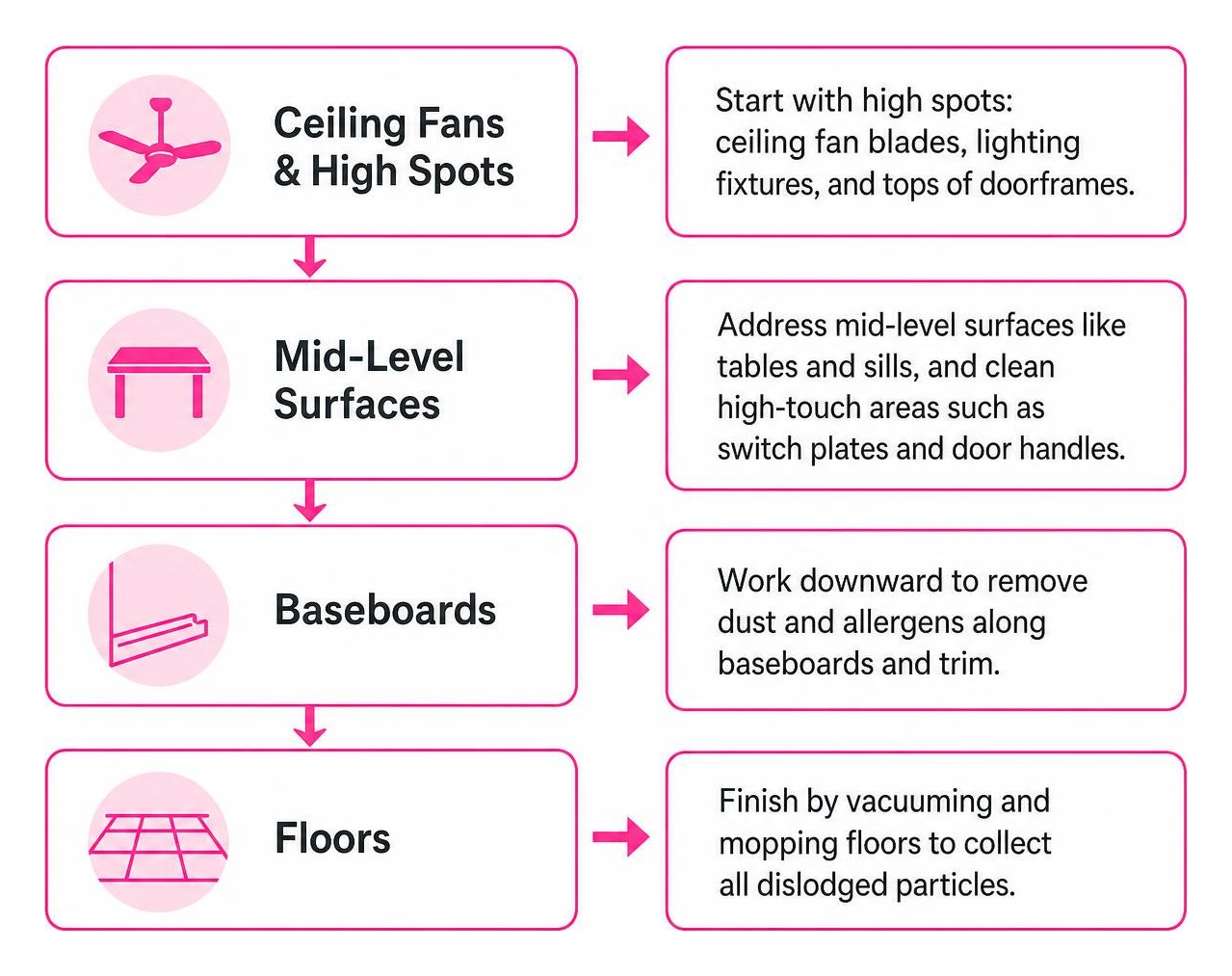
A top-to-bottom method ensures dislodged particles fall downward onto floors where they can be collected during final vacuuming and mopping. If you want to learn everything you need to know about deep cleaning your home, establishing clear room-by-room workflows is key.
Start with high spots: ceiling fan blades, lighting fixtures, and the tops of doorframes. Next, address mid-level surfaces like tables and sills, and pay close attention when cleaning high-touch areas such as switch plates and interior door handles where oily residues and dust collect. Finish by tackling baseboards and accessible flooring.
Prioritizing the Bedroom: How to Clean After Allergy Season for Restful Sleep
Because people spend about one-third of their lives in the bedroom, this space should be your top priority.
- Strip and Wash Bedding: Wash sheets, pillowcases, and blankets weekly in water heated to 130 degrees Fahrenheit or hotter, which is the temperature required to kill dust mites. Run them through a hot dryer cycle.
- Encase Mattresses and Pillows: Encase mattresses, box springs, and pillows in zippered allergen-proof covers. Zippered mattress encasements can help reduce allergy symptoms by limiting dust mite exposure in the bed.
- Clear Surface Clutter: Keep nightstands and dressers simple so they are easy to wipe with a damp cloth each week.
- Clean Accessible Floor Surfaces: Vacuum low-pile rugs or bare floors thoroughly, taking time to reach the edges around the bed frame.
Living Areas and Fabrics: How to Clean After Allergy Season to Trap Lingering Pollen

Living rooms gather pollen and dander brought in from outdoor activities and daily foot traffic.
- Upholstery: Run a vacuum brush attachment over fabric sofas, armchairs, and under removable cushions to remove loose pollen, dust, and pet dander.
- Window Treatments: Wipe down hard window blinds using a damp microfiber cloth. If you have washable fabric curtains, launder them according to fabric instructions to remove accumulated pollen.
- Rugs and Floors: Vacuum hard floors and area rugs slowly using a HEPA vacuum to pull up settled grit.
Kitchen and Bathroom Moisture Zones
High-moisture spaces can quickly develop mold and mildew if dampness lingers.
- Ventilation: Run exhaust fans during and for twenty minutes after showering or cooking to pull moisture outside.
- Surface Care: Wipe down bathroom tiles, tubs, and sink surrounds. For surface mildew, clean with mild detergent and water or an appropriate cleaner, making sure to dry the area completely afterward. Widespread mold behind drywall or under subflooring requires a certified mold remediation specialist.
- Appliances: Wipe down accessible refrigerator door seals where condensation gathers. Cleaning inside refrigerators and ovens is an optional add-on service during professional visits, but you can keep exterior gaskets clean week-to-week with a quick wipe.
Maintaining HVAC Systems, Air Cleaners, and Indoor Moisture
Your heating, ventilation, and air conditioning (HVAC) system circulates air through every room, making filter management an effective way to protect indoor air quality.
- Upgrade Air Filters: Replace standard fiberglass filters with pleated models rated MERV 11 or MERV 12, which are designed to capture microscopic pollen, pet dander, and mold spores. Change these filters every three months (or monthly during heavy use). While some systems can support MERV 13, verify your unit’s airflow specifications before upgrading.
- Use Standalone Air Purifiers: Portable air cleaners with Certified Asthma & Allergy Friendly® HEPA filters can capture up to 98% of airborne allergen particles. Position them in primary spaces like the master bedroom or living room, making sure their intake vents remain unblocked.
- Regulate Humidity Levels: Maintain indoor relative humidity between 30% and 50%. This range keeps indoor air comfortable while discouraging dust mite reproduction and mold spore growth. Empty portable dehumidifier reservoirs regularly to keep them fresh.
Daily and Weekly Habits to Keep Allergens Away
Keeping indoor allergens low is easier when supported by small, consistent habits. Establishing a structured routine with regular home cleaning habits prevents chores from becoming overwhelming.
- Create an Entryway Drop Zone: Remove outdoor shoes at the front door to prevent tracking pollen and street grime across your floors.
- Manage Pet Dander: Brush pets outdoors to remove loose fur and pollen before it enters the house. Wipe their paws with a damp cloth after walks, and maintain consistent pet care to keep bedding and resting areas refreshed.
- Keep Windows Closed: Run the air conditioner on recirculate during high-pollen days rather than opening windows.
- Weekly Damp Wiping: Quickly damp-wipe high-dust horizontal surfaces once a week to capture loose particles before they settle deeply into furnishings.
Frequently Asked Questions About Cleaning After Allergy Season
What water temperature can help reduce dust mites in bedding?
Wash bedding, uncovered pillows, and washable stuffed items in water heated to at least 130 degrees Fahrenheit (54°C) on a weekly basis. This temperature reliably kills dust mites and washes away skin flakes and dust mite waste. Follow up with a high-heat dry cycle when fabrics allow.
Why should I avoid opening windows to air out my home after allergy season?
Opening windows can pull outdoor tree, grass, or weed pollen straight into your living space, where it settles into carpets, furniture, and bedding. Using your central HVAC system with a clean MERV 11 or 12 filter refreshes indoor air without drawing outdoor allergens inside.
When should I consult an allergist for persistent symptoms despite deep cleaning?
If you experience ongoing sinus pain, wheezing, nighttime coughing, persistent congestion, or poor sleep despite maintaining a clean home, schedule an appointment with a board-certified allergist or medical provider. They can conduct skin or blood testing, suggest targeted prescription remedies, or evaluate you for allergen immunotherapy.
Conclusion
Carrying out a thorough clean after allergy season removes trapped pollen, dander, and dust, helping everyone in your home breathe easier. By focusing on the bedroom first, wiping surfaces with damp microfiber, and keeping indoor humidity below 50%, you can create a relaxing, low-irritant environment throughout every season.
If you want support maintaining a clean home across Pittsburgh and surrounding areas—including Wexford, Cranberry, Monroeville, Upper St. Clair, Sewickley, and Allison Park—our team at Affordable Maids is here to help. With 32+ years of experience, 279k+ cleans completed, and 8 local offices, we provide bonded and insured cleaning tailored to your household’s needs. Learn how our professional deep cleaning services can give your living spaces a fresh start after seasonal pollen winds down.