
Smarter Home Care: Overcoming Common House Cleaning Mistakes
Avoid Common House Cleaning Mistakes
The common house cleaning mistakes most worth fixing are mixing products, using too much cleaner, scrubbing delicate surfaces, and cleaning in the wrong order. Never mix bleach with other cleaners. Follow each product’s label, use only the recommended amount, and check that it is safe for the surface. Dust and sweep before wet cleaning, work from high surfaces down to the floor, and keep bathroom cloths separate from kitchen cloths.
I’m Lynn Reynolds, and I’ll show you how to put these safer, simpler habits to work throughout your home.
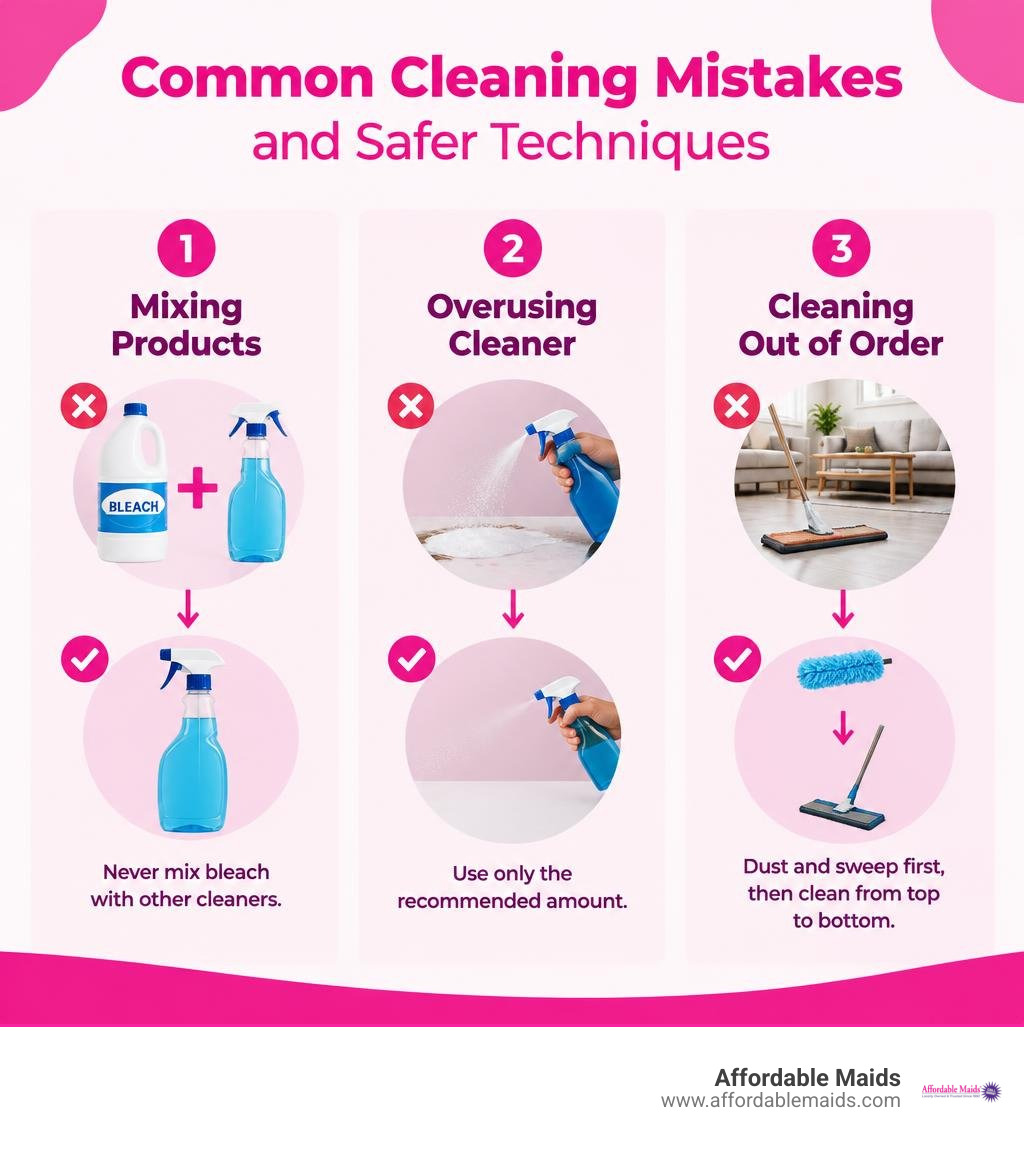
Hazardous Chemical Combinations and Safe Product Application
When caring for our homes, we often assume that stronger chemicals and larger doses equal a cleaner environment. In reality, combining powerful solutions or saturating surfaces can compromise indoor air quality and damage finishes. Establishing safe chemical habits protects both our living spaces and our health.
| Hazardous Combination | Resulting Chemical Hazard | Health & Property Risk | Safe Alternative |
|---|---|---|---|
| Bleach + Ammonia | Chloramine gas | Severe respiratory irritation, throat damage | Mild dish soap and warm water |
| Bleach + White Vinegar | Chlorine gas | Eye stinging, coughing, airway inflammation | Separate use: wash first, rinse, let dry |
| Vinegar + Hydrogen Peroxide | Peracetic acid | Corrosive acid burns, respiratory discomfort | Apply sequentially with thorough drying between |
| Multiple Drain Cleaners | Chemical heat reaction / toxic vapor | Pipe rupture, caustic splashing, vapor release | Mechanical auger, plunger, or licensed plumber |
Dangerous Chemical Mixtures That Threaten Household Health
Mixing household chemicals is one of the most hazardous habits encountered in home maintenance. Combining chlorine bleach with acidic solutions such as distilled white vinegar generates toxic chlorine gas. Even in small concentrations, chlorine gas causes intense eye irritation, persistent coughing, and breathing difficulties.
Similarly, combining bleach with ammonia-based formulas—frequently found in commercial window cleaners—produces hazardous chloramine gas. Inhaling chloramine vapor can cause severe damage to respiratory tissues.
A 2019 analysis published in the American Journal of Infection Control demonstrated that custodial and healthcare workers with routine occupational exposure to disinfectants develop asthma at higher rates than peers in other fields. Furthermore, research in Environmental Health revealed that detectable disinfectant fumes can persist in indoor air for at least 20 minutes after application.
To maintain a secure home environment:
- Always open nearby windows and run exhaust fans to ensure consistent airflow during cleaning sessions.
- Wear protective gloves, and consider an N95 mask when working in enclosed areas like compact bathrooms.
- Never mix different commercial formulations in buckets, spray bottles, or toilet basins.
Product Overuse, Detergent Dosing, and Residue Buildup
Using an excessive amount of cleaning product does not yield better sanitation; it leaves behind a sticky layer of chemical surfactant. When floors, countertops, or fabrics are oversaturated, that lingering surfactant attracts airborne dust, pet dander, and grit. This causes surfaces to look dull shortly after washing.
Overdosing is especially common in laundry care. A standard load requires only about 1.5 ounces of detergent—roughly the volume of a standard shot glass. Exceeding this amount creates heavy foam that standard rinse cycles cannot fully wash away. Over time, trapped detergent builds up in clothing fibers, promotes mildew growth inside washing machine drums, and can irritate sensitive skin.
A 2022 study in the Journal of Exposure Science & Environmental Epidemiology detected quaternary ammonium compounds (quats)—common antimicrobial surfactants—in human breast milk, showing higher concentrations among frequent disinfectant users. Limiting product volume reduces unnecessary chemical contact.
Homeowners benefit from understanding cleaning vs sanitizing vs disinfecting in your home. Cleaning physically lifts soil using gentle soap and water, which the CDC confirms is sufficient for routine household maintenance without creating heavy chemical buildup.
The Science of Disinfectant Contact Time
A frequent point of confusion is how disinfectants actually work on surfaces. Spraying a surface with an antibacterial solution and instantly wiping it dry with a towel is often called “disinfection theater.” For an antimicrobial agent to neutralize bacteria and viruses, it must remain visibly wet on the surface for the entire duration specified by the manufacturer—known as dwell time or contact time.
Dwell times typically range from 30 seconds to several minutes, depending on the active ingredients and target pathogens. If the cleaner dries or is wiped away before that duration elapses, it cannot deliver its certified level of efficacy.
Before applying any disinfectant, remove physical barrier soils such as dust, grease, and crumbs with warm, soapy water. Pathogens can hide beneath organic matter, preventing the chemical solution from making direct contact.
Room Workflow and Sequencing Common House Cleaning Mistakes
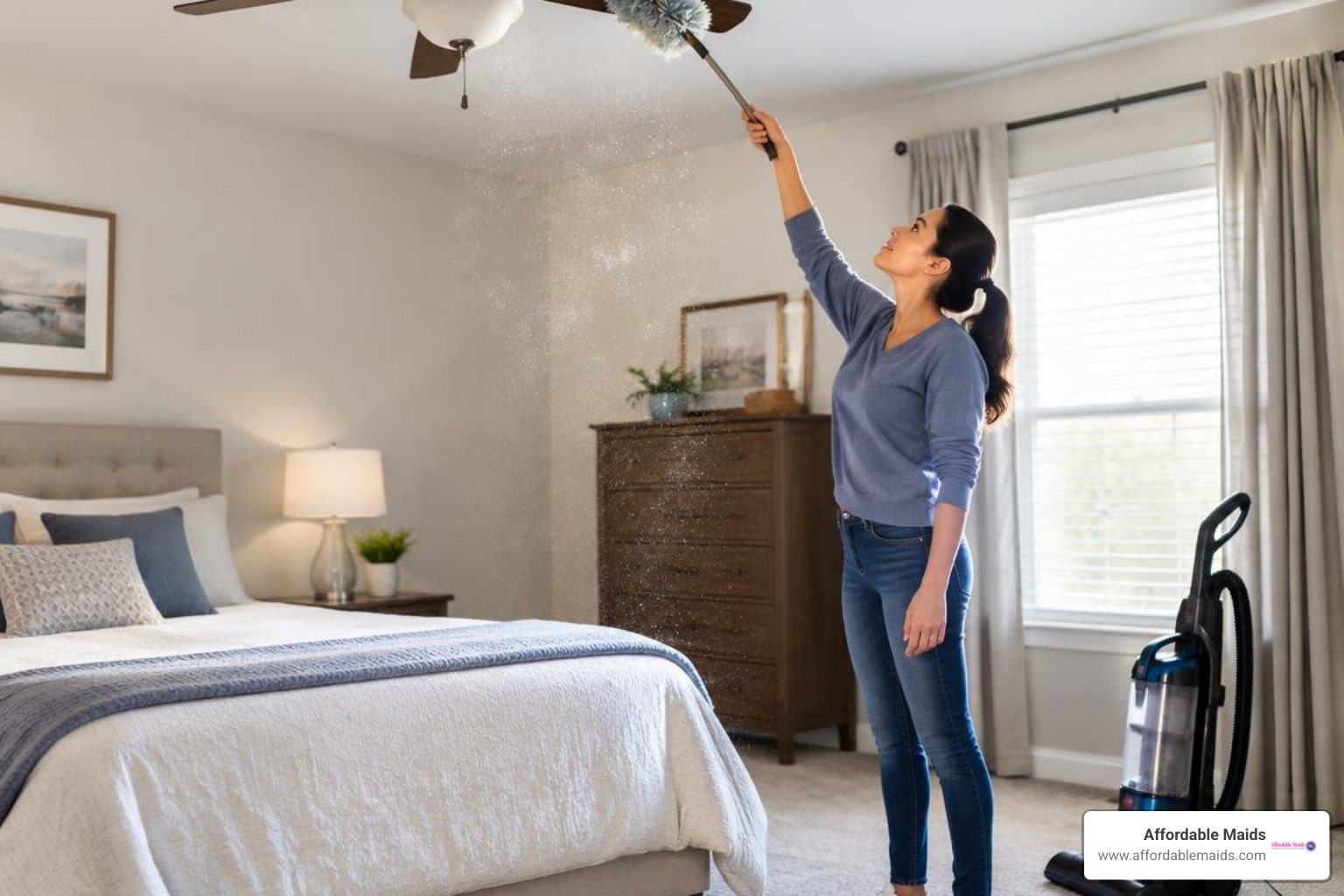
A structured routine saves energy and prevents redundant labor. When tasks are performed out of order, freshly washed surfaces often get soiled by airborne debris from subsequent steps.
Cleaning Out of Order: Why Top-to-Bottom Flow Matters
Gravity governs the movement of dust and debris. Cleaning lower surfaces before addressing higher elements is a classic sequencing mistake that forces you to repeat tasks.
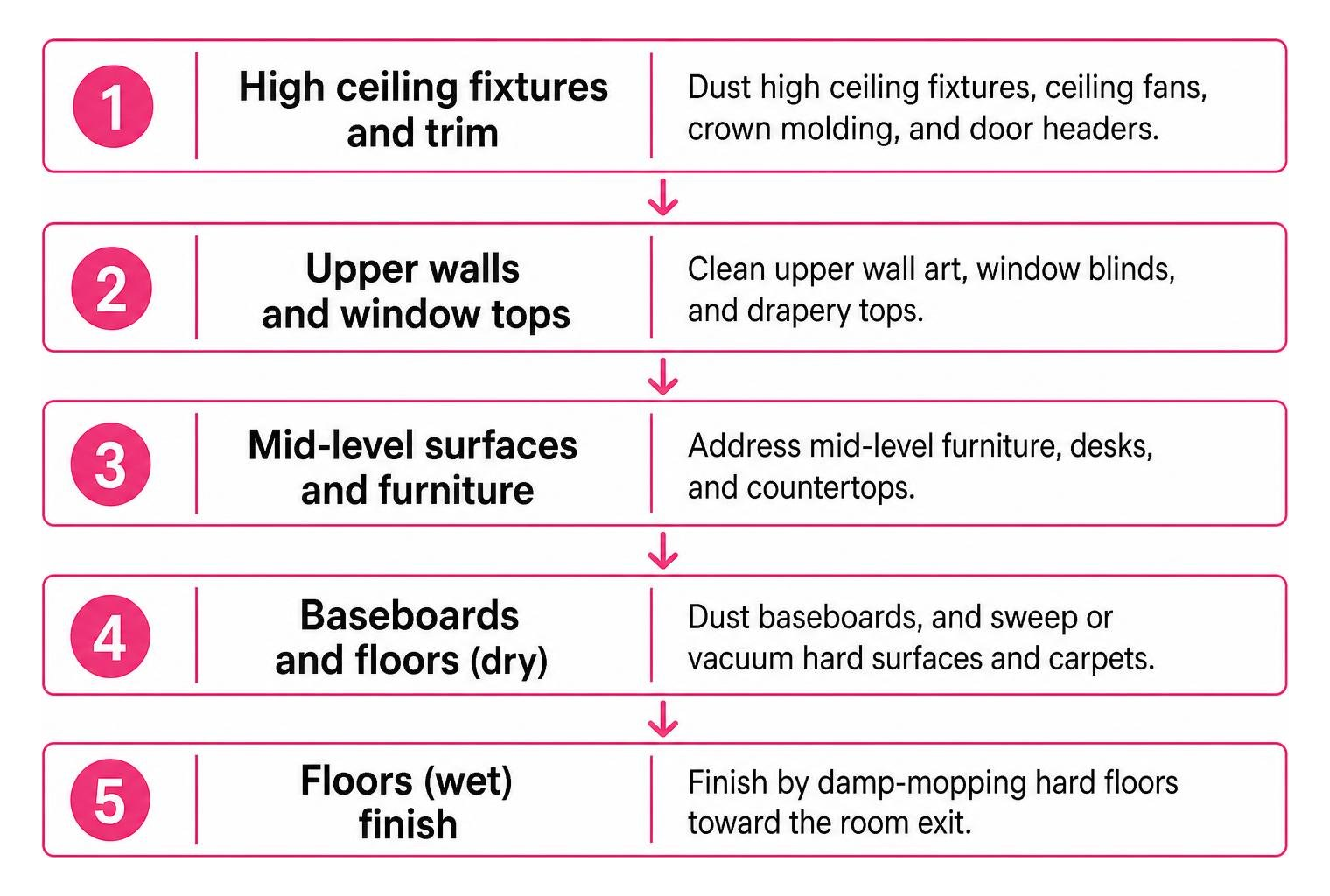
Always follow a top-to-bottom, back-to-front progression within every room:
- Dust high ceiling fixtures, ceiling fans, crown molding, and door headers.
- Clean upper wall art, window blinds, and drapery tops.
- Address mid-level furniture, desks, and countertops.
- Dust baseboards, and sweep or vacuum hard surfaces and carpets.
- Finish by damp-mopping hard floors toward the room exit.
Following a practical guide to cleaning house more efficiently helps maintain this downward progression, ensuring fallen particles are captured during the final floor clean.
Skipping Dry Preparation Before Wet Cleaning
Applying liquid sprays directly over loose dust, pet fur, or food crumbs creates a muddy slurry. This paste gets smeared into grout lines, baseboard crevices, and wood grain, making soil harder to remove.
Always complete dry preparation steps before introducing liquids:
- Use dry, electrostatically charged microfiber tools to lift loose dust from furniture and shelving.
- Thoroughly sweep or vacuum hard floors to remove grit before running a damp mop.
- Brush dry debris away from bathroom sink corners and kitchen backsplashes prior to applying surface cleaners.
Implementing smart dusting tactics that keep surfaces cleaner for longer preserves finishes and prevents loose grit from acting as an abrasive under wet cleaning cloths.
Neglecting High-Touch Points and Problem Zones
While wide floors and open countertops receive frequent care, smaller contact areas are often overlooked. Light switch plates, interior doorknobs, cabinet pulls, appliance handles, television remotes, and microwave buttons collect skin oils and daily soil through constant handling.
Wipe down these high-touch zones weekly using a lightly dampened microfiber cloth. Pay close attention to hidden transition areas, like the baseboards near front doors and the floor space behind toilets. Establishing simple daily routines to keep high traffic entryways spotless keeps high-contact surfaces tidy throughout the week.
Tool Maintenance and Surface Material Compatibility
Using dirty tools spreads soil from one room to another, defeating the purpose of cleaning. Matching the right tool to each surface is equally important to avoid unintended damage.

How Dirty Tools and Cross-Contamination Spread Grime
Cleaning with worn or dirty tools redistributes soil across your home. Using a single cloth to clean bathroom fixtures and then wiping kitchen countertops introduces bacteria to food preparation surfaces.
To prevent cross-contamination and maintain clean tools:
- Color-Code Cloths: Designate specific microfiber colors for distinct zones (for example, blue for bathrooms, yellow for kitchens, and green for general living areas).
- Two-Bucket Mopping: Use one bucket for clean detergent solution and a separate bucket for dirty rinse water to avoid reapplying murky water to flooring.
- Tool Replacement Schedules: Replace dish sponges every 1 to 2 weeks, bottle brushes every 1 to 2 months, and dish brushes every 3 to 4 months.
- Toilet Brush Hygiene: Allow toilet brushes to air-dry securely over the toilet bowl for at least 15 minutes before placing them back in their holders, preventing stagnant moisture buildup.
- Vacuum Maintenance: Empty vacuum canisters or change collection bags when they are two-thirds full to maintain optimal airflow and prevent musty odors.
Delicate Surfaces Damaged by Common House Cleaning Mistakes
Different surfaces require compatible care. Using aggressive tools or unmatched chemicals can degrade finishes and lead to costly repairs.
- Natural Stone (Marble, Granite, Limestone): Distilled white vinegar and lemon juice contain acids that react chemically with the calcium carbonate in natural stone. This reaction causes surface etching—a permanent chemical dulling of the stone that cannot be wiped away. Always clean natural stone with pH-neutral stone formulas or mild dish soap.
- Hardwood and Laminate Flooring: Steam mops and dripping-wet string mops force high-temperature moisture into seams and micro-gaps. Over time, trapped water causes hardwood and laminate planks to swell, cup, and warp, while degrading the protective polyurethane topcoat. Use a lightly dampened microfiber spray mop instead.
- Stainless Steel Appliances: Scrubbing stainless steel with abrasive scouring pads or against the grain creates visible micro-scratches. Always wipe in the direction of the metal’s visible grain using a soft microfiber cloth.
Debunking Viral Social Media Cleaning Hacks
Social media often promotes quick household shortcuts, but many viral hacks cause long-term problems:
- Fabric Softener on Baseboards: Some trends suggest wiping baseboards with fabric softener to repel dust. However, fabric softeners leave a flammable chemical coating near electrical outlets and baseboard heaters, posing a fire risk while creating a waxy film that traps dust.
- Melamine Foam (Magic Erasers) on Glossy Finishes: Melamine foam functions like extremely fine abrasive sandpaper. Using it on stainless steel appliances, polished stone, or high-gloss cabinetry dulls reflective coatings and removes protective sealers.
- Chemical Cleaners in Toilet Tanks: Submerging bottles of concentrated cleaner inside a toilet tank exposes rubber flappers, intake valves, and plastic seals to corrosive chemicals, causing premature plumbing leaks.
- Newspaper for Window Cleaning: While vintage newsprint was effective on older glass, modern newspapers use soy-based inks and thinner paper fibers that break down quickly, leaving ink smudges and lint behind.
- Excessive Laundry Stripping: Repeatedly soaking fabrics in hot chemical baths strips dye, weakens fabric fibers, and accelerates textile wear without providing extra sanitation over balanced washing routines.
Frequently Asked Questions About Common House Cleaning Mistakes
Why shouldn’t vinegar be used on natural stone countertops or hardwood floors?
Distilled white vinegar contains approximately 5% acetic acid. When applied to marble, limestone, or travertine, this acid dissolves the calcium carbonate structure of the stone, causing etching and surface dullness. On hardwood flooring, repeated acidic exposure breaks down the protective polyurethane finish, making the wood vulnerable to moisture damage and potentially voiding manufacturer warranties.
What is the correct order to clean a room to avoid repeating work?
The most efficient sequence is to work from top to bottom and back to front. Start by dusting ceiling fans, high vents, and upper light fixtures, followed by wall art, window treatments, and furniture surfaces. Clear crumbs and dry debris from baseboards and floors next, and finish the room by vacuuming and damp-mopping hard flooring toward the doorway.
How do you disinfect high-touch household surfaces without harsh chemicals?
Routine household sanitation does not require heavy chemical fogging. The CDC recommends cleaning surfaces first with warm water and mild dish soap to remove dirt and physical barriers. When targeted disinfection is needed—such as when a family member is ill—apply an EPA-registered disinfectant to high-touch handles and switches, allow it to remain visibly wet for the full dwell time on the label, and ensure the space is well-ventilated.
Conclusion
Building smarter home care habits centers on using the right tools, following proper room workflows, and respecting surface chemistry. By avoiding dangerous chemical mixtures, measuring cleaning agents accurately, and protecting delicate finishes, you can keep your living space fresh and comfortable without wasting time or effort.
For homeowners seeking comprehensive care, our team provides trusted residential maid support tailored to your schedule. We offer recurring maintenance, move-in/out assistance, and specialized Deep Cleaning Services that thoroughly address accessible surface dirt across kitchens, bathrooms, and living areas. Optional add-ons, such as cleaning inside refrigerators and ovens, can also be arranged to suit your home’s unique needs. Contact our team to request a personalized quote based on your home size and preferred service options.