
The Easy Way to Clean Baseboards and Keep Them That Way
How to Keep Baseboards Clean Without Making It a Big Chore
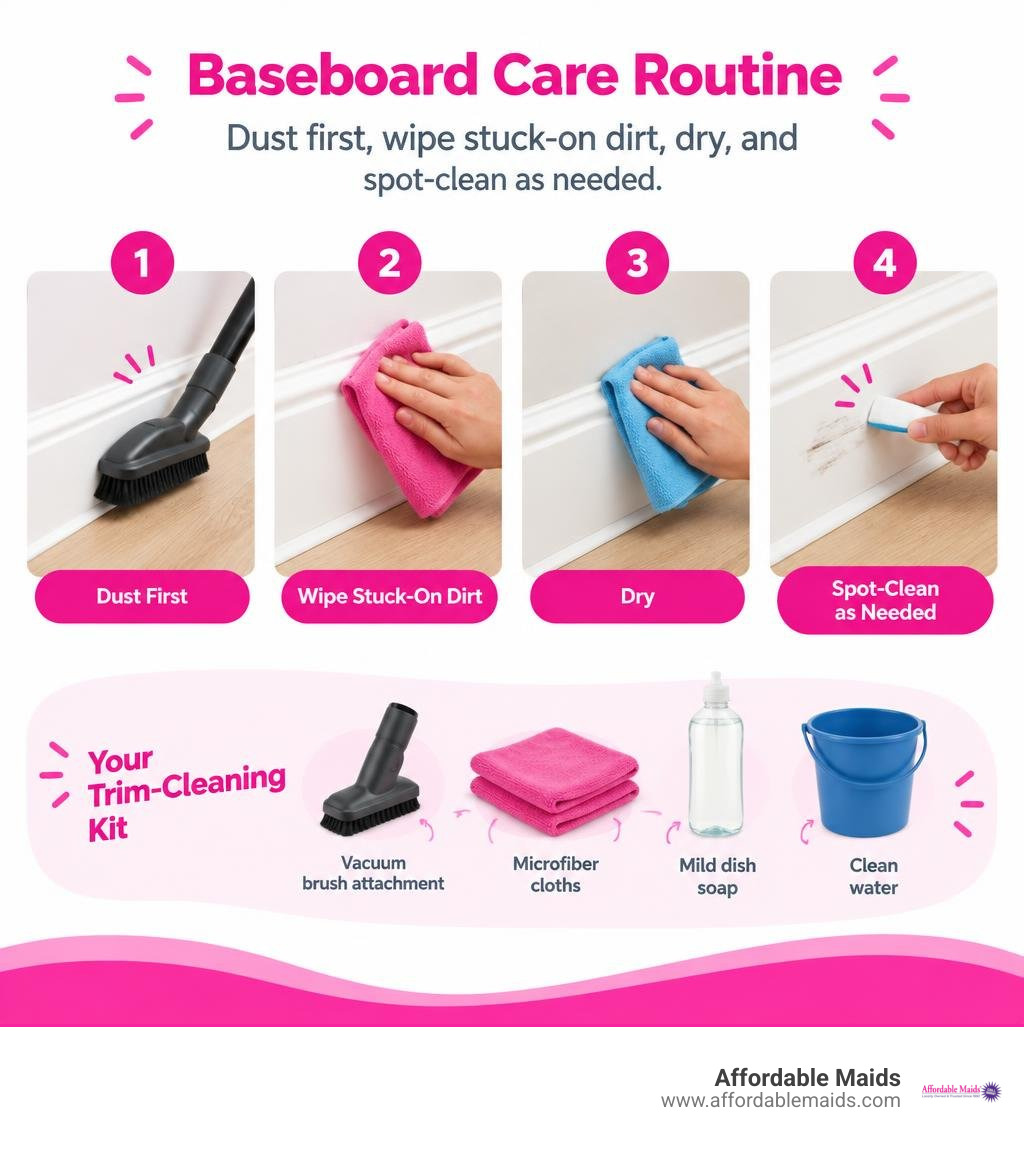
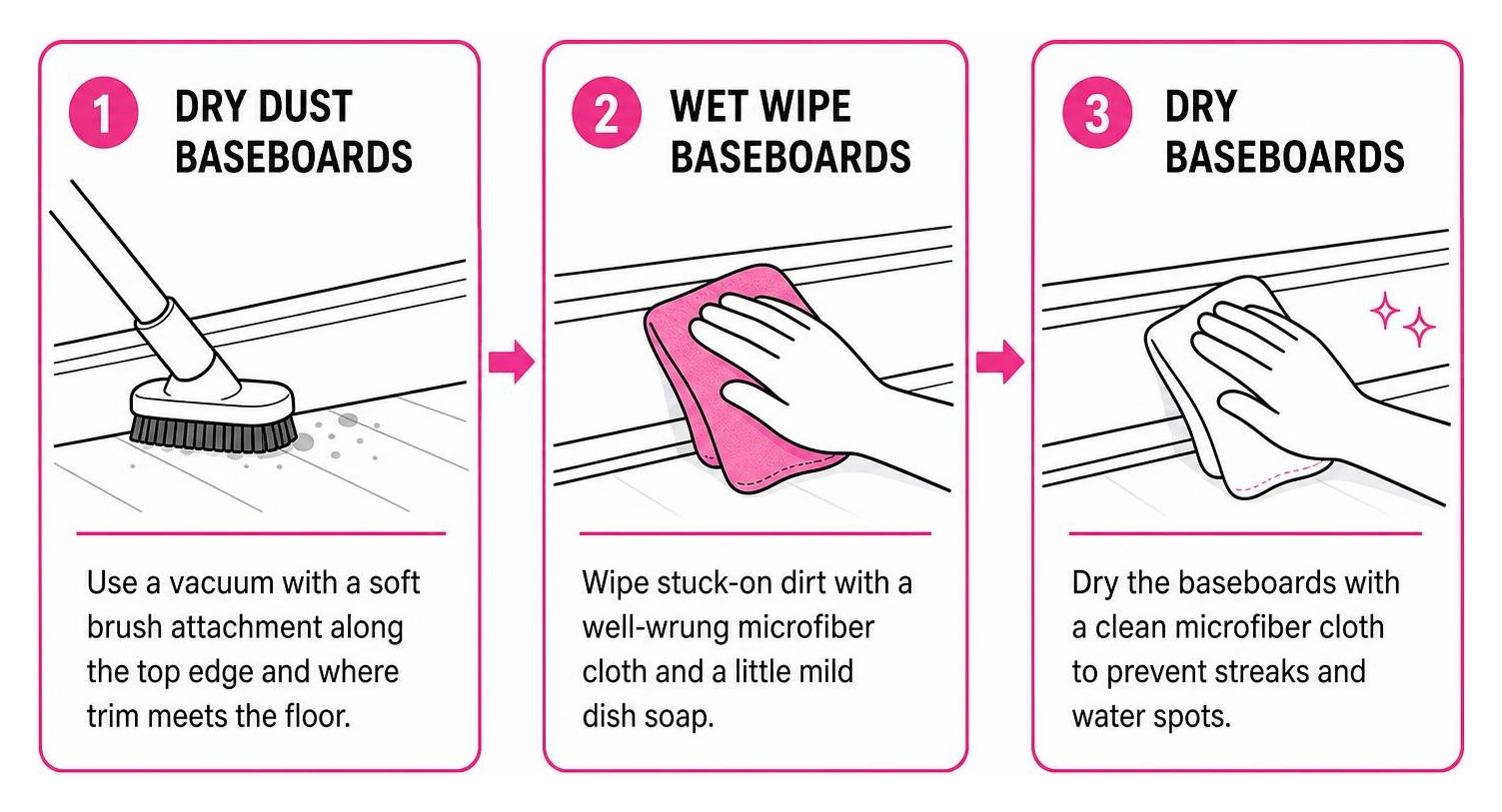
Dust baseboards when you vacuum, before you clean the floor. Run a soft brush attachment along the top edge and where the trim meets the floor. When dirt sticks, wipe it with a well-wrung microfiber cloth and a little mild dish soap, then dry it. Spot-clean scuffs and spills as they appear.
Baseboards collect dust, pet hair, and shoe marks because they sit right where daily activity meets the wall. This guide walks you through a simple routine that works for different trim and floor types.
Room Preparation and Essential Baseboard Cleaning Tools
Before jumping into cleaning, taking five minutes to prepare your room saves you time and frustration. Move lightweight furniture, such as side tables and floor lamps, a few feet away from the walls. Pull back floor-length curtains and tuck away any loose electrical cords or pet toys that block your path along the perimeter of the room.
Having the right supplies on hand prevents what we call the “cleaning scavenger hunt.” Assemble a dedicated trim-cleaning kit with the following basics:
- Vacuum with attachments: An extension wand fitted with a soft dusting brush or a narrow crevice tool.
- Microfiber cloths: High-quality, lint-free cloths for both damp wiping and dry buffing.
- Mild dish soap: An effective, gentle surfactant that cuts through everyday grime without stripping paint.
- Warm water bucket: A small bucket or spray bottle for your gentle washing solution.
- Melamine sponge: Ideal for spot-treating marks on durable white trim.
- Cotton swabs or an old soft toothbrush: Indispensable tools for intricate corners, decorative ridges, and seams.
- Knee protection: A garden kneeler or a folded yoga mat to protect your joints if you plan to clean at floor level.
Keeping these essentials organized makes it easy to integrate trim maintenance into your broader cleaning checklists without turning it into an all-day project.
The Best Step-by-Step Method to Deep Clean Baseboards
When baseboards have accumulated months of built-up grime, a quick dusting will not be enough. Following a structured order ensures you do not waste energy smearing wet dust across your walls or dirtying a freshly mopped floor. We always recommend adhering to the correct order to clean a house, which means tackling ceiling fans and furniture surfaces first, moving down to the baseboards, and finishing with the floors.
Step-by-Step Guide on How to Keep Baseboards Clean
- Start With Thorough Dry Dusting: Never apply water or liquid cleaner to dusty trim. Doing so turns dry particles into a muddy paste that settles into grooves. Run your vacuum’s dusting brush along the top ledge, the face of the molding, and the junction where the board meets the flooring.
- Mix a Gentle Cleaning Solution: Combine one-half teaspoon of mild dish soap with two quarts of warm water in a small bucket. You want just enough soap to lift oils without leaving behind a sticky residue that attracts fresh dust.
- Wipe With a Barely Damp Cloth: Dip a microfiber cloth into your solution and wring it out completely until it is barely damp. Wipe along the length of the baseboard, working from top to bottom. Rinse your cloth frequently in the bucket and change the water as soon as it looks cloudy.
- Dry Immediately: Follow right behind your damp cloth with a clean, dry microfiber towel. Drying the trim protects delicate materials from moisture buildup and leaves a smooth, clean finish.
Removing Stubborn Scuff Marks and Kitchen Grease
Shoes, vacuum cleaner wheels, and toys frequently leave dark rubber scuffs along hallway trim, while kitchen baseboards collect airborne cooking oils.
For scuff marks on durable, white-painted baseboards, dampen a melamine foam sponge with plain water and gently rub the mark using light pressure. Melamine acts as an ultra-fine abrasive, so avoid scrubbing vigorously or using it across entire walls. Always perform a quick spot test on an inconspicuous corner first, particularly if your trim features dark, satin, or matte paint finishes. On natural wood trim, an art gum eraser is a much safer alternative to lift rubber marks without dulling the clear coat.
For grease splatters near stoves or dishwashers, increase your dish soap concentration slightly (up to one full teaspoon per two quarts of water). Dish soap is formulated specifically to break down food oils safely. Avoid mixing commercial degreasers with acidic household cleaners like vinegar, as combining disparate chemicals can produce irritating fumes or damage underlying paint layers.
Cleaning Intricate Trim, Corners, and Decorative Molding
Elaborate trim profiles, such as colonial or ogee moldings, feature carved dips and curves that trap heavy dust. Flat cloths often glide right over these recessed grooves without picking up the debris.
To clean detailed profiles, switch your vacuum to hand mode and use a narrow crevice tool to pull loose debris out of the grooves. Next, dip a cotton swab or a soft-bristled toothbrush into your soapy water solution, shake off excess moisture, and gently trace the profile lines and inside corners. Finish by wiping the crevices with the corner of a dry microfiber towel.
Baseboard Care by Material and Flooring Type
Not all baseboards tolerate water and cleaning solutions the same way. Matching your cleaning technique to your specific trim material prevents accidental water damage, peeling, or dulling.
| Baseboard Material | Moisture Tolerance | Recommended Cleaners | Tools to Avoid |
|---|---|---|---|
| Semi-Gloss / Satin Paint | High | Warm water with mild dish soap | Heavy abrasives, wire brushes |
| Flat / Matte Paint | Low to Moderate | Barely damp microfiber, plain water | Melamine sponges, heavy scrubbing |
| Stained / Natural Wood | Low | Wood-specific soap or barely damp cloth | Harsh degreasers, excess water |
| MDF (Fiberboard) | Very Low | Well-wrung, barely damp microfiber | Soaking cloths, steam, standing water |
| Vinyl / PVC | Very High | Mild soap, all-purpose household cleaners | Solvent-based thinners, heat tools |
Painted, Stained Wood, MDF, and Vinyl Finishes
- Painted Baseboards: Trim finished with semi-gloss or satin paint handles light damp wiping exceptionally well. Matte and flat finishes are more porous and can develop shiny “burnish” spots if scrubbed; treat them with gentle, single-pass wipes using minimal water.
- Stained or Natural Wood: Natural wood expands and contracts with moisture. Clean stained boards using a dedicated wood cleaner or a cloth wrung almost completely dry. Never allow water to pool along wood seams or floor joins.
- Medium-Density Fiberboard (MDF): Common in modern homes, unsealed or pre-primed MDF acts like a sponge when exposed to liquid. If water penetrates the seams or back edges, the fiberboard can swell and deform permanently. Use only barely damp microfiber and dry the trim immediately with a towel.
- Vinyl or PVC Trim: Frequently installed in bathrooms and basements due to its water resistance, vinyl can be washed thoroughly with mild soapy water without fear of swelling.
Carpeted Rooms vs. Hard Flooring
The flooring next to your baseboards plays a major role in how grime accumulates.
In carpeted rooms, the narrow gap where the carpet edge meets the wooden tack strip acts as a dust trap. Foot traffic pushes airborne particles toward the walls, creating dark lines along the lower edge of the trim. When working in carpeted areas, use your vacuum’s crevice tool along the floor-to-trim junction to draw out trapped lint before doing any wet wiping. For broader efficiency across your home, you can master dusting techniques in less than an hour a day by coordinating your dusting and vacuuming passes together.
In hard-surface rooms (hardwood, tile, or luxury vinyl plank), wet mopping often splashes dirty water against baseboard faces, leaving water spots that dry into stubborn rings. When mopping floors, keep your mop head an inch away from the baseboard edge, and immediately wipe down any accidental splashes with a dry cloth.
Ergonomic Techniques to Clean Baseboards Without Bending Over

One reason baseboards get neglected is the physical strain of kneeling, crouching, or crawling around an entire room. Fortunately, you can clean your trim thoroughly while standing upright by using smart ergonomic tools.
- Vacuum Extension Wands: Use a lightweight stick vacuum or canister vacuum equipped with a long rigid wand. Attach a 360-degree dusting brush and walk the perimeter of the room at a comfortable, upright pace.
- Long-Handled Microfiber Mops: Flat dust mops with pivoting heads can be flipped on their side to run along the vertical face of baseboards without requiring you to bend down.
- The Broom Handle Wrap: Wrap a slightly damp microfiber towel around the bristle head of a standard household broom and secure it with a rubber band. You can guide the padded head along the baseboard ledge from a standing position.
- Knee and Joint Support: If you prefer hand-cleaning intricate trim up close, place a cushioned garden kneeler or thick foam mat underneath you, or sit on a low rolling utility stool to take pressure off your lower back.
How to Keep Baseboards Clean: Long-Term Prevention Tips
Once your baseboards are clean, simple preventative measures will keep dust from settling quickly. Incorporating simple habits for a dust-free home reduces airborne debris before it ever lands on your trim.
- The Dryer Sheet Technique: After deep cleaning and drying your trim, rub a standard dryer sheet along the face and upper ledge of the baseboard. The anti-static coating leaves a microscopic film that neutralizes electrical charges, helping repel floating dust particles.
- Maintain HVAC Filters: Check and replace furnace and air conditioning filters according to manufacturer guidelines (typically every 60 to 90 days). Clean filters pull dust and pet dander out of the air circulation before it drops to floor level.
- Place High-Efficiency Entryway Mats: Place quality walk-off mats both outside and inside exterior doors to capture soil, mud, and street grit before shoes track it past your entryway baseboards.
- Maintain Clean Vacuum Filters: A vacuum with a clogged or dirty exhaust filter blows fine dust back into the air, which settles directly onto your baseboards within hours of cleaning.
How to Keep Baseboards Clean Between Deep Cleans
Keeping trim presentable does not require frequent deep scrubbing. Integrate a quick dusting pass into your regular bi-weekly cleaning routine. Running a soft duster or an electrostatic dusting wand over the top ledge takes less than two minutes per room. If someone spills a drink or tracks mud near the wall, spot-clean it with a damp cloth immediately rather than letting it dry into a hardened stain.
Mistakes to Avoid When Maintaining Baseboards
- Skipping the Dry Dusting Step: Applying wet rags directly to heavy dust creates muddy streaks that are difficult to remove from paint crevices.
- Using Too Much Water: Soaking your cleaning cloths risks moisture seeping behind boards, causing MDF to bubble or natural wood to warp.
- Reaching for Abrasive Scrub Pads: Green scouring pads and wire brushes will scratch paint coats and strip clear sealants from wood.
- Overusing Melamine Sponges: Using a melamine foam eraser on glossy or dark paints can leave permanent dull, cloudy patches.
Frequently Asked Questions About Baseboard Cleaning
Can you use a steam cleaner on baseboards?
No, you should not use a household steam cleaner on baseboards. The combination of intense heat and concentrated moisture can soften and bubble interior paint, dissolve adhesives behind vinyl trim, and cause wood or MDF fiberboard to swell and warp. Stick to dry dusting and barely damp microfiber wiping.
How often should baseboards be cleaned?
For most households, dry dusting baseboards every two weeks during your regular vacuuming routine is plenty. A deeper damp wipe-down with mild soapy water is typically only needed every two to three months, or once a month in high-traffic zones like entryways, kitchens, and homes with shedding pets.
Do dirty baseboards contribute to indoor dust and allergens?
Yes. Baseboards collect significant amounts of settling dust, pet dander, and pollen. Whenever people walk quickly past walls or doors swing open, airflow currents disturb these particles and push them back into the living space. Keeping perimeter trim dusted helps reduce circulating surface debris.
Conclusion
Keeping your baseboards clean does not have to be an exhausting chore that leaves you with aching knees. By dry dusting with vacuum attachments first, wiping down grime with a gentle, barely damp cloth, and neutralizing static with a quick dryer sheet pass, your trim will frame your rooms beautifully with minimal effort.
When your entire home needs a comprehensive refresh from top to bottom, our team at Affordable Maids is ready to help. We provide thorough deep cleaning services that handle the heavy lifting for you. Contact us today to receive a personalized quote tailored to your home’s unique layout and needs.