
Transform Your Kids into Helpful Little Roommates
Age Appropriate Chores for Kids: Start Small and Build Skills
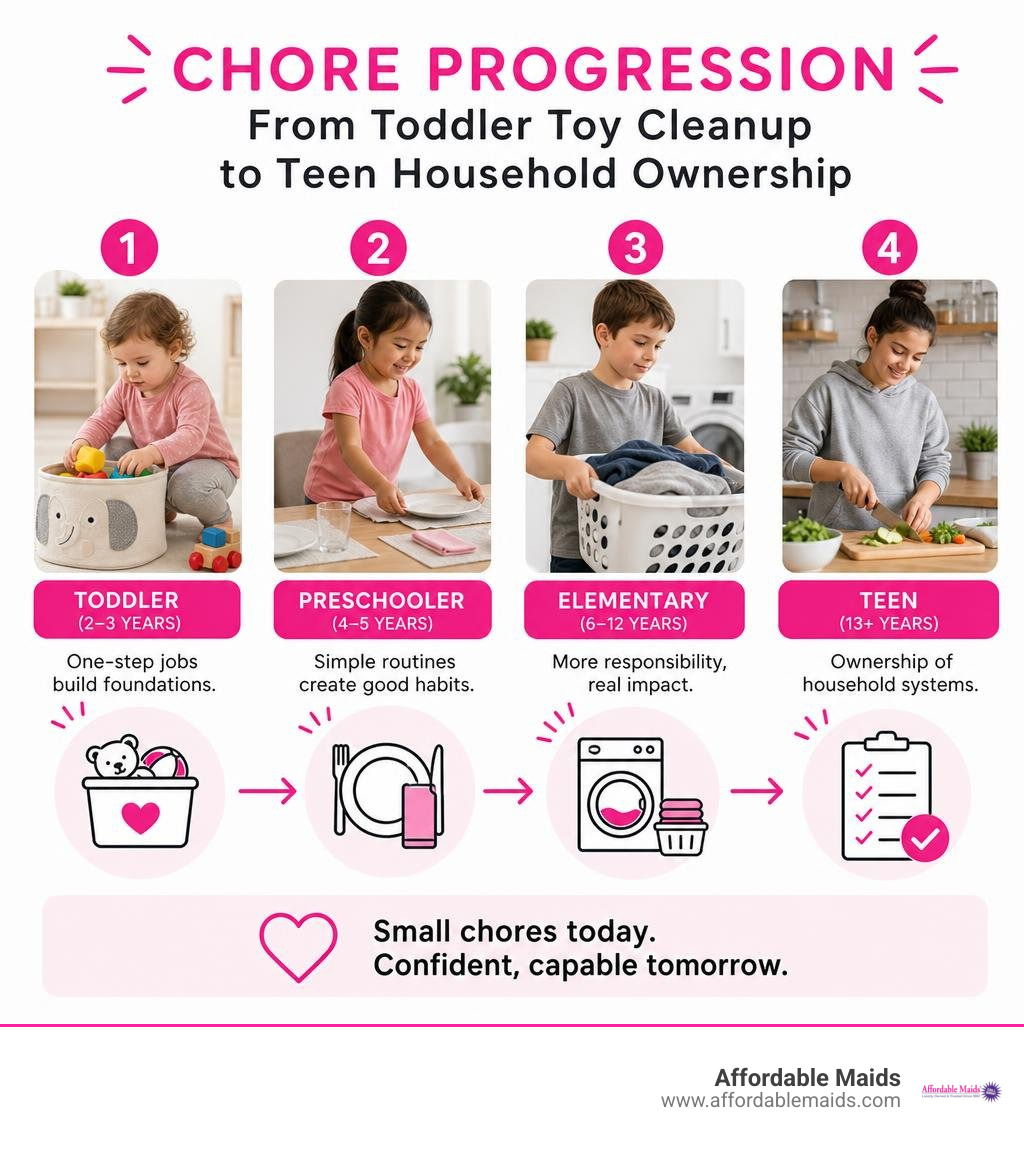
The best age appropriate chores for kids match what they can safely do now, then grow as they gain skill. Start toddlers with one-step jobs like putting toys in bins. Give preschoolers simple routines, such as setting napkins on the table. By elementary school, kids can help with laundry, dishes, and shared spaces. Teens can take ownership of real household systems, from cooking meals to doing their own laundry.
Chores are not just about a cleaner house. They help children practice responsibility, planning, patience, and follow-through. They also show kids that they are valued members of the household.
For busy families, the goal is not a long daily task list or perfect results. Pick one or two repeatable jobs, teach them together, and make expectations visible with a chart or checklist. A five-year-old’s unevenly folded towel is still progress.
This guide breaks down practical chores by age, plus simple ways to make them part of family life without turning every cleanup into an argument.
Why Age Appropriate Chores for Kids Build Lifelong Independence
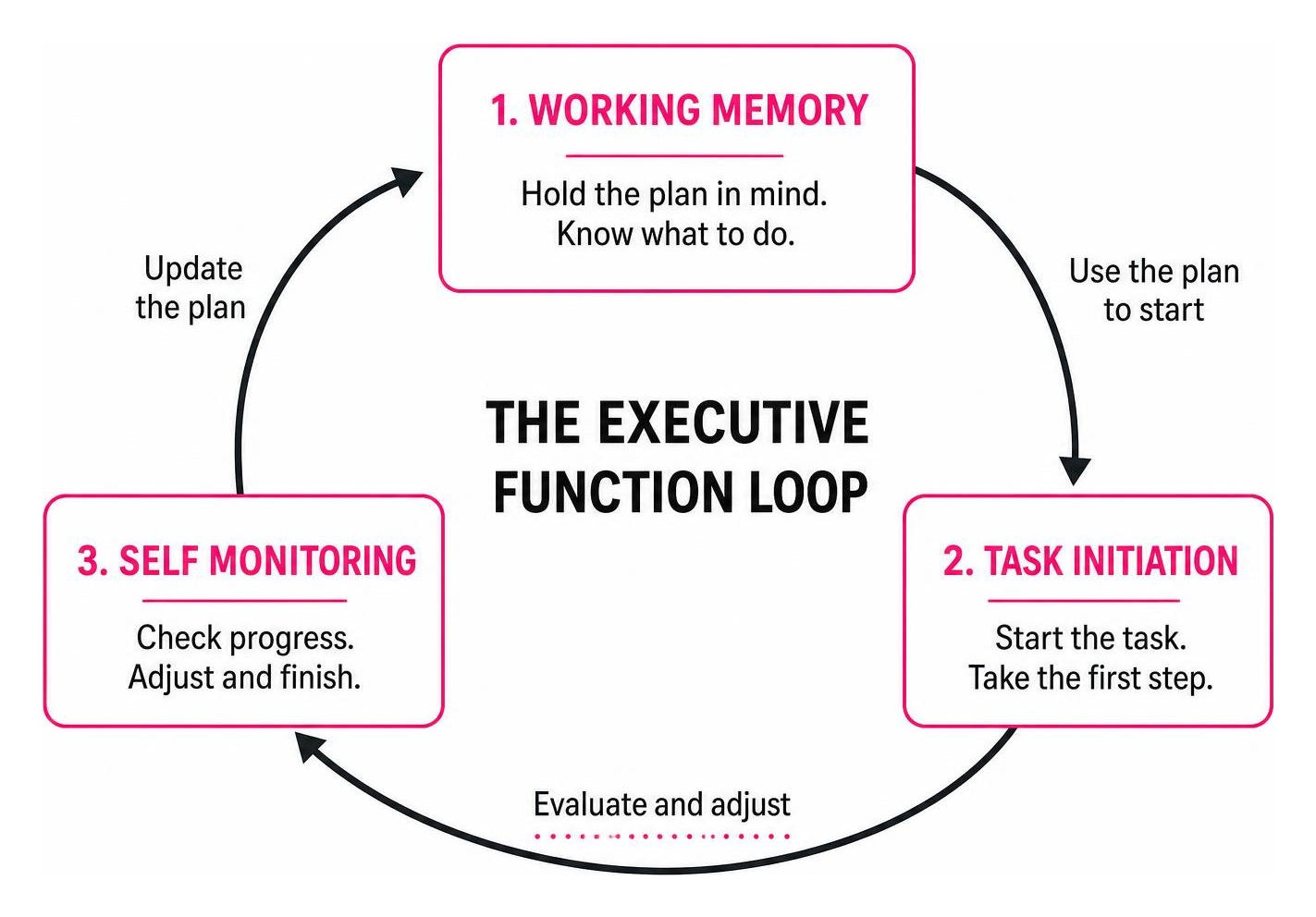
Assigning household responsibilities does far more than lighten the daily cleaning load for parents. Decades of behavioral research confirm that regular household chores serve as a practical training ground for emotional resilience, executive function, and long-term adult competence.
A landmark longitudinal study demonstrated that children who began participating in household chores before age four were significantly more likely to become self-sufficient adults with strong personal relationships and early career success. When children contribute meaningfully to everyday domestic life, they develop intrinsic self-worth. They see that their efforts keep the home running smoothly.
According to AAP guidance on chores and responsibility, pitching in at home helps children cultivate frustration tolerance and master the art of delayed gratification. Research in developmental psychology underscores these developmental gains: kids with regular chore duties scored 27% higher on measures of planning, organization, and task initiation compared to peers without assigned duties. Furthermore, a meta-analysis in the Journal of Marriage and Family found that children raised in homes with consistent chore routines were 3.5 times more likely to maintain those positive domestic habits into their adult lives.
Integrating shared responsibilities alongside simple habits for a dust-free comfortable home teaches kids that maintaining living spaces is an ongoing, collaborative effort rather than an unpredictable chore scramble.
The Complete Breakdown of Chores by Age and Developmental Stage
Matching tasks to physical motor skills and attention spans prevents chore-time tears and burnout. As outlined in a practical field guide to housekeeping in residential homes, dividing household maintenance into clear categories makes daily tasks manageable for every member of the household.
| Age Bracket | Developmental Focus | Recommended Daily Time | Core Task Examples |
|---|---|---|---|
| Toddlers (Ages 2–3) | Imitation, one-step direction | 5–10 minutes | Putting toys in bins, wiping small spills, placing clothes in hampers |
| Preschoolers (Ages 4–5) | Multi-step routines, visual cues | 10–20 minutes | Making beds roughly, setting tables, sorting socks, watering plants |
| Early Elementary (Ages 6–8) | Real independence, shared spaces | 15–25 minutes | Sweeping floors, emptying wastebaskets, packing backpacks, pet care |
| Tweens (Ages 9–12) | System management, quality standards | 20–35 minutes | Loading dishwashers, cooking simple meals, cleaning sinks, full laundry |
| Teens (Ages 13+) | Full household ownership, life skills | 30–45 minutes | Meal planning, deep appliance care, lawn maintenance, car detailing |
Age Appropriate Chores for Kids in Toddlerhood and Preschool (Ages 2–5)

Between ages two and five, young children love to mimic adult behavior. Toddlers do not see wiping a floor as hard work; they see it as an exciting, hands-on game. Capitalizing on this natural curiosity builds positive associations with household care early.
For toddlers (ages 2–3), focus on single-step tasks done side-by-side with an adult:
- Gathering stuffed animals and placing them into open storage bins.
- Carrying dirty shirts or pajamas to the laundry basket.
- Putting an old clean sock over their hand to dust low baseboards.
- Assisting with dry pet food distribution using pet-friendly cleaning tips.
- Carrying their empty, non-breakable plate to the kitchen counter after snack time.
By preschool (ages 4–5), children develop better fine motor coordination and can follow two- to three-step sequences. In fact, research indicates that 85% of four-year-olds can complete multi-step daily routines when supported by visual picture charts.
Preschool tasks include:
- Pulling up their duvet and straightening pillows to make their bed.
- Setting the dinner table with napkins, forks, and spoons.
- Sorting clean laundry into separate color piles and matching socks.
- Using a small, lightweight watering can to water indoor plants.
- Wiping down low coffee tables or kitchen chairs with a damp, kid-safe cloth.
Age Appropriate Chores for Kids in Elementary School (Ages 6–12)
During the elementary and middle school years, kids shift from needing side-by-side supervision to working independently. At this stage, household contributions transition from personal care to shared family responsibilities.
For early elementary kids (ages 6–8), multi-step tasks strengthen executive functioning:
- Sweeping hard-surface floors using a child-sized broom and dustpan.
- Emptying small bathroom and bedroom trash cans into the main household bin.
- Packing their daily school snacks and refilling reusable water bottles.
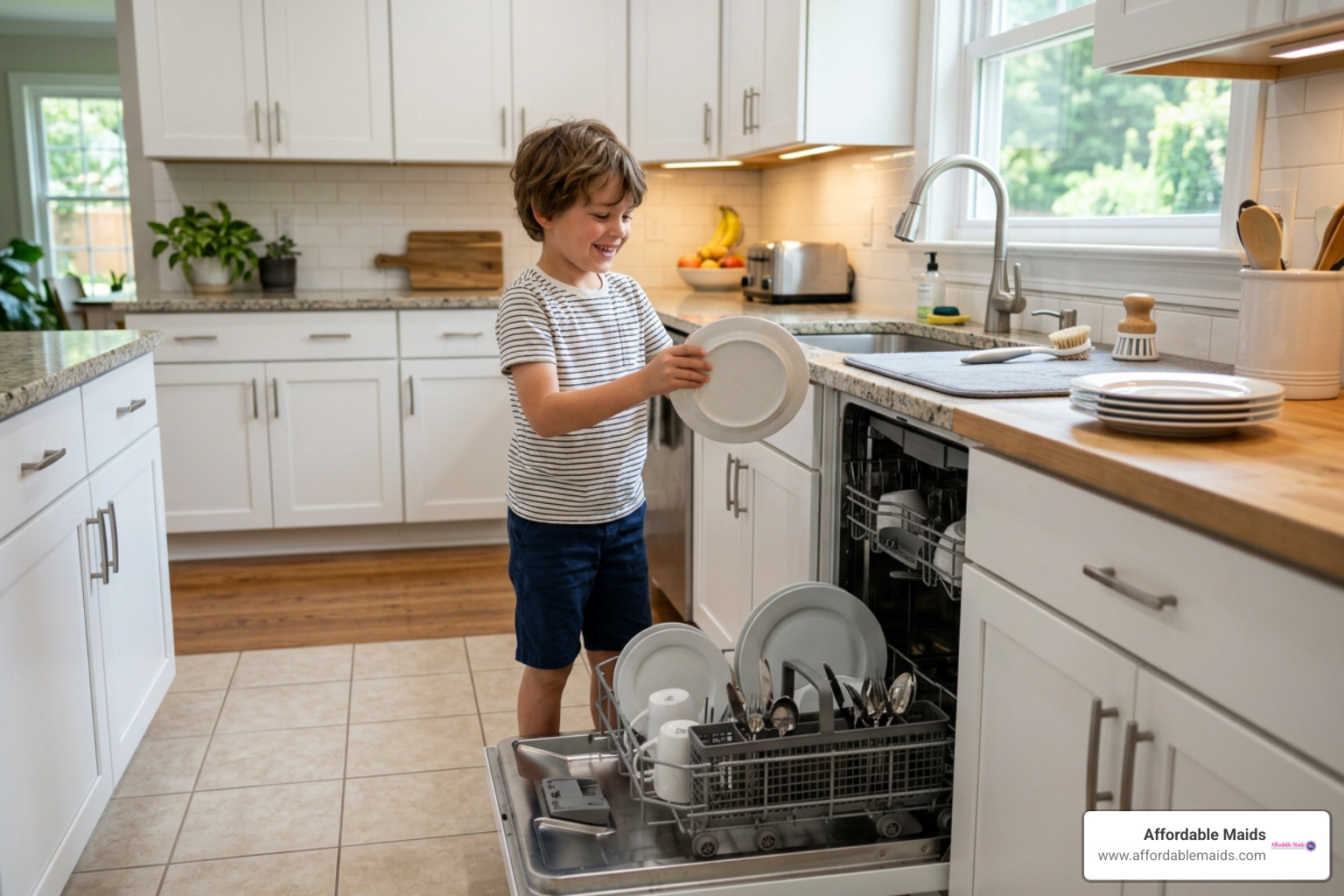
- Unloading non-breakable items, utensils, and plastic containers from the dishwasher.
- Dusting low shelving, wiping baseboards, and tidying shared family spaces before dinner.
For older elementary kids and tweens (ages 9–12), assign entire systems or physical zones as detailed in our weekly guide to maintain a clean home:
- Fully loading, running, and emptying the family dishwasher.
- Operating the washing machine and dryer, then folding and storing complete loads of personal laundry.
- Vacuuming high-traffic living areas, rugs, and hallways.
- Wiping down bathroom vanity mirrors, sinks, and countertops.
- Preparing simple family breakfasts or assembling weeknight side dishes and salads.
- Raking autumn leaves, pulling garden weeds, and taking outdoor trash bins to the curb.
Essential Household Responsibilities for Teens (Ages 13+)
Teenagers require practical life skills before heading off to college or living independently. Instead of micromanaging daily chores, give teens complete ownership over specific outcomes, which reinforces what are the 18 basic housekeeping rules for clean spaces.
Teens should master advanced domestic duties, including:
- Planning a balanced family dinner, assembling the grocery ingredient list, and preparing the meal from start to finish.
- Deep cleaning bathrooms, including scrubbing showers, bathtubs, and toilets.
- Managing their own clothing care, including stain treatment, fabric sorting, and ironing or steaming garments.
- Operating outdoor equipment safely, such as push mowers and string trimmers for lawn care.
- Vacuuming and cleaning the interior of family vehicles.
- Performing seasonal deep cleaning tasks, such as cleaning inside microwave ovens, sanitizing kitchen waste bins, or sorting through pantry dry goods.
How to Introduce Household Chores Without Power Struggles
Transforming resistant kids into helpful helpers requires predictable structures rather than emotional verbal battles. When chore reminders turn into repeated nagging, friction takes over.
According to practical developmental research from Children’s Mercy, setting clear routines and praising effort over perfection prevents daily household resistance. Implementing standardized cleaning checklists depersonalizes instructions; the chart becomes the reminder instead of the parent.
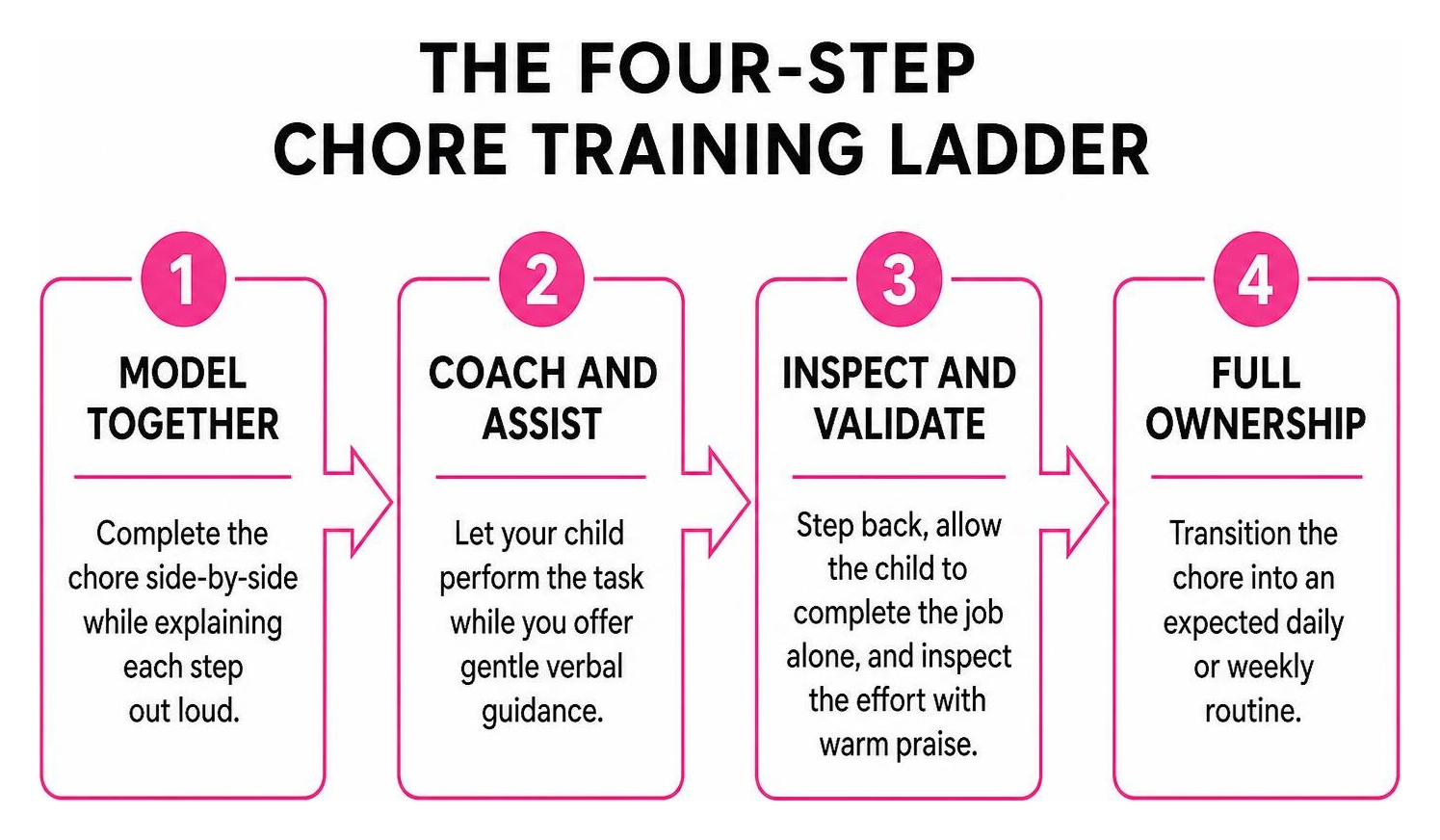
To establish new tasks smoothly, use the four-step teaching ladder:
- Model Together: Complete the chore side-by-side while explaining each step out loud.
- Coach and Assist: Let your child perform the task while you offer gentle verbal guidance.
- Inspect and Validate: Step back, allow the child to complete the job alone, and inspect the effort with warm praise.
- Full Ownership: Transition the chore into an expected daily or weekly routine.
Crucially, never redo your child’s imperfectly completed chore in front of them. If your seven-year-old folds a bath towel slightly crookedly, leave it be. Redoing their work signals that their contribution was inadequate, quickly eroding motivation.
Praise the effort and concentration immediately upon completion, and save minor technical adjustments for a neutral teaching moment down the road.
Allowance and Motivation: Should Kids Get Paid for Helping at Home?
The debate over whether to link chores to financial allowances is a common dilemma for parents. Child development experts and financial literacy specialists generally advise separating basic household contributions from financial earnings.
Every member of a family consumes resources, creates messes, and uses shared spaces. Basic chores—such as clearing personal dinner plates, making beds, putting dirty clothes in the hamper, and cleaning bedroom floors—should be framed as standard citizenship duties required to maintain a consistently clean home. Tying fundamental daily chores to an allowance can inadvertently backfire: if a child decides they do not need pocket money that week, completing their basic duties becomes optional.
Instead, consider a balanced dual-tier system:
- Baseline Family Chores (Unpaid): Daily habits that maintain personal spaces and shared family living areas (e.g., tidying bedrooms, setting tables, feeding household pets).
- Bonus Project Chores (Paid Earnings): Optional, above-and-beyond household tasks that build real financial literacy and teach the value of work (e.g., detailing the family car, weeding garden beds for an hour, or cleaning garage shelving).
Allow natural consequences to do the heavy lifting for baseline chores. If a teenager forgets to place their soccer jersey in the laundry hamper by Sunday evening, the natural consequence is having to wash it themselves before practice on Monday.
Frequently Asked Questions About Kids and Chores
How many chores should a child do each day?
As a general rule, children should have two to three quick daily baseline tasks (such as making their bed and clearing dishes) alongside one larger weekly rotating task (such as vacuuming the hallway or wiping baseboards).
Keep total daily chore times aligned with developmental attention spans: 5 to 10 minutes for toddlers and preschoolers, 15 to 25 minutes for elementary students, and 30 to 45 minutes for teens. If chore time regularly exceeds these windows, prune the checklist to avoid burnout.
What should parents do when a child refuses to do chores?
Avoid engaging in emotional power struggles or lectures. First, ensure the requested chore matches their actual developmental ability and is clearly defined (e.g., “Put all plastic building blocks into the blue bin” instead of “Clean the playroom”).
Use “When/Then” framing to connect responsibilities directly to privileges: “When your bedroom floor is picked up, then you can turn on the video game console.” If chore resistance persists and is accompanied by school difficulties or severe behavioral challenges, discuss the issue with your family pediatrician to screen for underlying executive functioning or attention struggles.
How can families establish consistent daily chore habits?
Anchor chores to existing family daily rhythms rather than assigning tasks at random times throughout the day. Establish a 10-minute “Morning Rhythm” (making beds, dressing, putting cereal bowls in the sink) and a 15-minute “Evening Reset” right before dinner or bedtime (wiping tables, packing backpacks, putting living room toys away).
Consistency and predictable schedules transform household responsibilities into automatic daily habits.
Conclusion
Teaching your children age-appropriate chores is an ongoing investment in their future self-reliance, emotional maturity, and executive function. By starting small, celebrating progress over perfection, and maintaining consistent family routines, you help your children grow into capable, confident roommates who take genuine pride in caring for their living spaces.
While your kids build everyday maintenance habits, let our professional team handle the demanding, deep-cleaning workload. From our 8 local offices across Allison Park, Bethel Park, Canonsburg, Cranberry, Fox Chapel, Gibsonia, Mars, McCandless, Monroeville, Mt. Lebanon, Pittsburgh, Robinson Township, Sewickley, Squirrel Hill, Upper St. Clair, and Wexford, Affordable Maids provides bonded, insured, and dependable recurring maid services. Backed by 32+ years of local experience, over 279,000 completed cleans, and our 100% satisfaction guarantee, we keep your home spotless so your family can spend more quality time together.