Understanding Cleaning vs Sanitizing vs Disinfecting in Your Home
Cleaning, Sanitizing, and Disinfecting: Choose the Right Level of Care
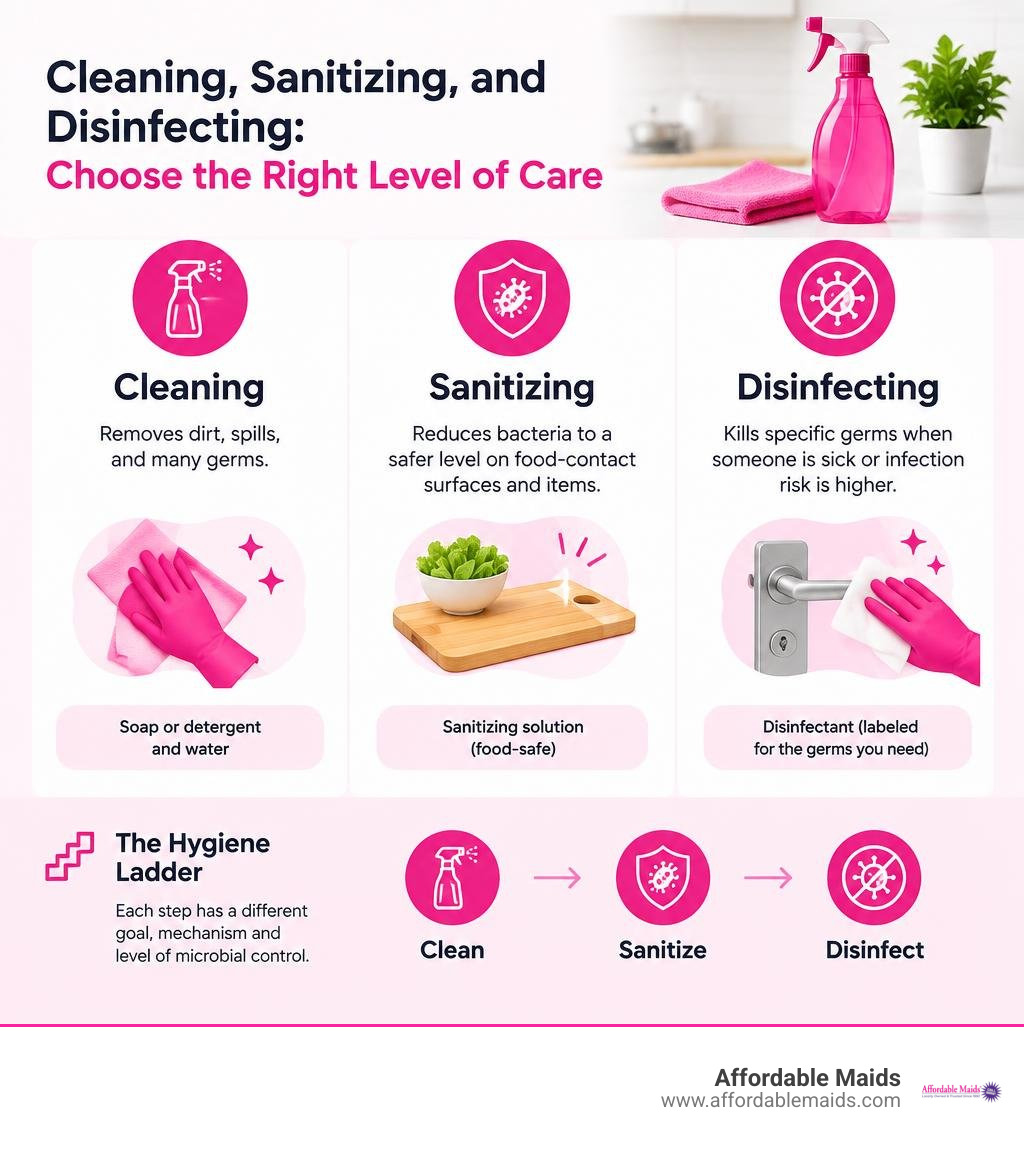
Cleaning vs sanitizing vs disinfecting comes down to the goal:
- Clean to remove dirt, spills, and many germs with soap or detergent and water.
- Sanitize clean food-contact surfaces and items that touch mouths to reduce bacteria to a safer level.
- Disinfect when someone is sick or infection risk is higher, using a product labeled to kill the specific germs you need to target.
For most healthy households, routine cleaning is the main job. The CDC notes that extra sanitizing or disinfecting at home is generally not needed unless someone is ill. When you do use a sanitizer or disinfectant, clean visible soil first, then keep the surface wet for the full label-listed contact time.
I am Lynn Reynolds, and this guide will help you use each method thoughtfully, safely, and without adding unnecessary steps to your already busy routine.
The Spectrum of Hygiene: Cleaning vs Sanitizing vs Disinfecting
Understanding surface hygiene starts with recognizing that cleaning, sanitizing, and disinfecting represent distinct steps on a hygiene ladder. Each process achieves a specific objective, utilizes different mechanisms, and addresses particular microbial challenges.
| Process | Primary Mechanism | Target Microbes | Microbial Reduction Standard | Typical Dwell Time |
|---|---|---|---|---|
| Cleaning | Physical removal via surfactants, water, and friction | Dirt, debris, organic matter, and transient surface microbes | Removes soil and a portion of germs; no mandated kill rate | None (rinse or wipe dry after scrubbing) |
| Sanitizing | Chemical reduction or thermal treatment | Primarily vegetative bacteria | 99.9% (3-log) on non-food surfaces; 99.999% (5-log) on food-contact surfaces | 30 seconds to 5 minutes |
| Disinfecting | Chemical destruction or deactivation | Broad spectrum: bacteria, fungi, and specific viruses | 99.999% (5-log) kill rate against tested pathogens | 30 seconds to 10 minutes (surface must remain wet) |
| Sterilizing | Extreme heat (autoclave), radiation, or harsh chemical sterilants | All microbial life, including bacterial endospores | 100% destruction of all viable microorganisms | Specialized cycle times (healthcare/laboratory settings) |
Defining the Three Tiers of Surface Care
Cleaning relies on water, detergents, and physical friction to loosen and wash away organic matter, dust, and accessible surface residues. Surfactants lift dirt particles so you can wipe them away. This physical removal dramatically lowers the number of germs present, even though it does not chemically destroy them. Understanding how routine surface wiping compares to deeper residential maintenance, such as deep cleaning vs standard cleaning, helps clarify why mechanical soil removal is the necessary foundation for everything else.
Sanitizing takes a clean surface and applies a chemical agent (or high thermal heat) to reduce bacteria to levels considered safe by public health standards. Sanitizers are formulated primarily to tackle bacteria rather than stubborn viruses or fungal spores.
Disinfecting represents the strongest tier typically used in residential homes. Disinfectants use specialized active ingredients to chemically destroy or deactivate bacteria and viruses. Because disinfectants must overcome microbial defense structures, they are reserved for targeted situations where cross-contamination risks or viral illnesses are present.
Understanding the Science: Cleaning vs Sanitizing vs Disinfecting Standards
The Environmental Protection Agency (EPA) regulates sanitizers and disinfectants as antimicrobial pesticides. For a product to claim it “sanitizes” or “disinfects,” it must undergo rigorous testing to prove its efficacy against specific test organisms. General household cleaning products that do not claim antimicrobial properties are not subject to these EPA registration rules.
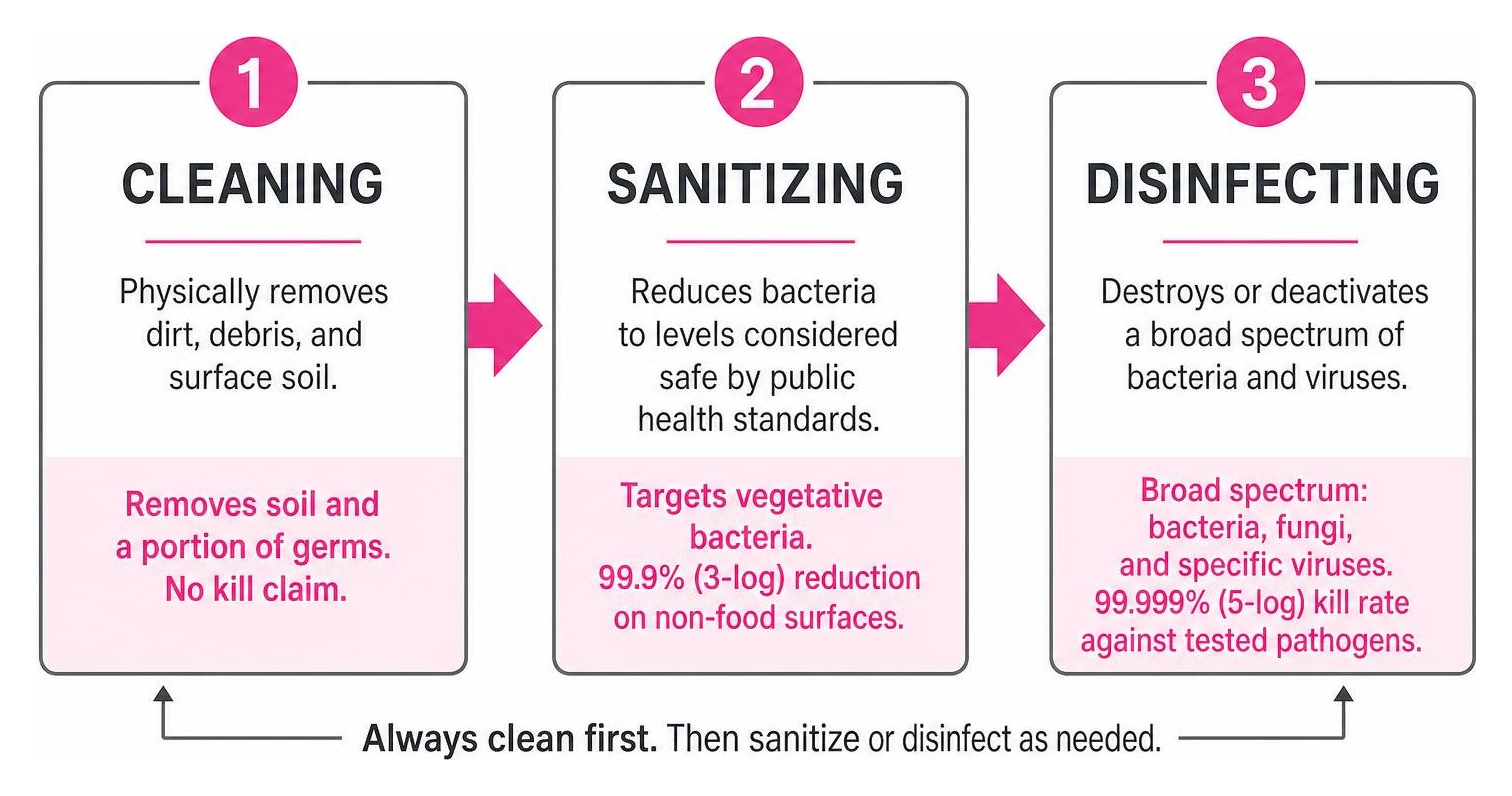
Following the correct order to clean a house ensures that cleaning always comes before antimicrobial treatments. Applying a sanitizer or disinfectant directly over grime prevents the active ingredients from reaching the underlying surface, rendering the treatment ineffective.
Contact Time and Log Reduction: How Germ Elimination Actually Works
Two core scientific principles govern whether a sanitizing or disinfecting product works as intended: contact time and log reduction. Overlooking either factor is the most common reason antimicrobial treatments fail in home settings.
The Critical Role of Dwell Time on Hard Surfaces
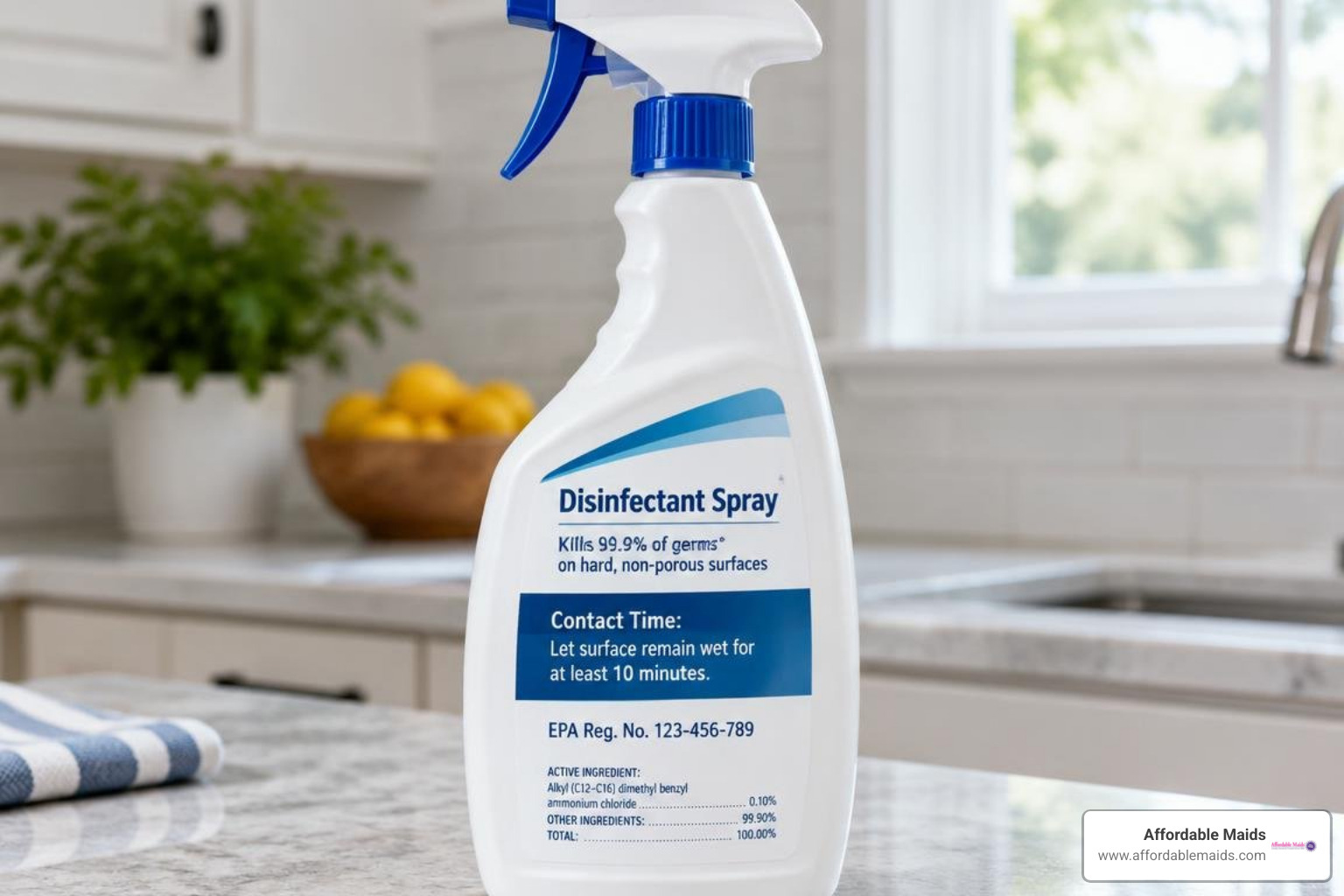
Contact time, commonly called dwell time, is the exact duration a chemical solution must remain visibly wet on an undisturbed surface to neutralize target organisms. Disinfectant contact times typically range from 30 seconds up to 10 minutes, depending on the active ingredient and the specific pathogen listed on the container.
Spraying a surface and immediately wiping it dry with a towel removes the product before it can complete its work. Reviewing essential tips for effectively cleaning and disinfecting highlights the importance of letting products air-dry or sit for the full duration specified on the manufacturer label. If the liquid evaporates before the required dwell time finishes, it must be reapplied.
Log Reduction Explained: From 3-Log to 5-Log Efficacy
Antimicrobial performance is measured scientifically using logarithmic reduction, which represents a 10-fold reduction in live microbes for every log level:
- 1-Log Reduction (90% reduction): Reduces a population of 1,000,000 microbes down to 100,000.
- 2-Log Reduction (99% reduction): Reduces 1,000,000 microbes down to 10,000.
- 3-Log Reduction (99.9% reduction): Reduces 1,000,000 microbes down to 1,000. This is the minimum EPA standard for non-food-contact surface sanitizers.
- 4-Log Reduction (99.99% reduction): Reduces 1,000,000 microbes down to 100.
- 5-Log Reduction (99.999% reduction): Reduces 1,000,000 microbes down to just 10. This is the standard required for EPA-registered food-contact sanitizers (achieved within 30 seconds) and medical-grade surface disinfectants.
While a jump from 99.9% to 99.999% sounds small on paper, it represents a 100-fold difference in surviving pathogens on a heavily contaminated surface.
Room-by-Room Strategy: When to Clean, Sanitize, or Disinfect
A balanced home hygiene routine matches the level of care to the actual risk in each living space. Using a structured home cleaning checklist allows you to address dirt systematically while applying stronger antimicrobial steps only where truly beneficial.
Room-by-Room Breakdown: Cleaning vs Sanitizing vs Disinfecting in Everyday Life
- Kitchen Prep Zones: Daily meal preparation requires cleaning counters with warm water and mild detergent. When handling raw poultry, meat, or seafood, follow cleaning with an EPA-registered food-contact sanitizer on cutting boards and prep counters. Always rinse food surfaces with clean potable water if the sanitizer label requires it.
- Bathrooms: Sinks, counters, and toilet exteriors benefit from routine cleaning to remove soap scum, hair, and dust. Periodic sanitizing or disinfecting of faucet handles and flush levers helps manage moisture-loving bacteria.
- Living Areas & Bedrooms: Routine dusting, vacuuming, and hard surface wiping with standard cleaners are completely sufficient for healthy rooms. Disinfecting living room tables or bedroom nightstands during normal conditions creates unnecessary chemical exposure without health benefits.
- Nursery & Infant Items: Baby feeding supplies and mouth-contact toys should be washed with soap and hot water, followed by a food-grade sanitizer or boiling water bath. Allow them to air-dry thoroughly.
High-Touch Surfaces and Illness Protocols
When an infectious illness strikes a household member, switch from standard maintenance to a targeted disinfection protocol. Pathogens easily transfer when multiple hands touch the same fixture throughout the day.
Concentrate your efforts on cleaning high-touch areas such as:
- Doorknobs, cabinet pulls, and entryway hardware
- Light switches and thermostat controls
- TV remote controls, computer keyboards, and gaming controllers
- Refrigerator exterior handles and microwave push-pads
- Faucet handles and toilet flush mechanisms
In dedicated sick rooms, keep a separate set of cleaning cloths. Clean away surface dust, apply an EPA-registered disinfectant effective against the specific virus or bacteria involved, and let it stand for the full dwell time before wiping.
Product Safety, Two-in-One Cleaners, and Essential Precautions
Antimicrobial chemicals require careful handling to avoid accidental injuries, respiratory irritation, or surface degradation.
Using Combined Cleaners and Reading EPA Registration Labels
Many modern commercial sprays are marketed as two-in-one cleaner-disinfectants. These products contain both detergent surfactants and antimicrobial actives. However, reading the fine print reveals a crucial instruction: if the surface is visibly dirty, you must perform a two-step application. Use the spray first to wipe away physical grime, then spray a second time and allow the liquid to remain wet for the listed contact time.
Always verify the EPA registration number on the bottle label. This number confirms that the formula has undergone independent laboratory validation for its specific pathogen kill claims.
Chemical Safety and Avoiding Hazardous Combinations
- Never mix cleaning chemicals: Combining household bleach with ammonia produces toxic chloramine gas. Mixing bleach with vinegar, toilet bowl cleaners, or other acids creates hazardous chlorine gas.
- Ensure adequate ventilation: Open interior windows, run exhaust fans, and keep fresh air circulating when using aerosol sprays or volatile sanitizers.
- Wear appropriate PPE: Use reusable rubber or disposable nitrile gloves to protect skin barriers from drying chemicals and irritants.
- Safe storage: Keep all chemical containers in their original labeled bottles, tightly capped, out of reach of children and pets.
- Emergency readiness: Keep the national Poison Control hotline number visible in your home: 1-800-222-1222.
Sanitizing vs Sterilizing: Why Homes Do Not Need Hospital-Grade Sterilization

Sterilization is the complete destruction of all microbial life, including highly resistant bacterial spores. It is achieved in healthcare environments, surgical suites, and specialized laboratories using pressurized steam autoclaves, dry heat ovens, radiation, or concentrated ethylene oxide gas.
Residential homes do not require sterilization, nor is it practically achievable. Everyday living spaces are naturally populated by millions of harmless environmental microbes that help prevent dangerous pathogens from establishing dominance. Striving for an operating-room level of sterility in a family home wastes resources, risks damaging residential finishes, and exposes household members to unnecessary chemical hazards. Routine cleaning combined with selective sanitizing and targeted disinfecting provides all the protection a residential home needs.
Frequently Asked Questions About Surface Hygiene
Does sanitizing kill viruses or only bacteria?
Under EPA regulatory standards, sanitizers are evaluated and registered specifically for their ability to reduce vegetative bacterial populations. While some specialized multi-claim products exist, standard surface sanitizers are not tested or approved to destroy viruses. When dealing with viral pathogens—such as influenza, norovirus, or respiratory viruses—use an EPA-registered disinfectant with confirmed viral efficacy.
Can you disinfect a surface without cleaning it first?
No. Applying a disinfectant to a surface covered in dirt, grease, or dust leads to poor results. Organic soil acts as a physical shield, preventing the disinfectant from contacting the microbes underneath. Certain soils can also chemically neutralize active disinfectant ingredients before they have a chance to work.
Is it possible to over-sanitize a home environment?
Yes. Overusing broad-spectrum disinfectants on low-risk surfaces (like baseboards, bedroom furniture, or clean floors) adds unnecessary chemical residues to your indoor environment and can contribute to antimicrobial resistance. Public health agencies like the CDC recommend routine cleaning with standard soap and water for everyday maintenance, reserving sanitizers and disinfectants for food preparation zones, diaper stations, and active illness management.
Conclusion
Mastering the balance between cleaning, sanitizing, and disinfecting keeps your living spaces fresh and comfortable without overcomplicating your weekly routine. Focus on consistent soil removal for day-to-day upkeep, sanitize food prep areas to keep meals safe, and reserve targeted disinfectants for high-touch points when someone in the house is sick.
For homeowners in Allison Park, Wexford, Fox Chapel, Upper St. Clair, and across the Greater Pittsburgh area who want support managing their home maintenance, explore our recurring maid services to discover how tailored home care can keep your home thoroughly refreshed all year long.