
How to Clean Ceiling Fan Dust Without Dirtying the Floor
Essential Supplies and Safety Prep Before You Start
To clean dust from a ceiling fan without dropping it on the floor, turn the fan off and slide an old pillowcase over one blade. Gently press the fabric against the top and bottom as you pull it back. The dust stays inside. Repeat on each blade, then empty the pillowcase outdoors and wash it.
For dust that sticks, follow with a lightly damp microfiber cloth and dry each blade. Put a sheet beneath the fan to catch anything the pillowcase misses. If you cannot reach the blades safely, use an extendable duster from the floor.
I’m Lynn Reynolds, and I’ll walk you through the safest way to clean the rest of the fan, too.
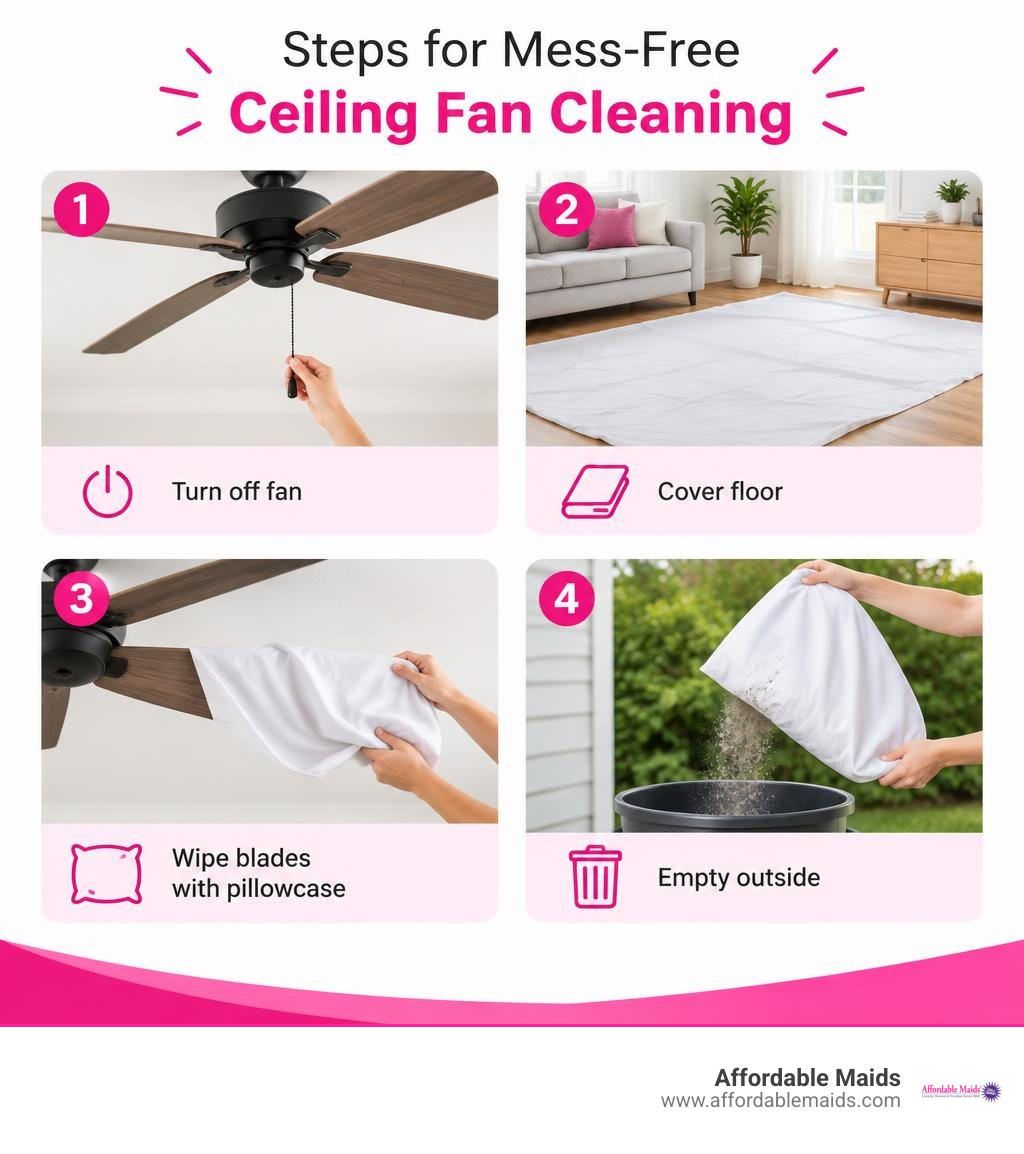

Before reaching up toward the ceiling, gathering the right tools and establishing safe habits ensures you finish the job quickly without scattering dust or risking an accident. Most ceiling fan dust settles on the top side of the blades, hidden from view until a sudden breeze knocks it loose onto your sofa, rug, or bed. Proper preparation stops those dust clouds before they start.
Tools and Supplies Needed
- An old cotton pillowcase (standard or king size)
- Microfiber cloths (lint-free)
- A sturdy step stool or ladder with non-slip feet
- An old bedsheet or plastic drop cloth
- Mild liquid dish soap or distilled white vinegar
- Warm water in a small bucket or spray bottle
- A can of compressed air (optional, for motor vents)
- Dust mask and safety glasses (highly recommended for allergy sufferers)
Safety First: Step-by-Step Prep
- Cut the Power: Switch off the ceiling fan at the wall switch or pull chain and wait at least 30 seconds for the blades to stop spinning entirely. If your fan operates on a remote, set the remote aside so nobody turns it on accidentally. For added security during deep cleaning, switch off the breaker at the electrical panel.
- Protect the Area Below: Lay an old sheet or drop cloth directly beneath the fan. Even with careful cleaning methods, a stray dust clump can drift downward. Covering your furniture and rugs means you will not have to vacuum twice.
- Set Up a Stable Base: If you are using a step stool or ladder, position it on a flat, dry, level surface. Never stand on rolling office chairs, wobbly dining chairs, or sofa cushions. Maintain three points of contact whenever climbing.
- Gear Up: Dust often contains skin flakes, pet dander, microplastics, and trace minerals. If you are sensitive to dust, wearing safety glasses and a dust mask keeps airborne particles out of your eyes and respiratory tract.
Incorporating these steps into The Home Cleaning Checklist: What to Clean and When helps keep high-dust fixtures from being neglected throughout the year.
How to Clean Ceiling Fan Dust: Step-by-Step Methods
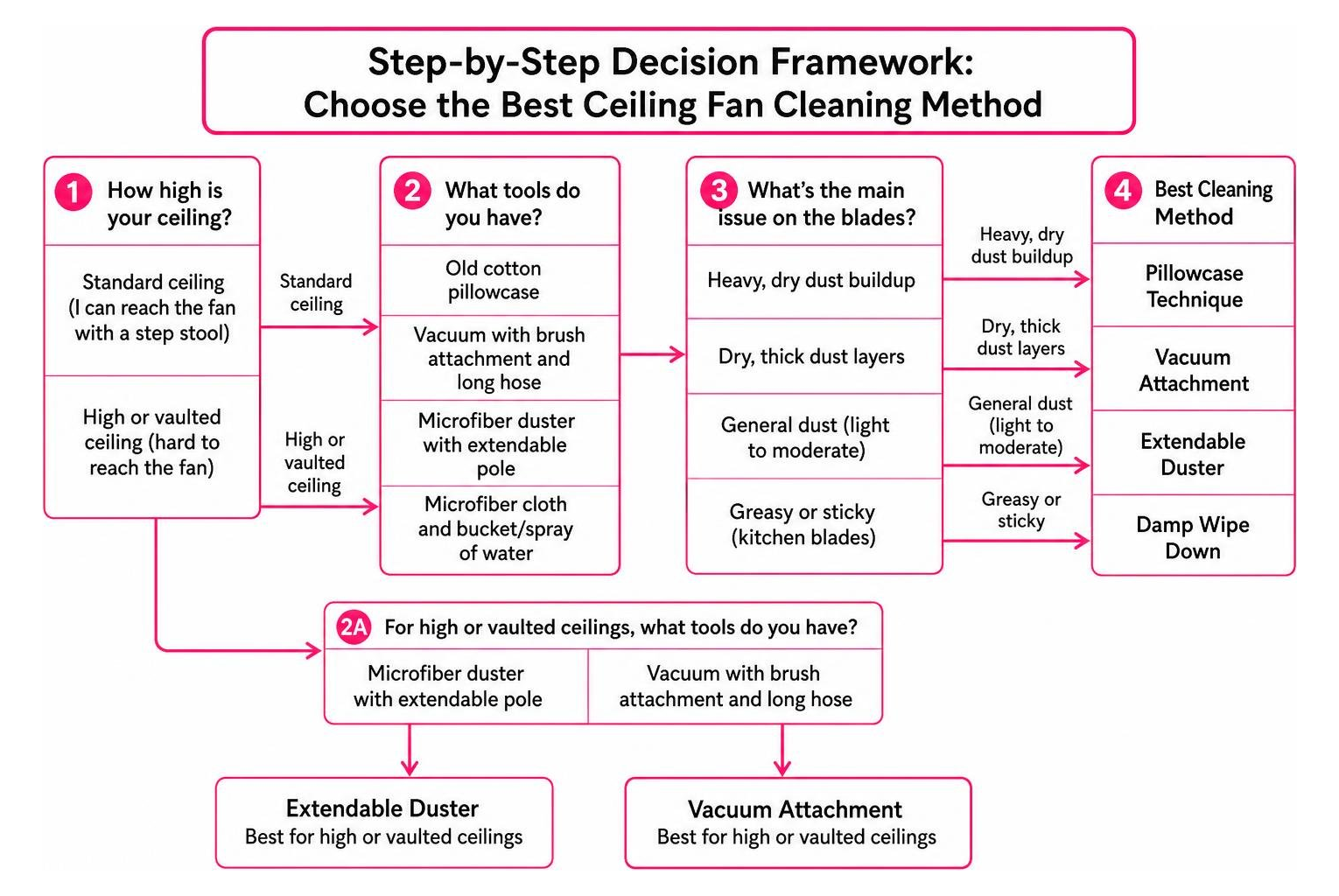
Choosing the right dusting technique depends on the height of your ceiling, the tools you have on hand, and how long it has been since the fan was last cleaned.
| Method | Primary Tool | Mess Containment | Best For | Ladder Needed? |
|---|---|---|---|---|
| Pillowcase Technique | Old cotton pillowcase | Excellent (traps 100% inside) | Heavy buildup on standard ceilings | Yes (step stool) |
| Extendable Duster | Microfiber duster pole | Moderate (captures static dust) | High or vaulted ceilings | No |
| Vacuum Attachment | Brush head with long hose | High (vacuums instantly) | Dry, thick dust layers | Optional |
| Damp Wipe Down | Microfiber cloth + soapy water | High (no loose flyaway dust) | Greasy or sticky kitchen blades | Yes (step stool) |
The Pillowcase Method: How to Clean Ceiling Fan Dust with Zero Mess
The pillowcase method is widely considered the cleanest DIY technique for clearing thick dust blankets off fan blades. Because the fabric encloses the entire blade, all loose debris is trapped directly inside the pillowcase rather than drifting down onto your floor.
- Slip It On: Position your step stool securely under the fan. Take an old, clean pillowcase and slide it over the entire length of the first fan blade until it reaches the motor bracket.
- Press and Pull: Place your hands on the top and bottom of the blade over the pillowcase. Apply gentle, even pressure and slowly draw the pillowcase back toward the blade tip. The fabric will pull the dust off both sides simultaneously, capturing the loose debris inside the closed end of the case.
- Repeat Around the Fan: Carefully move your stool and repeat the process on each remaining blade.
- Shake Out Outdoors: Once all blades are wiped, take the pillowcase outside, turn it inside out away from your face into a trash bin, shake it vigorously, and toss it in the washing machine.
Learning simple tricks like this is one of the best ways to incorporate efficient routines from How to Master Dusting Techniques in Less Than an Hour a Day.
How to Clean Ceiling Fan Dust Without a Ladder Using Extendable Tools
If you have high ceilings, vaulted entryways, or simply prefer to keep both feet firmly planted on the floor, you can clean ceiling fan dust safely using specialized high-reach tools.
- Select an Extendable Microfiber Duster: Use a cleaning pole that reaches comfortably above the fan without requiring you to overextend your arms. Dusters with flexible, bendable chenille or microfiber heads are ideal because you can contour the head into a curved “C” shape that hugs the blade’s profile.
- Work with Slow, Deliberate Strokes: Angle the curved duster head over the top of the blade near the motor. Slowly draw the head outward toward the tip. Microfiber fibers hold an electrostatic charge that naturally attracts and holds dust, but moving too fast can dislodge dust into the room.
- Use a Vacuum Brush Attachment: If your vacuum cleaner has a long extension wand and a soft brush nozzle, guide the brush along the blade while running the vacuum. The bristles loosen dry debris while suction immediately pulls the particles away.
- Wipe Down with a Pole-Mounted Cloth: For stubborn surface films, secure a lightly dampened microfiber cloth around the head of your extendable duster using a rubber band, then glide it across each blade.
Cleaning Motor Housing, Light Fixtures, and Greasy Blades
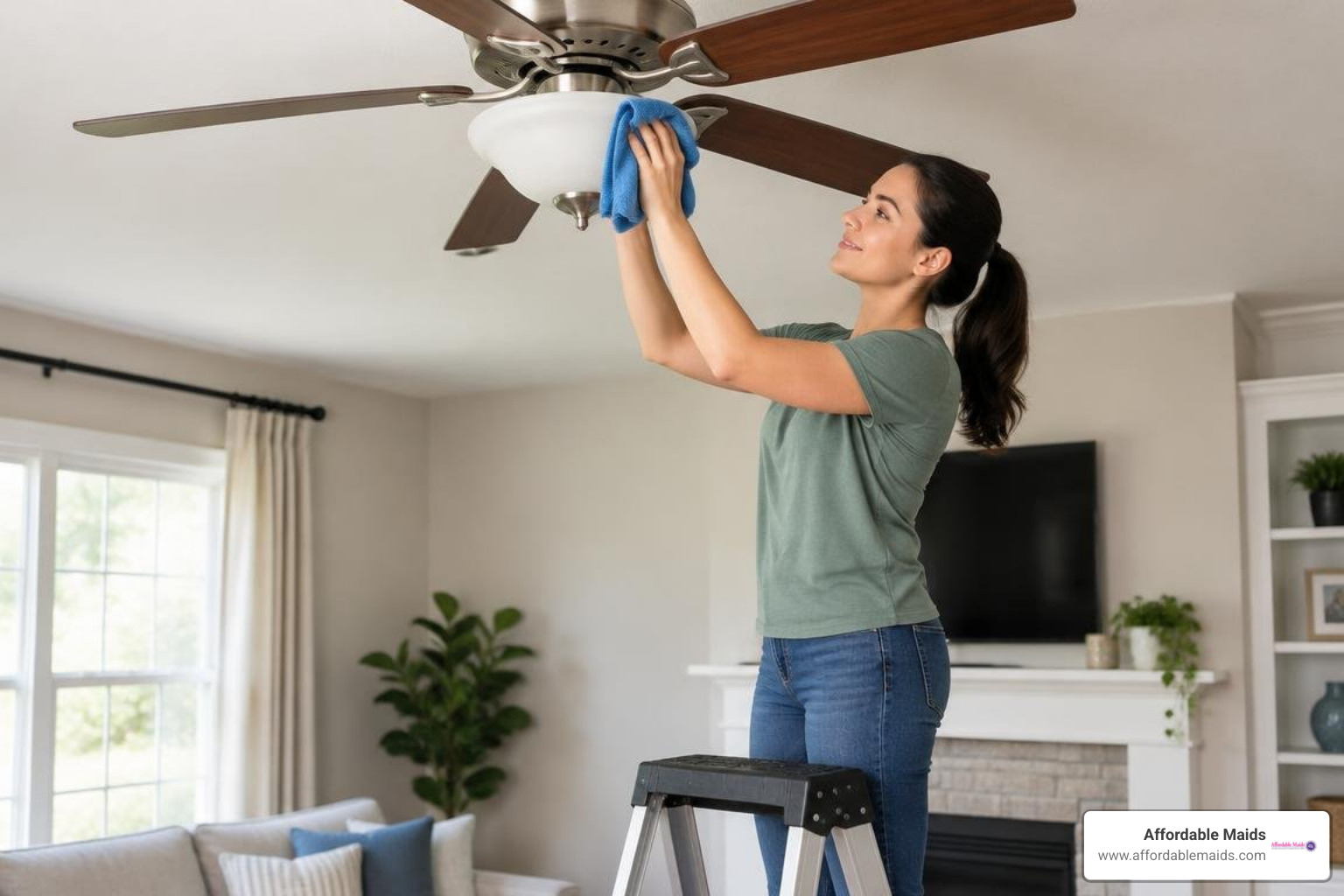
Blades are only one part of the fan. Dust also gathers on the motor housing, light kit, and pull chains. Furthermore, fans situated near kitchens often develop a sticky film caused by cooking oils combining with airborne dust, requiring a deeper wet clean.
Degreasing Sticky Blades
When dust combines with vaporized cooking grease, dry wiping alone will not remove the grime.
- Prepare a Mild Cleaning Solution: Mix warm water with a few drops of grease-cutting liquid dish soap, or prepare a 50/50 mix of warm water and distilled white vinegar in a bowl.
- Dampen, Do Not Soak: Dip a clean microfiber cloth into the solution and wring it out until it is barely damp. Never spray liquids directly onto the fan assembly, as moisture can seep into the motor housing and cause electrical shorts.
- Wipe and Dry: Wipe along the top, bottom, and side edges of each blade. Follow up immediately with a dry cloth to prevent moisture damage on composite, finished wood, or painted blades.
Cleaning the Glass Globe and Light Kit
- Remove the Globe: If your fan features a glass globe or light shade, make sure the bulb is cool to the touch. Carefully unscrew the retaining screws or twist the shade counterclockwise to remove it.
- Wash the Glass: Wash the glass cover in a sink filled with warm soapy water. Rinse thoroughly and dry completely with a lint-free cloth before reinstalling.
- Clean the Fixture and Bulbs: Wipe down the exterior of the light fixture with a dry microfiber cloth. Gently wipe dust off the light bulbs while they are cool.
Addressing the Motor Housing and Pull Chains
- Clear Vent Slats: The motor housing has narrow ventilation slots where dust can choke air circulation. Use short, controlled bursts from a can of compressed air to clear debris out of the vents, or sweep the exterior with a dry, soft-bristled brush.
- Wipe Pull Chains and Downrods: Dampen a cloth with warm water and wrap it around the pull chains, sliding down the length of the metal or cord to remove built-up hand oils and dust.
Following these practical surface care tips helps keep your ceiling fan running smoothly and looking clean.
How to Prevent Heavy Dust Buildup on Ceiling Fans
While no home is completely immune to dust, you can reduce how quickly buildup gathers on your fan blades using simple preventive habits.
- Apply the Dryer Sheet Trick: After thoroughly cleaning and drying your blades, wipe both sides with an unused anti-static dryer sheet. The coating reduces static electricity, making it harder for airborne dust to cling to the blade surfaces.
- Run the Fan Regularly: Dust settles most easily when blades remain stationary for days or weeks. Running your ceiling fans at low speeds keeps air circulating and reduces static dust accumulation.
- Replace HVAC Filters Consistently: A significant amount of indoor dust consists of carpet fibers, pollen, and everyday particles cycling through the home. Replacing standard 1-inch furnace filters every 30 to 60 days (or thicker 4-inch media filters every 3 to 6 months) captures airborne debris before it lands on your ceiling fixtures.
- Manage Indoor Sources: Much of the dust in a home originates from interior sources like shedding fabrics and skin cells. Establishing simple habits for a dust-free, comfortable home helps stop excessive dust at the source.
How Often Should You Clean Your Ceiling Fan?
A consistent maintenance schedule prevents thick dust layers from creating indoor air quality issues.
- Quick Dusting (Every 1–3 Months): A quick pass with a pillowcase or extendable duster every few weeks keeps blade buildup thin and manageable.
- Deep Wet Cleaning (Every 3–6 Months): Perform a full wipe-down with mild soapy water, clean the glass light globe, and clear the motor vents twice a year.
- Active Seasons & Pet Households: In homes with multiple shedding pets or during summer and winter months when fans run continuously, check blades every 3 to 4 weeks.
Aligning your fan maintenance with seasonal transitions is also the ideal time to check blade direction: set blades to rotate counterclockwise in the summer for a cooling downdraft, and clockwise at low speed in the winter to circulate warm air trapped near the ceiling. To optimize your overall routine, review the Ultimate Checklist for the Correct Order to Clean a House.
Frequently Asked Questions About Cleaning Ceiling Fans
Can you clean a ceiling fan without taking it apart?
Yes. Routine maintenance and deep cleaning can be performed while the ceiling fan remains fully mounted. You do not need to detach the blades or remove the motor housing from the ceiling. Simply clean the exposed surfaces, remove only the glass light shade for washing, and use a can of compressed air or a vacuum attachment to clear the motor vents.
Can I spray cleaning solution directly onto fan blades?
No. You should never spray cleaning sprays, vinegar, or water directly onto fan blades or motor components. Liquid droplets can easily drift into the motor casing, switch housing, or light sockets, leading to electrical hazards, corrosion, or motor failure. Always apply your cleaning solution to a microfiber cloth first until lightly damp, then wipe the blades.
Why does my ceiling fan wobble after being cleaned?
A fan that begins wobbling after cleaning is usually experiencing an uneven weight distribution. If thick dust was removed from some blades but left on others, or if heavy downward pressure bent one of the blade brackets slightly during wiping, the balance of the fan is thrown off. Ensure all blades are equally clean and wipe with gentle pressure to protect the factory alignment.
Conclusion
Keeping your ceiling fans free of thick dust does not have to result in dirty floors, speckled furniture, or sneezing fits. By shutting off the power, slipping an old pillowcase over each blade, and wiping down fixtures systematically from top to bottom, you can maintain fresh air and smooth fan performance in just a few minutes.
When life gets busy and you would rather leave household upkeep to trusted professionals, our team is here to help. Affordable Maids has served homeowners across the greater Pittsburgh region for over 32 years, completing more than 279,000 cleans backed by 400+ five-star reviews and our 100% satisfaction guarantee. Whether you live in Wexford, Monroeville, Cranberry, Sewickley, or Bethel Park, explore our flexible recurring maid services to keep your entire home refreshed and comfortable all year round.