
How Busy Households Keep High Traffic Zones Spotless
How to Keep High Traffic Areas Clean in a Busy Home
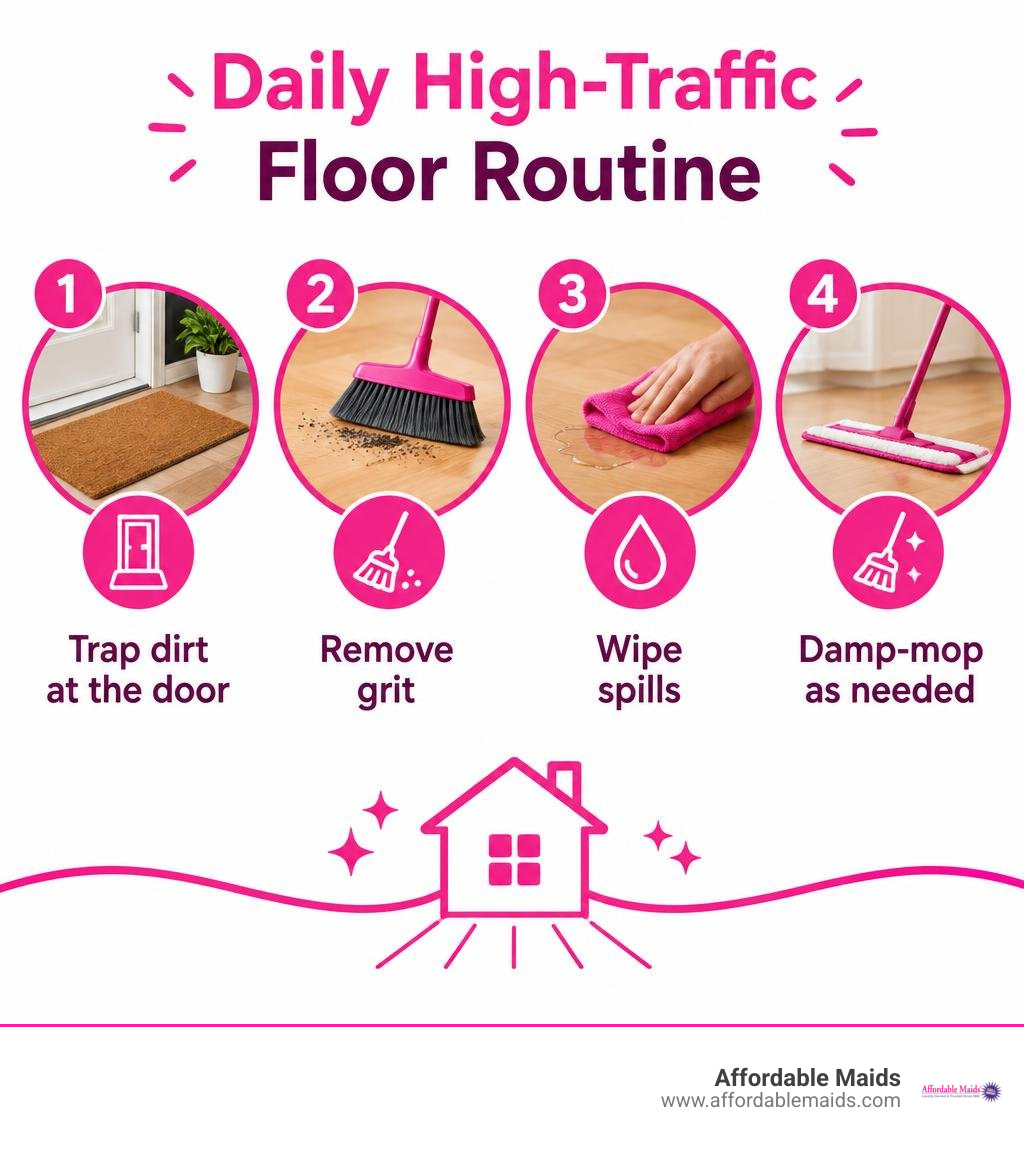
Here’s how to keep high traffic areas clean: place mats at entrances, leave shoes by the door, and remove grit from busy floors each day. Vacuum rugs and carpet paths, and sweep or dust-mop hard floors. Wipe up spills promptly, then damp-mop hard floors as needed with a cleaner suited to the surface.
Start with the entryway, then follow the paths your household uses most, such as the hall and kitchen walkway. I’m Lynn Reynolds, and I’ll show you how to turn those small tasks into a routine that fits a busy home.
For related upkeep, keeping baseboards clean also helps maintain a tidy perimeter throughout your home.
Mapping High-Traffic Zones and Preventive Entryway Defense
Every home has primary thoroughfares where family members, visitors, and pets consistently walk. In most households, these heavy pathways include the front foyer, the mudroom transition from the garage, the central hallway, the kitchen work triangle between the sink and refrigerator, and main staircases.
Much of the dirt inside a home is tracked in from outside, and much of it is deposited within the first several feet of the entrance door. Loose outdoor grit acts like microscopic sandpaper underfoot, grinding against floor finishes and cutting into carpet fibers with every step. Stopping this debris at the threshold is the single most effective way to protect your floors.

How to Keep High Traffic Areas Clean by Stopping Dirt at the Door
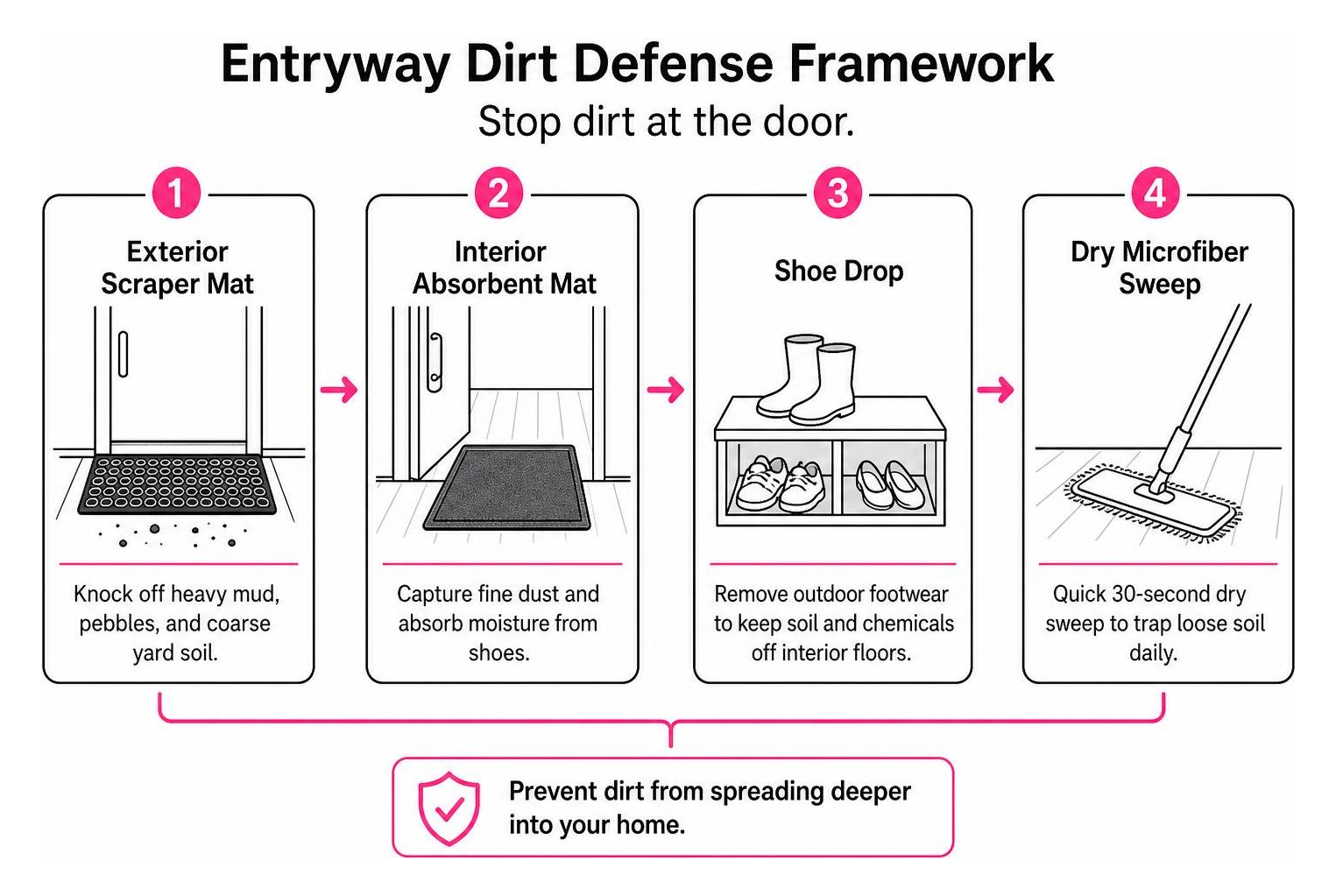
The foundation of entryway defense is a coordinated two-mat barrier system:
- Exterior Scraper Mat: Place a coarse, weather-resistant mat directly outside the exterior door to knock off heavy mud, pebbles, and coarse yard soil.
- Interior Absorbent Walk-Off Mat: Place a dense, washable mat inside the door extending several feet into the foyer. This captures residual fine dust and absorbs moisture from shoes.
- Designated Shoe Storage: Establish an indoor shoe-removal area with a sturdy boot tray or cubby system right beside the door. Removing outdoor footwear immediately keeps wet soil, lawn chemicals, and seasonal grit off main interior floors.
- Microfiber Trapping: Keep a clean, dry microfiber dust mop or lightweight sweeper stored in a nearby closet for a quick 30-second pass across the foyer floor at the end of each afternoon. Simple daily routines can help keep high-traffic entryways spotless and prevent loose soil from migrating deeper into adjoining rooms.
Identifying Severe Wear Patterns Across Household Corridors
Over time, concentrated foot traffic creates clear wear paths across household flooring. You will often notice visible dulling on hardwood near the kitchen island, darkened traffic lanes along hallway carpet runners, and flattened fibers in the center of carpeted stair steps.
To help disperse concentrated physical wear:
- Vary Footpaths: On carpeted staircases, encourage family members to step slightly toward the outer edges rather than stomping exclusively down the exact center.
- Shift Furniture Layouts: Periodically adjusting the placement of accent tables, sofas, and entryway benches subtly alters household walking routes, allowing heavy-use flooring sections to rest and wear more evenly.
- Add Protective Runners: Place washable runner rugs with non-slip backing across narrow, high-volume transition paths, such as the corridor between the living room and the kitchen.
How to Keep High Traffic Areas Clean: Proven Maintenance Schedules
Maintaining busy floors requires a tiered routine rather than sporadic, exhausting cleaning sessions. By removing dry abrasive grit daily and damp-cleaning weekly, you protect floor surfaces without spending hours scrubbing.
| Cleaning Frequency | Key Tasks for High-Traffic Zones | Primary Tools & Methods | Objective |
|---|---|---|---|
| Daily | Clear entryways, spot-clean spills, quick sweep/vacuum of main walkways | Microfiber dust mop, cordless stick vacuum, clean damp cloth | Remove abrasive dry grit before it scratches finishes or embeds in carpet |
| Weekly | Thorough damp mopping of hard floors, edge vacuuming along baseboards, wash entry mats | Flat microfiber mop, neutral pH floor cleaner, crevice vacuum tool | Remove fine sticky films, lift surface dust, and refresh walk-off mats |
| Monthly | Deep-clean floor transition strips, detailed baseboard wipe-down, shift heavy runners | Microfiber cloths, warm water with mild detergent, soft brush | Remove accumulated buildup from corners, edges, and grout lines |
Following structured cleaning routines allows you to keep high-traffic areas consistently tidy with minimal daily effort.
Daily Maintenance Cadence for Heavy Footpaths
Daily care focuses on rapid dry soil removal:
- Quick Dry Soil Removal: Run a microfiber dust mop or lightweight vacuum over the entryway, kitchen walkway, and main hall. A 3-to-5-minute pass removes gritty particles before foot traffic grinds them into the surface.
- Immediate Spill Attention: Wipe up liquid spills, cooking grease splatters, and pet paw prints immediately using a clean, damp microfiber cloth. Allowing liquids to dry creates sticky spots that attract and hold loose dust.
- Entry Mat Shake-Out: Pick up interior walk-off mats, shake them outside, or run a quick vacuum over them to prevent trapped soil from reaching capacity and redepositing onto clean floors.
Weekly and Monthly Deep Floor Refresh Routines
Weekly and monthly maintenance focuses on removing bonded surface films and edge buildup:
- Damp Mopping Hard Surfaces: Use a flat microfiber mop lightly dampened with a surface-appropriate neutral pH cleaner. Avoid saturating floors with excess water, especially hardwood, laminate, or luxury vinyl plank.
- Baseboard and Edge Detailing: Dust settles heavily where high-traffic floors meet vertical trim. Use a vacuum crevice tool along the floor perimeter, followed by a damp microfiber cloth to remove clinging dust films.
- Washing Floor Protection: Launder washable runner rugs and entry mats according to manufacturer care tags to keep their fibers absorbent and effective.
Floor-Specific Strategies for High-Volume Household Footpaths
Different flooring materials respond differently to foot traffic, friction, and moisture. Using the right cleaning method for each surface prevents surface dulling and premature wear.
How to Keep High Traffic Areas Clean on Different Flooring Types
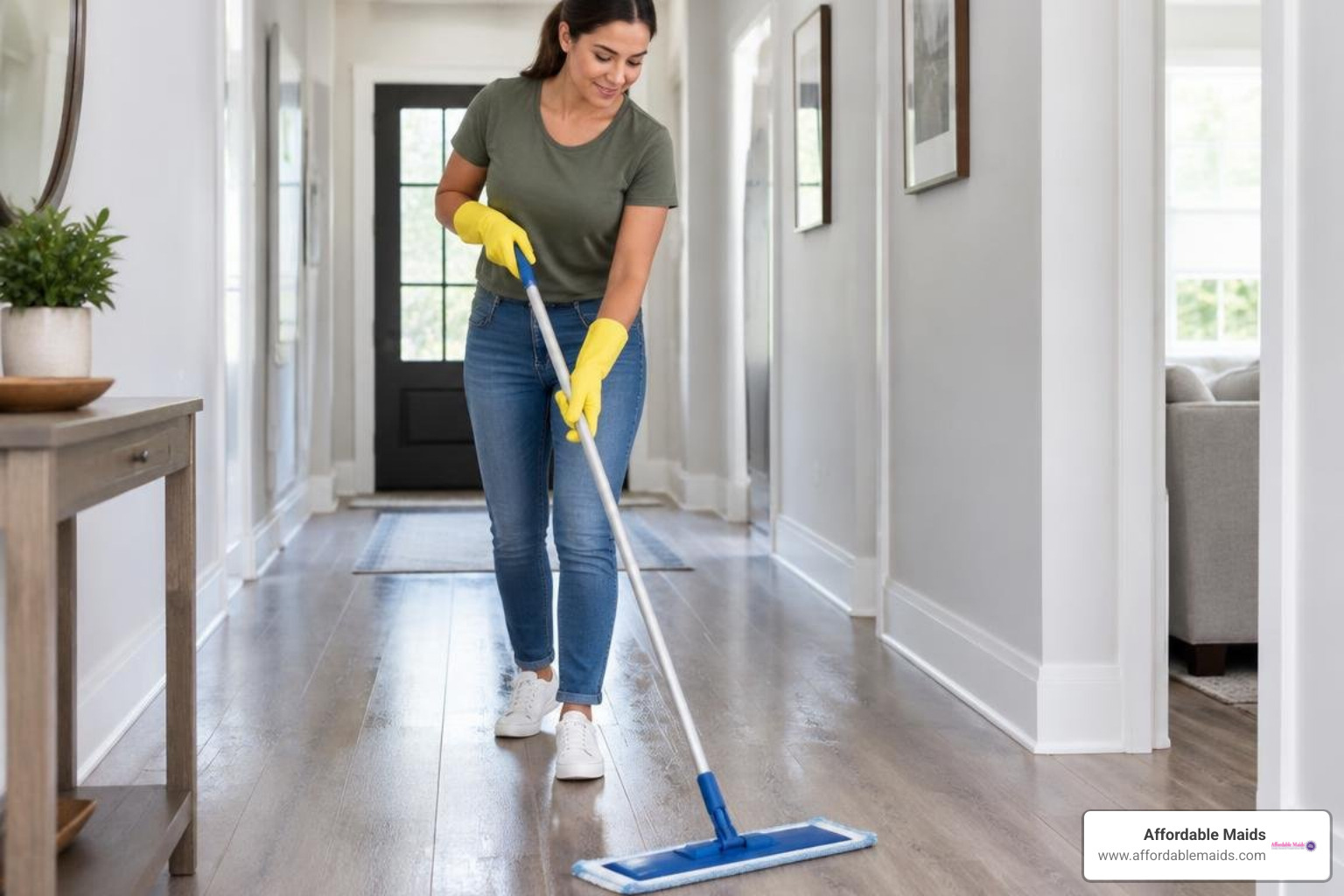
- Hardwood and Engineered Wood: Never use soaking wet string mops or harsh steam mops on hardwood. Excess moisture can penetrate seams and cause boards to cup or warp. Use a dry microfiber dust mop daily to lift abrasive grit. For damp cleaning, mist a dedicated pH-neutral hardwood floor cleaner lightly onto a microfiber mop pad—never directly onto the wood in puddles—and wipe along the grain.
- Tile and Grout: Ceramic and porcelain tiles withstand heavy use, but textured surfaces and recessed grout lines trap dirty mop water. Always sweep thoroughly first. Mop with a neutral cleaner, and change your rinse water frequently to avoid spreading dirty water into porous grout lines. For textured kitchen tile, occasional gentle scrubbing with a soft-bristled brush lifts settled grease before mopping.
- Luxury Vinyl Plank (LVP) and Laminate: These resilient surfaces are popular in busy homes, but abrasive sand can scratch their clear wear layers over time. Dust mop daily with microfiber. When damp mopping, use a lightly dampened pad with plain warm water or a gentle, residue-free cleaner. Avoid abrasive scouring pads, oil soaps, or wax-based polishes, which leave slippery, dust-attracting residues.
Managing High-Traffic Carpet Walkways and Rugs
Carpets in hallways and family rooms absorb heavy foot impact and collect dust deep within their pile.
- Slow, Overlapping Vacuum Strokes: High-traffic carpet paths require slow, deliberate vacuuming passes to allow the suction and brush roll to draw embedded grit out of the backing.
- Brush Roll Adjustment: Ensure your vacuum’s beater bar is adjusted to the correct pile height. For thick or high-pile rugs, raise the height or turn off the rotating brush to prevent fiber fraying; for dense, low-pile runners, set the brush roll low enough to agitate embedded grit.
- Immediate Spill Blotting: When spills occur on carpet runners, blot immediately from the outer edges toward the center using a clean, white absorbent towel. Never scrub or rub vigorously, as aggressive friction frays yarn tips and pushes liquids deeper into the carpet backing.
Cleaning High-Touch Surfaces and Preventing Cross-Contamination
High-traffic areas are not just about floors; they also involve high-touch surfaces where family members frequently place their hands. Stair railings, interior doorknobs, light switches, and kitchen cabinet pulls accumulate body oils, fingerprints, and everyday grime.
Cleaning High-Contact Fixtures
Incorporate cleaning high-touch areas into your regular household maintenance routine:
- Door Handles and Surrounding Wall Trim: Wipe down both sides of entryway doors, interior passage handles, and the immediate doorframe where hands naturally push.
- Light Switch Plates: Lightly spray a general household cleaner onto a microfiber cloth (never spray directly onto electrical plates) and wipe away finger smudges and dust.
- Stair Railings and Newel Posts: Wipe the top and underside of handrails using a damp microfiber cloth to remove built-up skin oils and dust.
Zone-Based Protocols to Stop Grime Transfer
Cross-contamination occurs when cleaning tools carry grease, soil, or microbes from one household area into another. Adopting simple zone-based practices keeps your cleaning efficient and sanitary:
- Color-Coded Microfiber Cloths: Use distinct cloth colors for different areas—for example, red or pink cloths strictly for bathrooms, yellow for kitchen counters, and blue or green for general living areas, handrails, and entryways.
- Fresh Water and Clean Mop Pads: When mopping hard floors, replace dirty mop pads as soon as they become visibly soiled. If using a bucket system, change your rinse water frequently; mopping with dirty water simply redistributes grime across floor surfaces.
- Clean Top-to-Bottom: Always dust upper fixtures, railings, and baseboards before performing your final floor sweep or vacuum. This ensures that any loosened dust falling downward is captured during your floor pass.
Frequently Asked Questions About High-Traffic Cleaning
What is the most effective way to protect entryway floors from heavy daily grit?
The most reliable method is combining an exterior coarse scraper mat with an interior absorbent walk-off mat, paired with a strict indoor shoe-removal policy. This traps outdoor dirt and moisture right at the doorway, preventing sharp abrasive particles from scratching hard floors or grinding into carpet fibers.
How often should high-traffic carpet runners and walkways be vacuumed?
High-traffic carpet lanes, entryway rugs, and busy hallways should be vacuumed daily or every other day with slow, overlapping strokes. Regular vacuuming removes dry, gritty soil before it sinks deep into the backing where it can abrade and break down carpet fibers.
Why do high-traffic hard floors get sticky or slippery after cleaning?
Sticky or slippery films are almost always caused by using too much cleaning chemical, using floor waxes or oil soaps improperly, or failing to rinse thoroughly. Excess soap residue dries on the surface, creating a tacky layer that quickly attracts fresh dust and shoe prints. To correct this, wipe the floor with a clean microfiber mop dampened only with plain, warm water to remove the leftover detergent film.
Conclusion
Keeping your home’s busiest pathways clean does not require endless hours of scrubbing. By capturing outdoor grit at the door with a reliable two-mat system, establishing a quick daily dry-dusting habit, and using surface-appropriate floor care methods, you can keep high-traffic zones fresh and comfortable for your entire household.
When busy schedules make it challenging to keep up with routine maintenance across your entryway, halls, and living spaces, our trusted team is here to help. With over 32 years of experience and more than 279,000 cleans completed, Affordable Maids provides reliable, high-quality care tailored to your home. Contact us today to explore our professional recurring maid services and keep every corner of your home consistently refreshed.