
Smart Dusting Tactics That Keep Surfaces Cleaner for Longer
How to Reduce Dust in a House Without Cleaning All Day
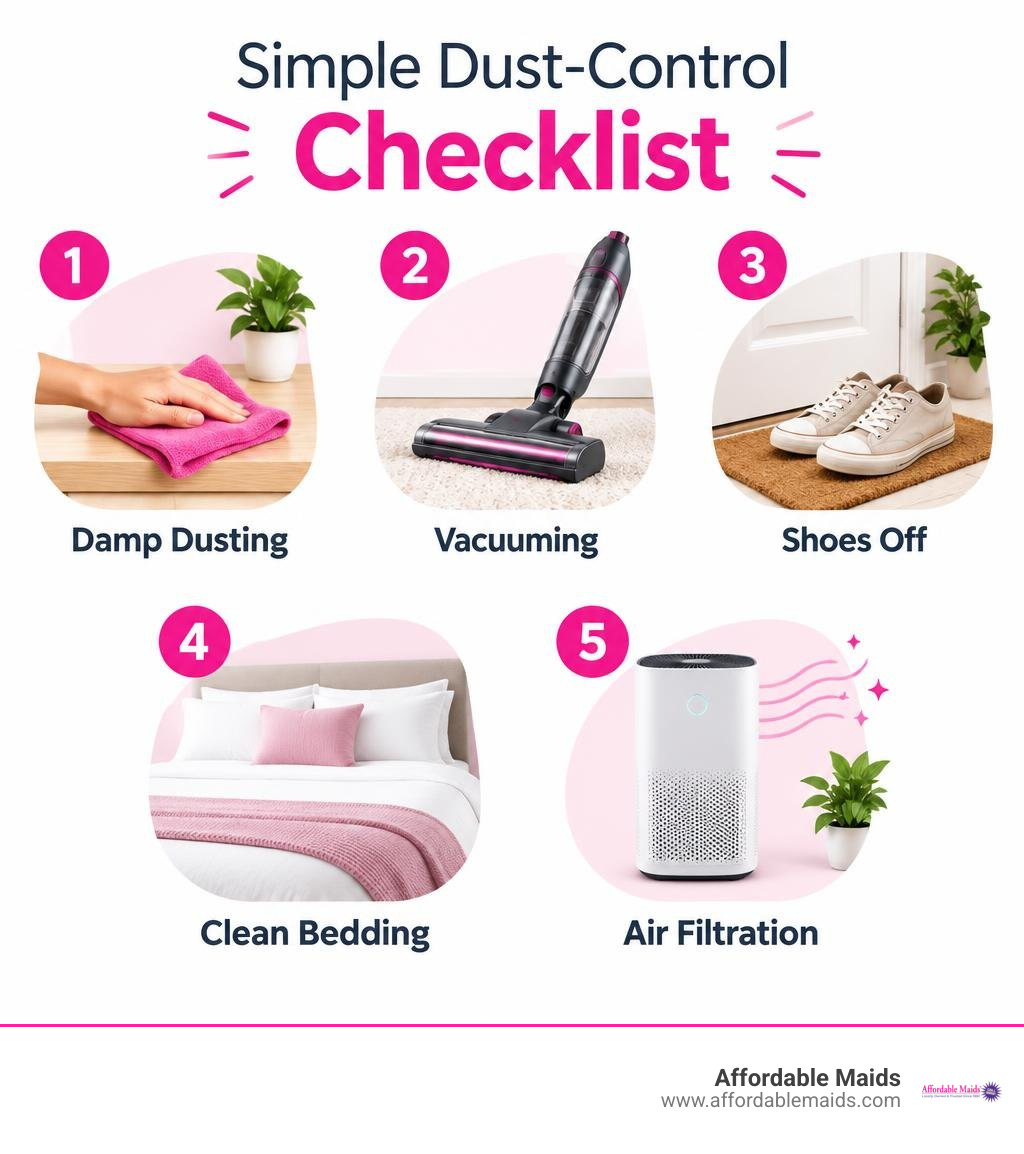
To reduce dust in a house, wipe surfaces from top to bottom with a slightly damp microfiber cloth, then vacuum the floors. Leave shoes at the door, wash bedding weekly, and keep HVAC filters clean. A HEPA air purifier can catch dust in the air, but you still need to clean dust that has settled.
Dust will keep coming back as people and pets shed particles and outdoor dirt finds its way inside. The goal is less buildup, not a dust-free home.
I’m Lynn Reynolds, and I’ll show you how to make these steps part of a routine that fits a busy week.
Understanding Where Household Dust Originates
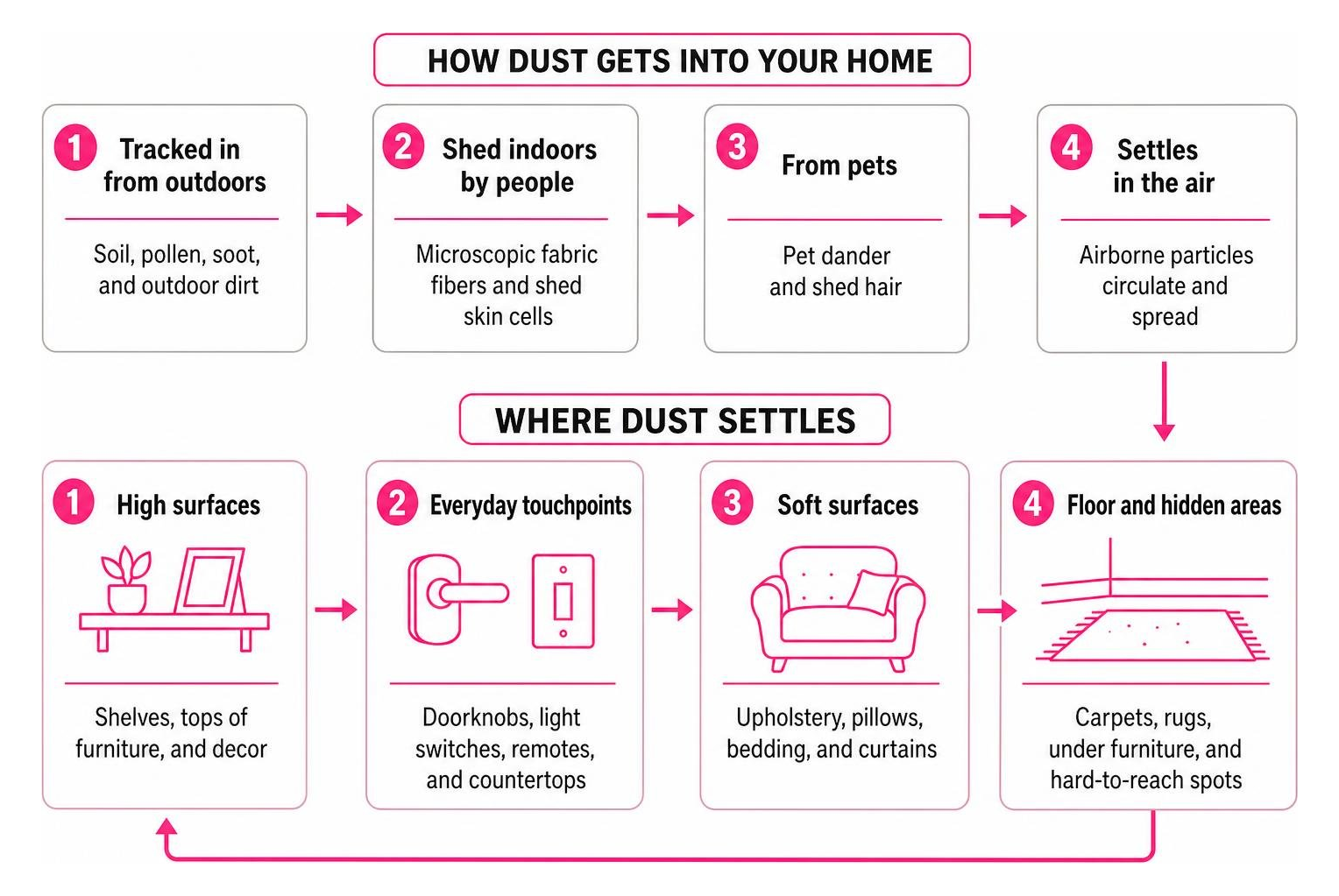
Every home produces dust continuously. A massive 30 to 40 percent of household dust is tracked in directly from outdoors as soil, pollen, and soot. The remainder is generated from our daily indoor lives: microscopic fabric fibers shed from clothing, upholstery, rugs, pet dander, and shed human skin cells.
Different surface textures influence how quickly these particles accumulate. Smooth, non-porous surfaces like polished hardwood or glazed tile allow particles to settle loosely, making them easy to wipe away. Porous, matte textures—such as unsealed wood, heavy woven upholstery, or untreated flat-pack materials—present countless microscopic cavities where particles cling tightly. Understanding the underlying source of dust allows us to address the root causes rather than just chasing gray fuzz from room to room.
The Science of Dust Composition and Health Risks
Beyond everyday surface grime, indoor dust contains biological matter that can create health challenges. Dust mites—microscopic arachnids that feed on discarded human skin cells—thrive in fabric-rich environments like mattresses, upholstered sofas, and carpets. According to the American Lung Association, dust mites are found in 4 out of 5 homes in the United States.
While dust mites do not bite, their droppings and decomposed bodies contain proteins that frequently trigger respiratory irritation, sneezing, nasal congestion, and asthma flare-ups. Regular cleaning helps keep these indoor allergens at manageable levels, improving daily breathing comfort for everyone in the household.
How to Reduce Dust in House: Proven Cleaning and Dusting Methods
To clear dust effectively without sending it airborne, using the right tools and sequence is essential.
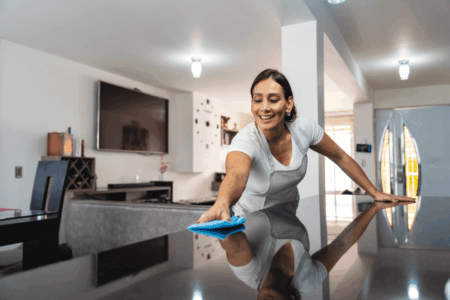
- Top-to-Bottom Sequence: Always dust high fixtures first—ceiling fan blades, light fixtures, and upper shelving—before working down to baseboards and floors. This ensures fallen particles are captured during your final floor sweep or vacuum.
- Damp Microfiber Dusting: Dry dusting tools send settled particles into the air, only for them to resettle an hour later. A slightly damp microfiber cloth creates a light physical bond with dust, lifting and trapping it cleanly.
- HEPA Vacuuming: Standard vacuum filters often exhaust microscopic particles straight back into your room. Using a sealed vacuum equipped with a HEPA filter removes 99.7 percent of all dust particles, pollen, and pet dander down to 0.3 microns. Vacuum slowly in overlapping strokes, focusing on carpeted areas and under furniture.
- Mopping Hard Floors: Following your vacuum pass, clean hard floors with a damp, well-wrung mop to capture residual fine particles.
By mastering efficient dusting techniques, you can clean a standard room in minutes rather than spending entire afternoons wiping down surfaces.
| Dusting Tool | Dust Trapping Ability | Particle Redistribution | Best Use Case |
|---|---|---|---|
| Traditional Feather Duster | Low | Very High | Light sweeping of delicate knick-knacks (rarely recommended) |
| Damp Microfiber Cloth | Exceptionally High | Extremely Low | Solid furniture, shelves, electronics, and countertops |
| Electrostatic Duster | Moderate to High | Low to Moderate | Quick touch-ups on blinds and dry vertical surfaces |
Common Dusting Mistakes That Spread Particles
Several common cleaning habits actually make dust problems worse:
- Dry Sweeping Hard Surfaces: Pushing a dry broom across hardwood or laminate launches fine dust clouds straight into the air. Always use a damp mop or a hard-floor vacuum attachment.
- Dusting After Vacuuming: Dusting last sends fine particles down onto your freshly cleaned carpet. Always vacuum last.
- Neglecting Vents and Baseboards: Air supply vents and baseboards collect heavy layers of lint. Wipe vents regularly, and review simple methods for keeping baseboards clean using a microfiber cloth or an anti-static wipe.
Air Quality and Filtration: How to Reduce Dust in House Air
Cleaning settled surfaces handles only half the equation; managing airborne particles prevents new layers from forming.
- Upgrade HVAC Filters: Replace your heating and cooling filters every 1 to 3 months, especially during seasons with heavy furnace or AC usage. Choose high-efficiency pleated filters rated to capture smaller particles.
- Run Standalone HEPA Air Purifiers: Placing dedicated HEPA air purifiers in frequently used spaces like living rooms and bedrooms captures at least 99.97% of fine airborne particles before they land on your furniture. For best results, run purifiers continuously on a quiet, low setting.
- Keep an Eye on Visible Vent Debris: If your vents seem to be blowing out noticeable dust or debris, especially after a renovation, it’s worth noting the issue so you can address the airflow and filtration in that room sooner rather than later.
Daily Habits and Environmental Controls to Stop Dust at the Source
Routine maintenance combined with small daily habits makes the biggest difference in long-term dust control.
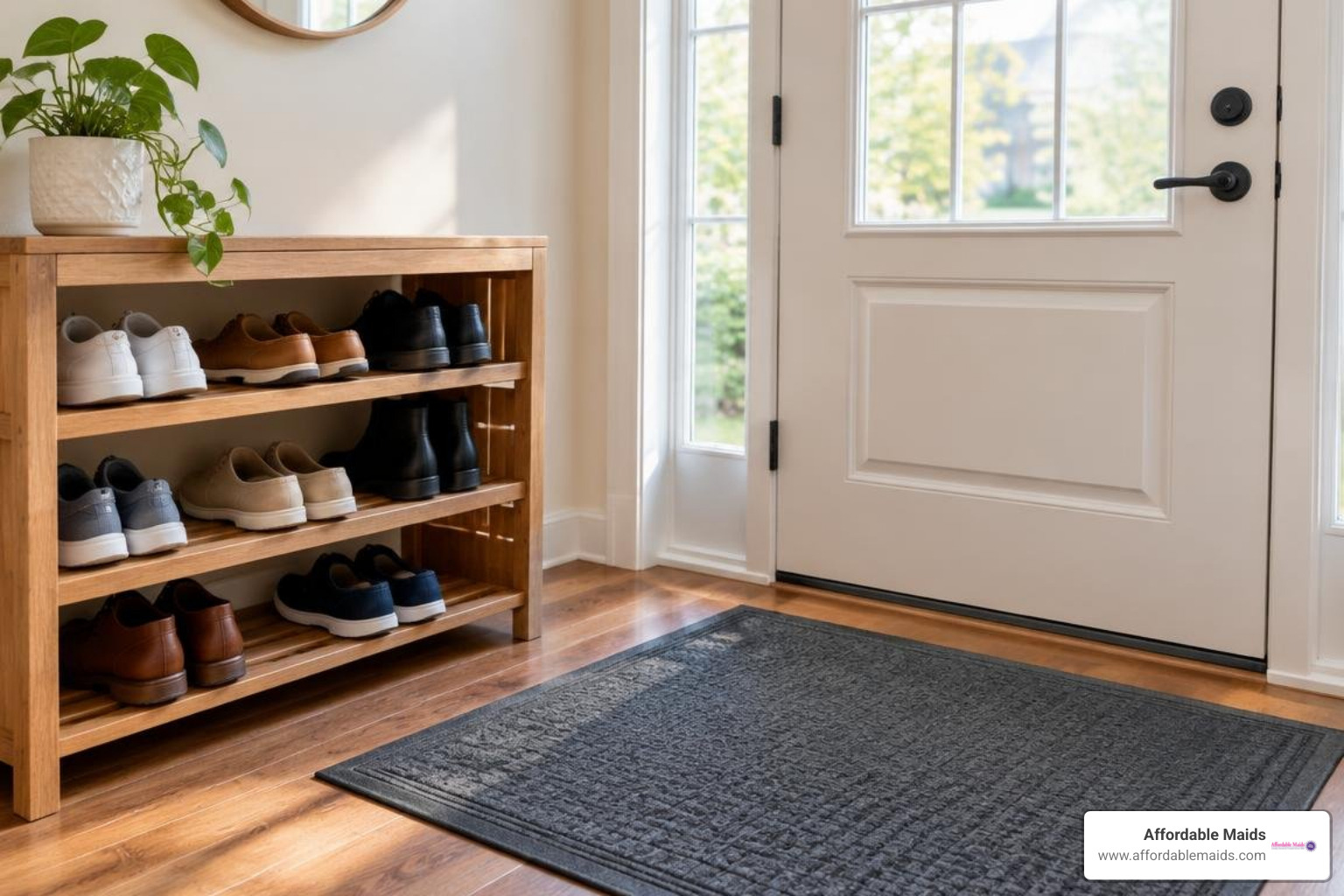
- Establish an Entryway Shoe-Free Zone: Up to 80% of dust can be eliminated by leaving shoes at the doorway. Pair outdoor and indoor walk-off mats to trap dirt before it crosses into living spaces.
- Regulate Indoor Humidity: Keeping indoor humidity at or below 50% slows dust mite growth and reduces static cling that holds dust to surfaces. Use a hygrometer to track room levels, adjusting with a dehumidifier in damp summer months or a humidifier during dry winters to maintain the ideal 40 to 50 percent range.
- Declutter Open Shelving: Knick-knacks, piles of magazines, and open storage boxes serve as collection sites. Storing loose items in closed cabinets or bins drastically reduces dusting time. Adopting daily habits for a dust-free home keeps clutter from accumulating throughout the week.
How to Reduce Dust in House Bedrooms and High-Traffic Areas
Bedrooms generate a massive amount of dust because mattresses, pillows, and blankets constantly shed fibers and hold dead skin cells.
- Wash Bedding Weekly in Hot Water: Washing bedding weekly in hot water is the fastest way to reduce dust in the bedroom and keep dust mite populations under control.
- Use Zippered Encasements: Encase mattresses and box springs in dust-mite-proof barrier covers.
- Groom Pets Frequently: Brush dogs and cats outdoors several times a week to remove loose fur and dander before it settles onto rugs and couches. Wash pet beds every week or two.
- Streamline High-Touch Zones: Living rooms and hallways experience constant movement that kicks settled dust back into circulation. Maintain clear paths and follow proper techniques for cleaning high-touch areas such as side tables, entertainment stands, and armrests.
Building a Sustainable Cleaning Schedule
Dusting once a week is sufficient for most homes, but two to three times a week is recommended for homes with pets, young kids, or allergy sufferers. Vacuuming twice a week in high-traffic areas and once a week in lower-use rooms keeps dust levels manageable without demanding hours of your time.
Keep your workflow structured by using a home cleaning checklist to target daily, weekly, and monthly chores.
Frequently Asked Questions About Household Dust
Can you ever completely eliminate dust from a home?
No. Because people and pets continually shed skin cells and hair, and clothing and soft furnishings naturally lose fibers, dust is produced continuously indoors. The realistic goal is proactive management: reducing the rate of accumulation and trapping particles effectively so they do not build up or degrade your indoor air quality.
Do air purifiers eliminate the need for routine dusting?
Air purifiers capture airborne particles that float near the intake, but they cannot lift particles that have already settled on dressers, tables, and floors. Air purifiers work best as a supporting tool alongside weekly damp wiping and HEPA vacuuming.
What indoor humidity level is best for controlling dust mites?
Aim to keep relative humidity between 40% and 50%. Relative humidity above 50% encourages dust mites to thrive, while levels below 30% can create static electricity that makes dust cling stubbornly to walls, electronics, and baseboards.
Conclusion
Controlling dust comes down to simple, consistent habits: capturing particles with damp microfiber cloths, running HEPA filtration, leaving outdoor shoes at the entrance, and washing soft fabrics regularly. If keeping up with routine cleaning feels overwhelming alongside a busy schedule, our team at Affordable Maids is here to help. Serving homeowners across the greater Pittsburgh region, our dependable recurring maid services keep living spaces refreshed, comfortable, and easier to maintain. Contact us today for a personalized quote tailored to your home’s needs.