
Check off the Overlooked Household Spots for a Truer Clean
Areas People Forget to Clean in Every Room
The areas people forget to clean are often just out of sight: under kitchen appliances, behind the toilet, on ceiling fan blades, and along baseboards and door frames. Dishwasher filters, washing machine seals, vent covers, remotes, and reusable shopping bags are easy to miss, too. Start with a microfiber cloth and a vacuum attachment, working from high surfaces down to floor-level gaps.
I’m Lynn Reynolds, and I’ll help you check these spots off without making your cleaning routine more complicated.
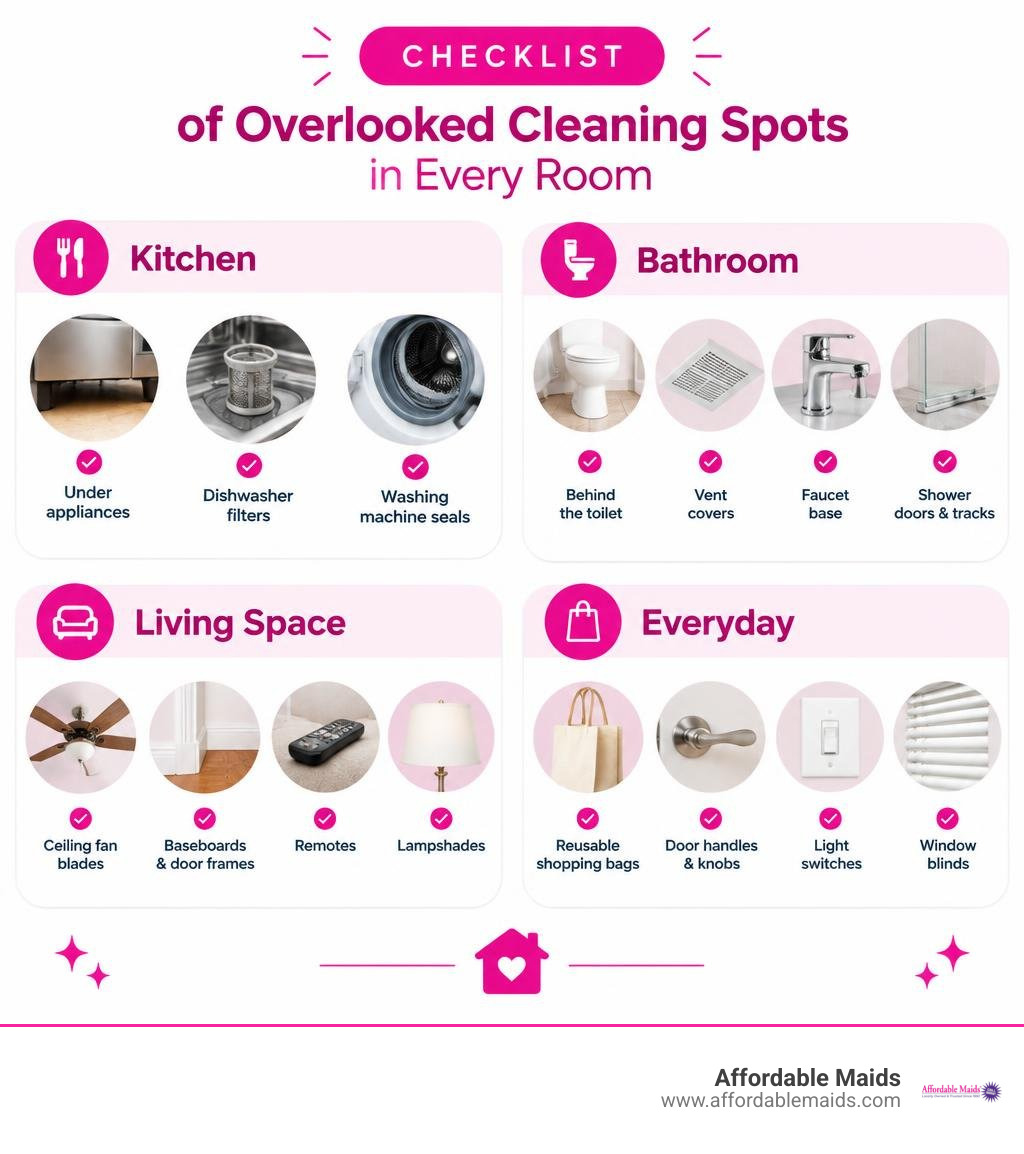
The Most Common Kitchen and Bathroom Areas People Forget to Clean
Kitchens and bathrooms see daily use, making them prime candidates for surface wipes and quick sweeps. However, high humidity and food preparation introduce invisible moisture and grease that settle into overlooked nooks. Over time, neglected moisture and grease trap dust, creating stubborn grime that routine surface maintenance misses.

Addressing these hidden zones prevents lingering odors and protects structural surfaces from moisture-related buildup.
Kitchen Hotspots: Refrigerator Coils, Dishwashers, and Appliance Gaps
While we regularly wipe down countertops, the mechanical and hidden components of our kitchen appliances quietly collect dirt.
- Refrigerator Condenser Coils: Located either underneath or behind the unit, condenser coils dissipate heat. When coated in pet hair and dust, the compressor works harder, reducing efficiency. Unplug the refrigerator before cleaning and use a narrow vacuum crevice tool or coil brush every 3 to 6 months to remove buildup.
- Dishwasher Interior and Filters: Food particles, grease, and hard water minerals accumulate in the removable cylindrical filter at the bottom of the tub. Take out the filter monthly, scrub it with warm soapy water, and wipe the rubber perimeter gasket to eliminate trapped debris.
- The Counter-Stove Gap: Crumbs and cooking oils inevitably fall into the narrow space between the range and countertop. Use a thin, flexible microfiber gap wand to pull debris out from these tight crevices.
- Range Hood Filters: Metal mesh filters capture aerosolized grease from cooking. Soak them in hot water mixed with grease-cutting dish soap, gently scrub away accumulated oil, and let them dry thoroughly before reinstalling.
- Surrounding Pet Dining Areas: Food debris and splashes behind food stations can quickly accumulate grime. Learning how to clean around pet bowls the right way protects both your flooring and wall surfaces from sticky residue.
Bathroom Neglect: Exhaust Fans, Behind Toilets, and Shower Liners
Bathrooms trap significant moisture, turning neglected dry dust into sticky, clinging grime.
- Exhaust Fan Grills and Motors: Humidity causes dust to cling tightly to vent covers, blocking airflow and encouraging mildew growth. Turn off power at the switch, remove the plastic cover, rinse it in warm soapy water, and vacuum visible dust from the housing.
- Behind and Around Toilet Bases: The narrow space behind the toilet tank and around floor bolt caps easily collects dust, hair, and residue. Use a narrow vacuum wand first, followed by a targeted microfiber wipe-down to address accessible surface grime.
- Toothbrush Holders: Toothbrush cups trap standing water and toothpaste residue, creating a slimy film at the bottom. Wash these holders weekly in warm soapy water or run dishwasher-safe models through a cycle.
- Shower Curtain Liners: Soap scum and mineral scale accumulate along the bottom hem of vinyl and fabric liners. Machine wash fabric liners on a gentle cycle or wipe vinyl liners regularly to prevent buildup.
Living Spaces and Hidden Dust Reservoirs
Living areas contain soft furnishings, fabrics, and electronics that naturally generate static electricity and shed fibers. These hidden reservoirs capture airborne particles that recirculate whenever someone walks across a carpet or turns on a ceiling fan.
| Neglected Area | Recommended Cleaning Frequency | Ideal Cleaning Tool | Key Benefit |
|---|---|---|---|
| Mattress Surface | Every 3 to 6 months | Vacuum upholstery tool | Reduces settled dust and shed fibers |
| Ceiling Fan Blades | Every 2 to 4 weeks | Extendable microfiber duster or pillowcase | Prevents dust redistribution across living areas |
| Fabric Lampshades | Monthly | Lint roller or soft dusting brush | Removes static-bound dust without fabric damage |
| HVAC Vent Covers | Every 1 to 2 months | Vacuum brush attachment & damp cloth | Improves airflow efficiency and vent cleanliness |
| Baseboards & Trim | Monthly | Microfiber cloth or extendable wand | Keeps perimeter floor lines free of trapped grit |
| Under Heavy Rugs | Quarterly | Vacuum with strong suction | Prevents abrasive grit from wearing floor finishes |
Bedroom and Living Room Areas People Forget to Clean
Soft furnishings act as filters that catch dust until they reach capacity. Mattresses, lampshades, and ceiling fan blades are common examples of surfaces that quietly collect settled particles.
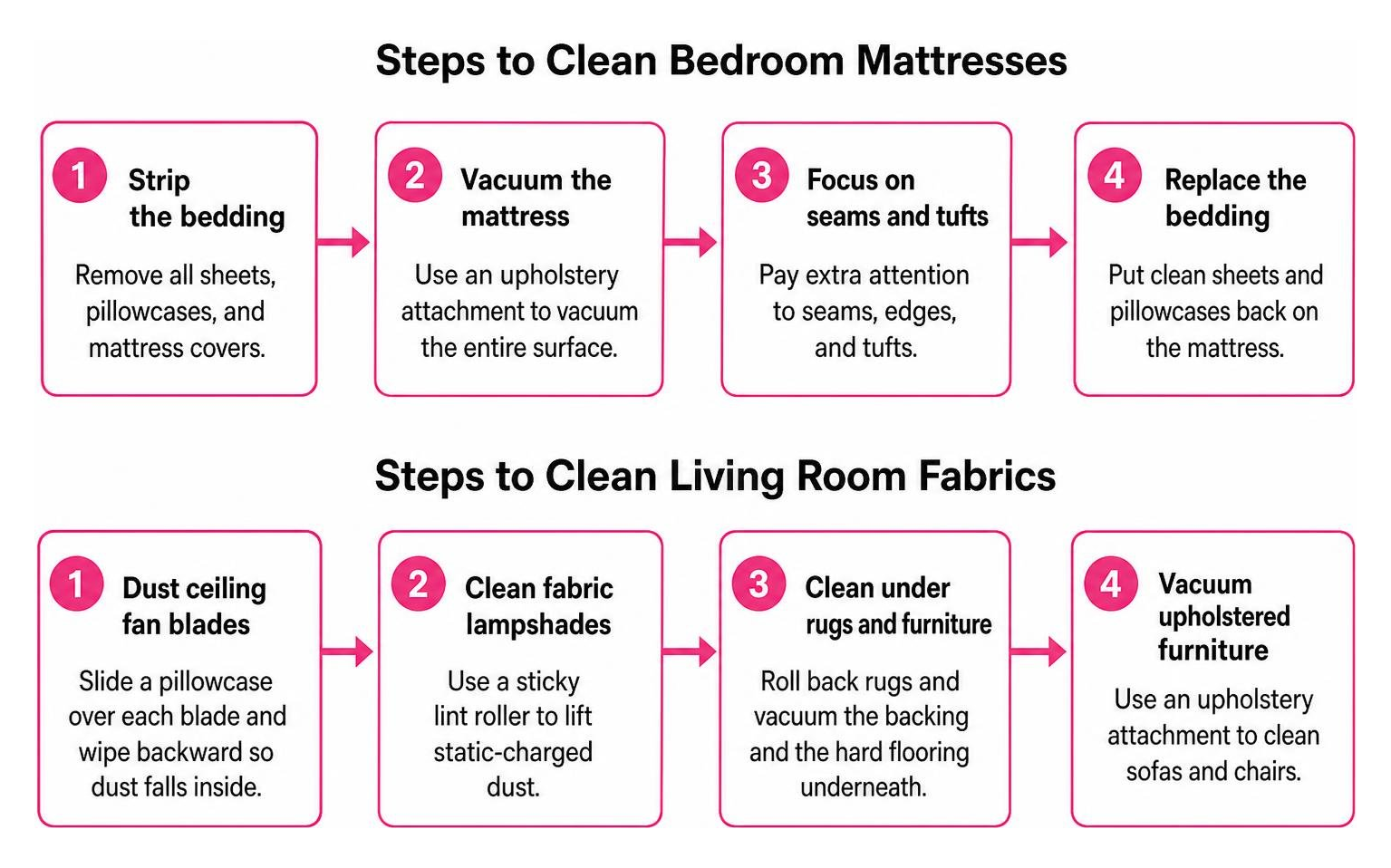
- Mattresses: Strip the bedding and vacuum the entire mattress surface using an upholstery attachment, paying close attention to seams and tufts. If you need a comprehensive approach to home dust management, you can learn how to master dusting techniques in less than an hour a day.
- Ceiling Fan Blades: Dust forms a thick layer along the leading edge of fan blades. Slide a pillowcase over each blade and wipe backward so the loose debris falls directly inside the case rather than onto your furniture below.
- Fabric Lampshades: Avoid wet wiping delicate paper or fabric shades. A standard sticky lint roller easily lifts static-charged dust from pleated or smooth fabric lampshades.
- Under Rugs and Furniture: Fine grit sifts through rug backing and acts like sandpaper against hardwood and laminate finishes. Roll back area rugs quarterly to vacuum both the backing and the hard flooring underneath, helping you find the source of dust in your home.
Architectural Details: Baseboards, Door Frames, and Vents
Dust rises with warm air currents and settles onto flat horizontal trim that sits outside your normal line of sight.
- Baseboards and Skirting Boards: Fine pet hair and floor dust cling to baseboard ledges. Discover the easy way to clean baseboards using an extendable dusting wand or a damp microfiber cloth to avoid constant bending.
- Tops of Door Frames and Moldings: The horizontal top ledge of interior doors and picture frames catches falling dust. Wipe these high horizontal surfaces with an extendable duster before vacuuming your floors.
- HVAC Return Grills and Window Sills: Vacuum return air vents and window tracks with a soft dusting brush to keep airflow clear of loose debris.
Overlooked Everyday Touchpoints and Cleaning Supplies
We handle dozens of everyday objects without thinking about when they were last cleaned. Paradoxically, the tools we use to maintain our homes are among the most neglected items of all.
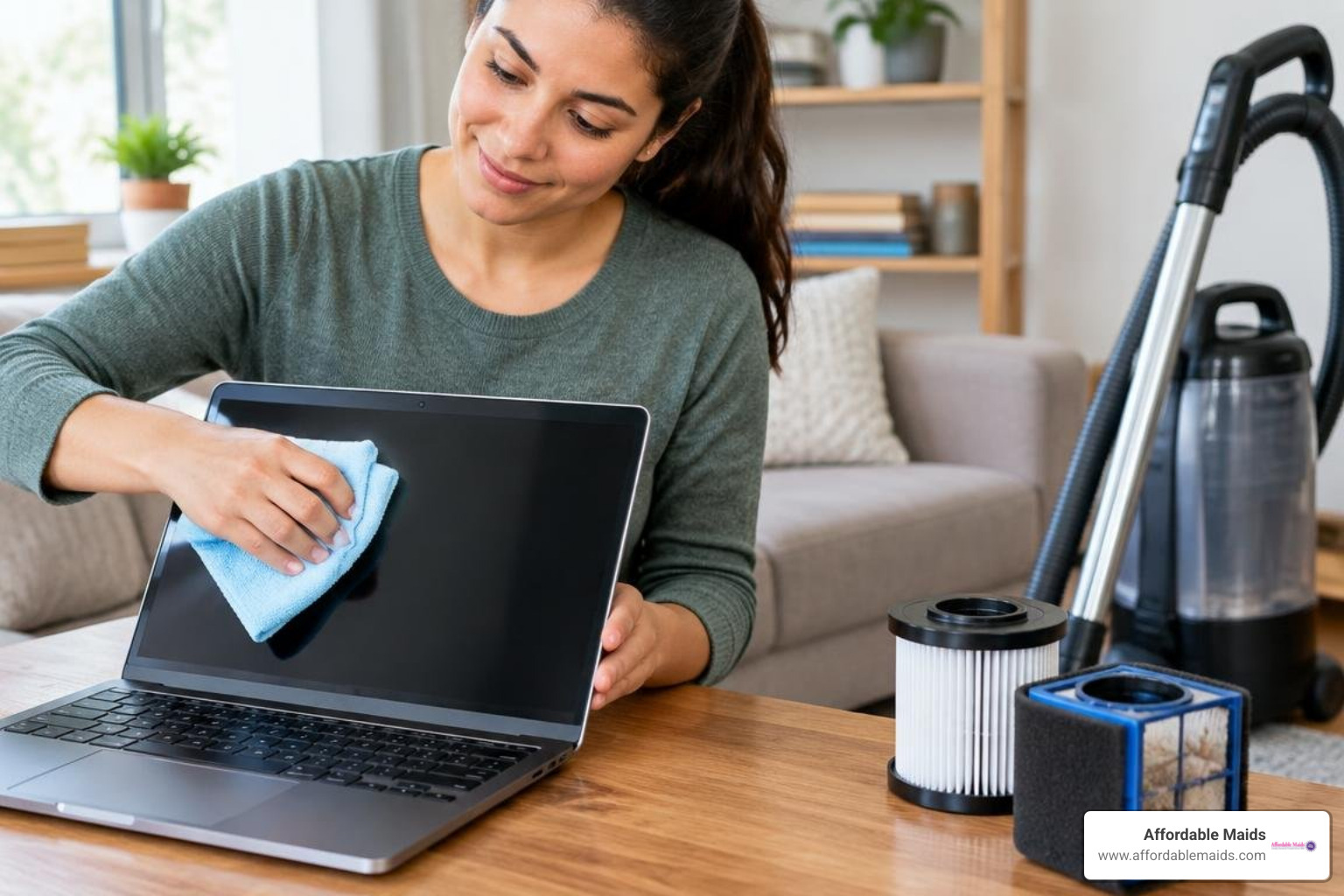
Cleaning Tools and Maintenance Areas People Forget to Clean
Cleaning with dirty tools merely redistributes soil across your home. Keeping tools well-maintained ensures every wipe and sweep is effective.
- Vacuum Canisters, Filters, and Roller Brushes: Washable vacuum filters should be rinsed monthly and air-dried for a full 24 hours. Clear tangled hair and threads from the roller brush to maintain proper suction and prevent belt strain.
- Washing Machine Door Gaskets: Front-load washers trap moisture, lint, and detergent residue in the rubber door boot. Wipe out the folds of the rubber seal after laundry days, and clean the detergent drawer regularly.
- Mop Heads and Buckets: Removable microfiber mop pads should be washed in hot water after every use without fabric softener. Rinse out mop buckets and let them dry inverted.
- Interior Trash Can Basins: Spills occasionally leak through trash bags, leaving sticky residue at the bottom of the can. Wash exterior and interior trash bins outside or in the tub using warm water and mild dish detergent every few months.
High-Touch Electronics and Daily Carry Items
We interact with personal items continuously throughout the day, transferring oils and dust across multiple surfaces.
- Remote Controls and Game Controllers: Electronics harbor surface oils between buttons. Lightly dampen a microfiber cloth with 70% isopropyl alcohol—never spray liquid directly onto electronics—and gently clean around switches and buttons. Practicing targeted care on high-touch household areas keeps frequently handled items refreshed.
- Light Switch Plates and Door Handles: High-traffic wall plates pick up fingerprints and oils daily. A quick wipe with a microfiber cloth keeps them clean without scratching switch covers.
- Reusable Grocery Bags: Fabric and synthetic shopping totes carry fresh produce, packaged meats, and pantry goods. Wash canvas bags in the washing machine and wipe insulated grocery totes with warm soapy water between shopping trips.
How to Integrate Forgotten Spots into Your Routine
Tackling every overlooked spot at once can feel overwhelming. The key to sustainable home maintenance is dividing deep-cleaning tasks into predictable, bite-sized micro-routines.
By establishing a structured cleaning schedule, you can assign one or two neglected tasks to your regular weekly cleaning session.
- Adopt a Top-to-Bottom Flow: Always clean high architectural surfaces—such as ceiling fan blades, door frames, and high vents—before wiping counters or vacuuming floors. This ensures that any dislodged dust is captured when you clean the lower surfaces.
- Rotate Quarterly Tasks: Assign deep mechanical tasks, like cleaning refrigerator coils or washing machine seals, to seasonal changes.
- Keep Supplies Accessible: Store extendable dusters, microfiber cloths, and vacuum attachments where they are easy to reach so you can dust high moldings or baseboards without friction.
Frequently Asked Questions About Overlooked Cleaning Spots
How often should hidden areas like refrigerator coils and air vents be cleaned?
Refrigerator condenser coils should be vacuumed every 3 to 6 months, or more frequently in homes with shedding pets. Air return vent covers and exhaust fan grills should be wiped or vacuumed every 1 to 2 months to maintain proper household airflow and prevent dust accumulation.
What is the most neglected spot in the bedroom?
The mattress is one of the most commonly overlooked bedroom items. Mattresses collect dead skin cells, settled dust, and fabric fibers over time. Vacuuming the surface with an upholstery tool every season helps reduce these trapped particles.
Why do high-touch items like remotes and door frames get missed so often?
Most cleaning routines focus on horizontal surfaces that display visible clutter, such as countertops, tables, and open floors. High-touch items like remotes, light switches, and door frames blend into our daily surroundings through visual habituation. Because grime accumulates as a thin film of oils rather than a thick layer of dust, these spots are frequently bypassed during routine surface tidying.
Conclusion
A truly clean home goes beyond vacuumed carpets and polished countertops. By addressing the hidden nooks, high moldings, and mechanical components that quietly collect grime, you can refresh your living spaces, support household appliance efficiency, and minimize settled dust throughout your home.
When life gets busy and you need support managing accessible surface dirt, high dusting, and thorough room maintenance, our team is here to help. Contact Affordable Maids to explore our professional deep cleaning services and keep your home refreshed from top to bottom.