
Create a Realistic Cleaning Schedule That Fits Your Hectic Week
Build a Cleaning Plan Around the Time You Have
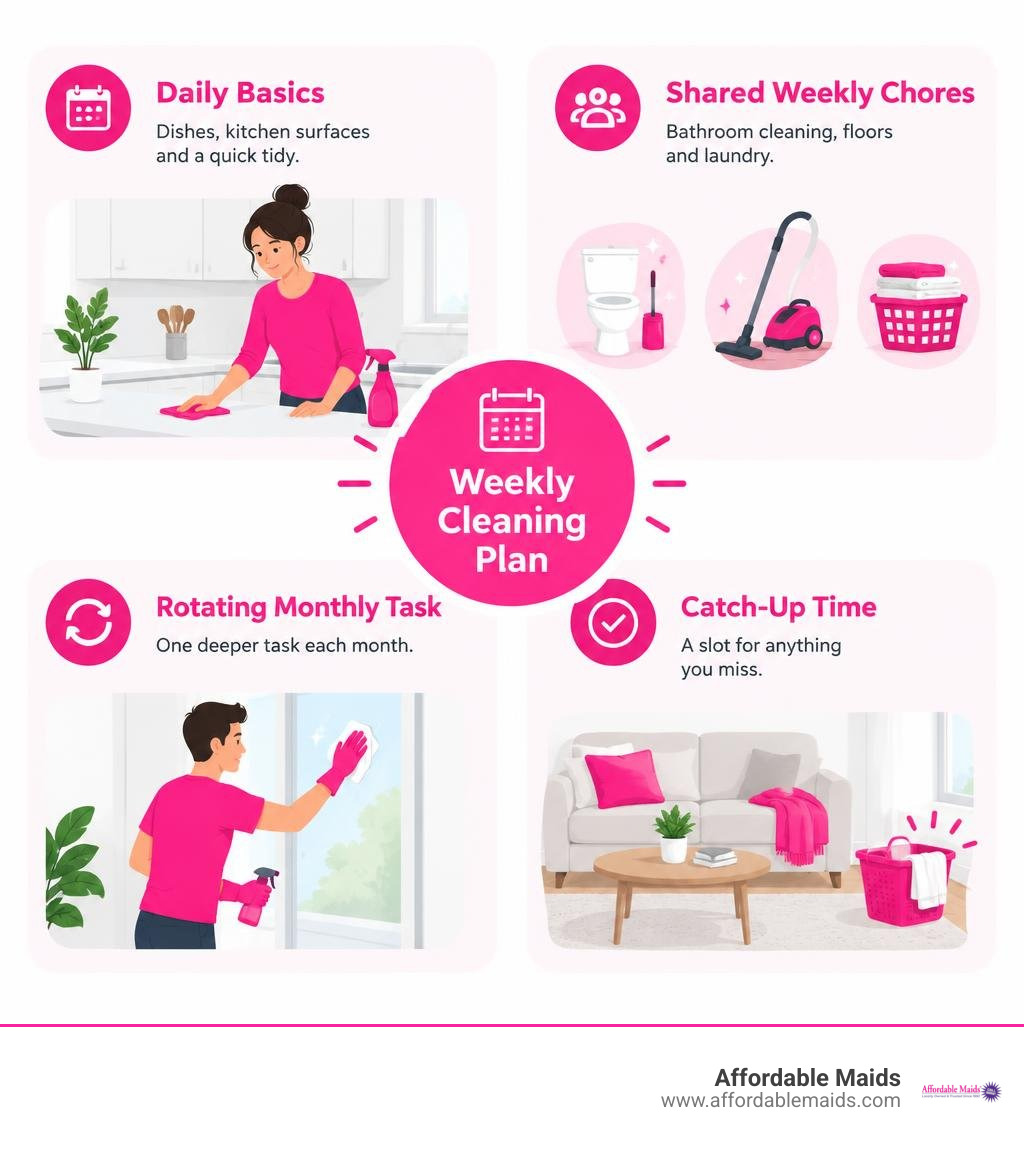
To create a realistic cleaning schedule, start with the time you can spare, not a long list of chores. Spend 15–20 minutes a day on dishes, kitchen surfaces, and a quick tidy. Spread bathroom cleaning, floors, and laundry across the week. Rotate one deeper task into the month, share chores with your household, and leave a slot open for anything you miss.
The goal is steady upkeep, not a perfect home every night. I’m Lynn Reynolds, and I’ll walk you through how to make that plan fit a hectic week.
Why Most Housekeeping Plans Fail and What Works Instead
Most cleaning routines fail not because of a lack of discipline, but because of poor planning. Many homeowners download complex, 50-point checklists designed for an idealized lifestyle where nothing unexpected happens. In reality, a late meeting at work, a sick child, or simply evening fatigue can derail an overly rigid plan in a single day. When tasks pile up, discouragement sets in, and the routine is abandoned entirely.
To make progress, we have to rethink how we approach domestic chores. The secret lies in designing a system tailored to your actual capacity rather than an unrealistic ideal.
Core Benefits of a Realistic Cleaning Schedule vs. Marathon Cleans
The traditional “marathon clean”—spending an entire Saturday scrubbing bathrooms, mopping every square foot of flooring, and folding mountains of laundry—leads directly to burnout. It turns precious weekend rest into unpaid labor. Furthermore, marathon cleaning creates an exhausting boom-and-bust cycle: the house is spotless for forty-eight hours, gradually slips into disarray over the next ten days, and requires another exhausting marathon session to reset.

When an unmanaged home falls behind, a first-time catch-up clean can take 2 to 4 times the effort of a steady-state routine. Conversely, learning how to build a cleaning schedule you can stick to allows you to maintain baseline cleanliness with manageable daily pacing. By focusing on steady upkeep, you protect your free time and prevent dust, grime, and clutter from reaching overwhelming levels.
Calculating Your True Weekly Time Capacity and Workload Multiplier
A practical routine must be grounded in math, not wishful thinking. Before assigning chores to specific days, you need an honest assessment of how many hours per week your household can sustainably dedicate to home maintenance.
Cleaning workloads scale sub-linearly with household size. Adding more people increases the mess, but tasks like mopping a kitchen or wiping down an entryway take roughly the same baseline effort regardless of who walked across the floor. A helpful planning formula is to start with a baseline of 1 and add 0.15 for each additional person beyond the first. So a household of 3 would have a workload multiplier of 1.30 compared to a single person. Pets also introduce extra hair, muddy paws, and surface smudges, adding an estimated 0.15 multiplier to the weekly routine.
For example, a typical 5-room home generally demands:
- Weekly room load: ~300 minutes (5 hours)
- Daily upkeep: ~15 minutes daily (105 minutes weekly)
- Monthly deep maintenance: ~52 minutes amortized weekly
A family of 3 in a 5-room home would comfortably require about 10 hours of combined household cleaning time per week.
| Household Size | Baseline Weekly Maintenance | Daily Upkeep Total | Monthly Rotation (Amortized) | Estimated Total Weekly Effort |
|---|---|---|---|---|
| 1 Person (3–4 Rooms) | 3.0 – 4.0 hours | 1.25 hours | 0.5 hours | 4.75 – 5.75 hours |
| 2 People (4–5 Rooms) | 4.5 – 5.5 hours | 1.50 hours | 0.75 hours | 6.75 – 7.75 hours |
| 3–4 People (5–7 Rooms) | 6.5 – 8.0 hours | 1.75 hours | 1.0 hour | 9.25 – 10.75 hours |
| 5+ People / Pets (7+ Rooms) | 8.5 – 11.0 hours | 2.0 hours | 1.5 hours | 12.0 – 14.5 hours |
Understanding these realistic numbers prevents you from attempting to squeeze ten hours of labor into a two-hour window.
How to Build a Realistic Cleaning Schedule Step-by-Step
Creating a sustainable routine requires breaking down your living space into manageable components and choosing an operational order that eliminates wasted effort.
Assessing Room-by-Room Needs and Real Priorities
Not every room accumulates grime at the same velocity. An open-concept kitchen and main hallway endure heavy foot traffic, grease splatters, and daily debris, while a guest bedroom might sit virtually untouched for weeks.
To organize your home effectively:
- Conduct an inventory: Count all functional areas, including bathrooms, hallways, living spaces, and utility zones.
- Identify high-traffic zones: Pinpoint areas where dirt enters the home (mudrooms, entryways) and where food is prepared (kitchen counters, stovetops).
- Establish hygiene priorities: Surfaces that encounter food, moisture, or bare skin—such as sinks, toilets, and countertops—require more frequent attention than baseboards or decorative shelving.
- Consult structured references: Utilizing a structured home cleaning checklist can help you categorize which items require weekly maintenance versus periodic attention.
Establishing Daily, Weekly, and Monthly Task Cadences
To keep chores from clumping together, divide your responsibilities into three distinct tiers: daily essentials, weekly tasks, and monthly rotations. Following a structured daily, weekly, and monthly cleaning framework provides a helpful system for balancing these cadences.
1. The Daily Baseline (15–20 Minutes)
Focus solely on tasks that prevent hygiene issues and visual chaos:
- Wipe down kitchen counters and stovetop after meals.
- Wash dishes or load/unload the dishwasher.
- Clear clutter from primary flat surfaces (dining table, central island).
- Conduct a rapid 5-minute sweep of high-traffic kitchen and dining floors.
2. The Weekly Rotation (Distributed Day by Day)
Assign specific rooms or task groups to designated weekdays to avoid weekend pile-ups:
- Monday: Kitchen focus (wipe exterior appliance surfaces, clear out expiring items from the fridge, mop floor).
- Tuesday: Living and high-traffic areas (dust flat surfaces, vacuum sofas, vacuum main rugs).
- Wednesday: Bathrooms (clean sink basins, wipe counters, address accessible surface dirt on tubs/showers, clean toilets, mop tile).
- Thursday: Bedrooms & Linens (change bed sheets, dust nightstands, vacuum carpets).
- Friday: Catch-up and trash reset (empty all wastebaskets, tackle any task skipped during the week).
3. The Monthly Deep Rotation (45–60 Minutes Once a Week)
Instead of scheduling an overwhelming seasonal overhaul, cycle one deep task into each week. For instance, rotate between wiping door frames and switch plates, vacuuming under accessible low furniture, cleaning microwave interiors, or thoroughly scrubbing shower tile grout.
Choosing the Most Efficient Cleaning Order and Supply Setup
Cleaning in the wrong sequence creates extra work. If you vacuum your floors first and then dust your ceiling fans and bookshelves, dust particles settle onto the clean floor, requiring you to vacuum a second time.
To streamline your process:
- Dry before wet: Always dust, sweep, and vacuum before using wet cleaners, mops, or sprays. Wetting loose dust creates mud that smears across surfaces.
- Top to bottom: Start with high light fixtures, ceiling fan blades, and upper shelves, working down to tables, chairs, baseboards, and finally the floor.
- Clockwise rotation: Move methodically around the perimeter of a room rather than darting back and forth between random surfaces.
Following the structured principles outlined in the ultimate checklist for the correct order to clean a house ensures you never clean the same surface twice.
Equally important is consolidating your gear. Keep a portable cleaning caddy equipped with microfiber cloths, an all-purpose surface spray, glass cleaner, a non-scratch scrub sponge, and a duster. If you live in a multi-story home, maintaining a fully stocked caddy on each level eliminates the wasted time and friction of walking up and down stairs for supplies.
Strategies to Adapt Your Routine for Busy Households
Balancing personal responsibilities, careers, and family life requires flexible cleaning strategies that adapt to demanding schedules.
Designing a Realistic Cleaning Schedule for Busy Families
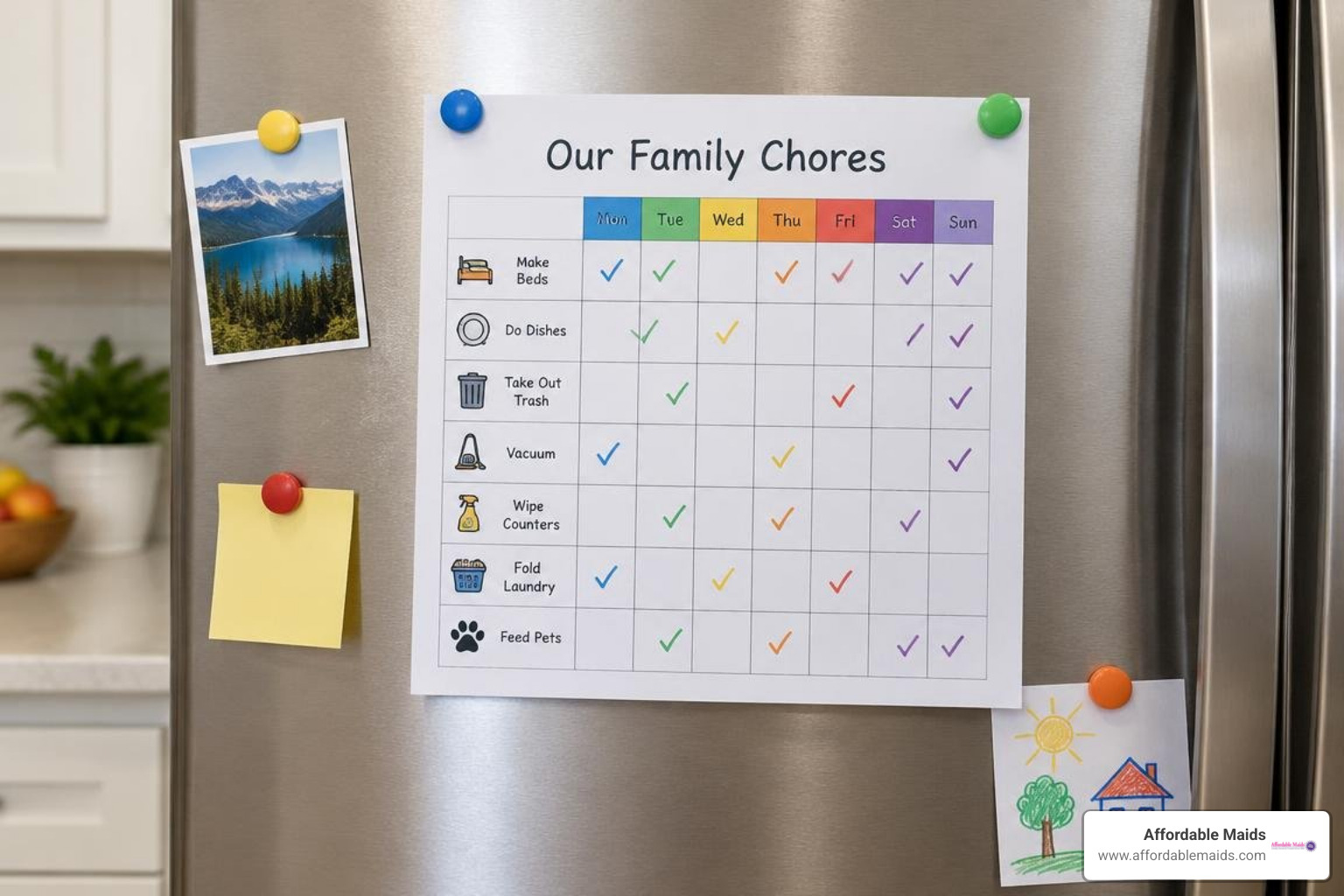
Housework should never fall on a single pair of shoulders. Involving everyone in the home lightens the overall load and fosters shared accountability.
When delegating tasks:
- Assign age-appropriate responsibilities: Young children can manage toy collection, wipe baseboards with a dry cloth, or place dirty laundry into hampers. Older children and teenagers can handle bathroom sinks, load dishwashers, and vacuum bedrooms.
- Make tasks visible: Place a simple chart or magnetic checklist on the refrigerator where everyone can see their responsibilities.
- Divide by zones: Consider assigning specific zones (such as upstairs bedrooms vs. main-level common areas) to specific family members.
For many households juggling demanding work weeks and children’s extracurricular activities, professional assistance can bridge the gap. Many families discover that utilizing bi-weekly house cleaning services handles the heavy scrubbing and floor washing, leaving only lightweight daily tidying for the family.
Using the 30-3 Rule and Micro-Tasks with a Full-Time Job
Working full-time often leaves little energy for evening housekeeping. Utilizing structured micro-sessions prevents chores from demanding your entire evening.
The 30-3 rule divides cleaning into three manageable 30-minute intervals throughout the day:
- Morning (30 mins): Make beds, empty the dishwasher, and start a load of laundry.
- Afternoon / Post-Work (30 mins): Fold laundry, wipe down high-touch kitchen surfaces, and sort daily mail.
- Evening (30 mins): Run the dishwasher, complete a 10-minute floor sweep, and reset living room surfaces.
If 30-minute blocks feel too long, pivot to habit stacking and micro-tasks:
- Wipe the bathroom counter immediately after brushing your teeth.
- Empty the kitchen trash while waiting for your morning coffee to brew.
- Squeegee accessible shower walls right after stepping out of the shower.
Integrating these micro-habits into your day, alongside a consistent weekly maintenance routine, keeps your living environment orderly without requiring dedicated cleaning afternoons.
Maintaining Long-Term Flexibility Without Mess Piling Up
A cleaning schedule should serve your lifestyle, not dictate it. Life will inevitably interrupt your plans, so building structural flexibility into your routine is critical for long-term consistency.
- Build in buffer days: Always leave at least one day per week (such as Friday or Sunday) free of scheduled deep tasks. Use this open slot as a buffer for anything missed earlier in the week.
- Adopt a grace mindset: If an emergency or intense workday forces you to skip a task, simply move it to your buffer day or let it roll to the next scheduled rotation. Missing a single bathroom scrub does not mean the system failed.
- Leverage digital alerts: Set recurring, low-friction reminders in your digital calendar for amortized monthly tasks (such as checking smoke alarm batteries or rotating seasonal linens).
- Perform seasonal resets: As family routines change with school terms or seasonal shifts, review your schedule and adjust task allocations accordingly.
Learning how to maintain a consistently tidy home is about building resilience against unexpected disruptions. When career or personal demands make self-maintenance unsustainable, understanding why busy homeowners choose recurring cleaning can help you evaluate when it makes sense to hand off labor-intensive tasks to experienced professionals.
Frequently Asked Questions About Cleaning Schedules
How do I catch up when my house is completely chaotic?
When a home has fallen behind, avoid trying to fix every room simultaneously. Start with high-impact triage cleaning:
- Collect all visible trash across the entire house into one heavy-duty bag.
- Gather all dirty dishes from around the home and load them into the sink or dishwasher.
- Consolidate dirty laundry into hampers.
- Clear flat surfaces in just one primary room (such as the kitchen island or living room coffee table) to establish an immediate sense of order.
Once visual clutter is contained, address one room at a time over several days rather than attempting an exhausting all-day marathon.
How can I stop spending my entire weekend cleaning?
The most reliable way to protect your weekends is spreading core tasks across Monday through Thursday evenings using short 20-minute daily blocks. By assigning one dedicated zone per weekday (e.g., bathrooms on Wednesday, bedroom linens on Thursday), the labor-intensive chores are finished before Friday night arrives. Reserve weekends strictly for rapid 10-minute morning resets, leaving your Saturdays and Sundays open for rest and family time.
How do I handle deep cleaning without overwhelming my schedule?
Avoid scheduling massive whole-house deep cleans twice a year. Instead, amortize your deep cleaning by selecting one rotating deep task each week (taking roughly 30 to 45 minutes). For example, tackle baseboard dusting in week one, wipe down interior window sills in week two, and clean out the microwave and crumb trays in week three. Spreading these tasks evenly throughout the year ensures your home stays refreshed without exhausting your schedule.
Conclusion
Building a realistic, sustainable cleaning plan is about finding balance. When you replace exhausting weekend marathons with consistent 15-minute daily resets, distributed weekly tasks, and shared household contributions, maintaining an orderly living space becomes simple and stress-free.
If your hectic schedule leaves you with little time to manage thorough floor cleaning, dusting, and bathroom maintenance on your own, our team is here to help. Discover how Affordable Maids and our customizable recurring maid services can handle the heavy lifting and give you back your hard-earned free time.